Ryan Cole
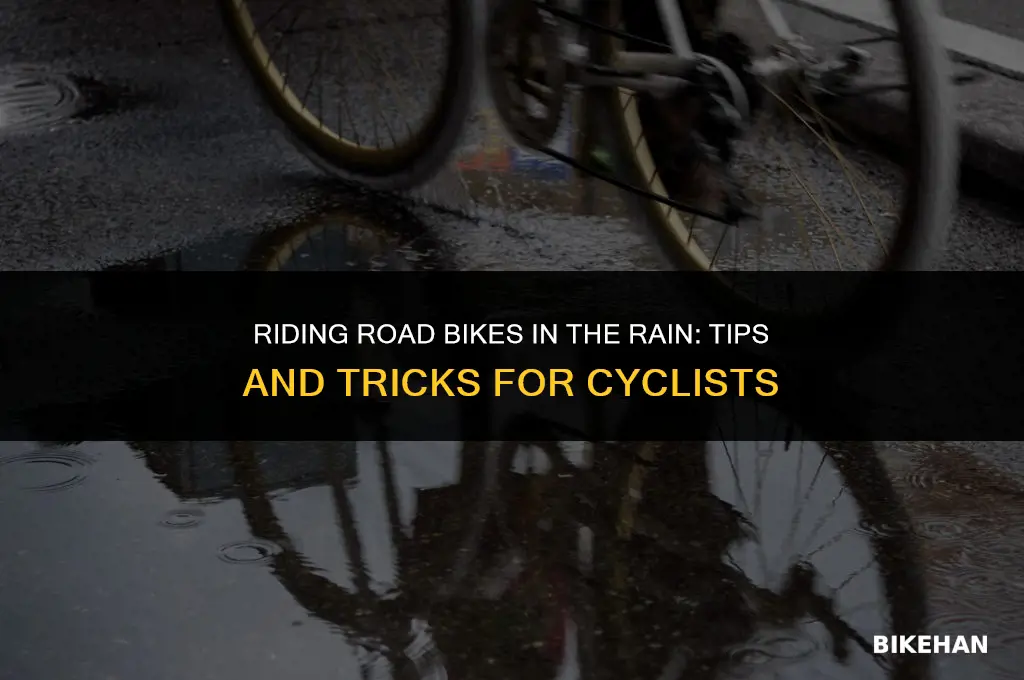
Riding a road bike in the rain can be a challenging and potentially hazardous endeavor. The wet conditions can significantly impact visibility, traction, and overall bike handling, increasing the risk of accidents. However, with proper precautions and equipment, it is possible to ride a road bike safely in rainy weather. This includes using appropriate rain gear, ensuring your bike is equipped with fenders and reflective materials, and adjusting your riding technique to account for the slippery surfaces. Additionally, it's crucial to be aware of your surroundings and other road users, as their visibility and reaction times may also be compromised. By taking these measures, you can minimize the risks associated with riding a road bike in the rain and continue to enjoy your cycling experience even in less-than-ideal weather conditions.
Explore related products


$63.51


What You'll Learn
- Safety Precautions: Discuss the importance of wearing appropriate gear, such as waterproof clothing and reflective materials
- Bike Maintenance: Explain how to prepare your bike for rainy conditions, including checking brakes and tire pressure
- Handling Techniques: Provide tips on how to maintain control of your bike on wet surfaces, like avoiding sudden movements
- Visibility: Offer advice on increasing your visibility to other road users, such as using lights and bright colors
- Route Planning: Suggest ways to plan your route to avoid heavily trafficked or poorly drained areas

Safety Precautions: Discuss the importance of wearing appropriate gear, such as waterproof clothing and reflective materials
Wearing appropriate gear is crucial when riding a road bike in the rain. Waterproof clothing not only keeps you dry but also helps regulate your body temperature, preventing hypothermia. Reflective materials are essential for visibility, as they catch the light from car headlights and other sources, making you more noticeable to drivers. This is particularly important in low-light conditions or at night when visibility is already compromised.
When selecting waterproof clothing, look for materials that are both breathable and water-resistant. This will help prevent you from getting wet from the inside out due to sweat. Reflective materials should be strategically placed on your clothing, ideally on the front, back, and sides of your body, as well as on your helmet and bike. This ensures that you are visible from all angles.
In addition to waterproof clothing and reflective materials, it's also important to wear appropriate footwear. Waterproof shoes or shoe covers can help keep your feet dry and comfortable, while also providing better grip on the pedals. Gloves are another essential item, as they not only keep your hands warm and dry but also improve your grip on the handlebars.
Remember, safety should always be your top priority when riding in the rain. By wearing the appropriate gear, you can significantly reduce the risks associated with wet weather cycling and enjoy a safer, more comfortable ride.
Exploring the Versatility: Off-Road Bikes on Paved Paths
You may want to see also
Explore related products

$38.08 $41.95


Bike Maintenance: Explain how to prepare your bike for rainy conditions, including checking brakes and tire pressure
To prepare your bike for rainy conditions, it's crucial to ensure that your brakes are functioning optimally. Start by inspecting the brake pads for wear and replace them if necessary. Next, check the brake cables for any signs of fraying or rust and lubricate them with a suitable cable lube to ensure smooth operation. It's also a good idea to bleed the brakes to remove any air bubbles that may have formed, which can affect braking performance in wet conditions.
In addition to brake maintenance, checking and adjusting tire pressure is essential for safe riding in the rain. Wet roads can be slippery, so it's important to have the right amount of pressure in your tires to maintain traction. Use a tire pressure gauge to check the current pressure and adjust it according to the manufacturer's recommendations for your specific bike and riding conditions. Consider using wider tires with a more aggressive tread pattern for better grip on wet surfaces.
Another important aspect of bike maintenance for rainy conditions is ensuring that your bike's drivetrain is clean and well-lubricated. A clean drivetrain will help prevent rust and corrosion, which can be accelerated by exposure to water and salt on the roads. Use a degreaser to clean the chain, cassette, and chainrings, then apply a waterproof lubricant to protect against moisture.
Finally, don't forget to check your bike's lights and reflectors to ensure they are clean and functioning properly. In rainy conditions, visibility can be reduced, so it's important to have working lights and reflectors to make yourself more visible to other road users. Consider using additional lights or reflective gear to increase your visibility even further.
By following these steps, you can help ensure that your bike is ready for safe and enjoyable riding in rainy conditions. Remember to always ride cautiously and be aware of your surroundings when cycling in wet weather.
Exploring the Possibilities: Riding Motorized Bikes Without the Motor
You may want to see also
Explore related products


Handling Techniques: Provide tips on how to maintain control of your bike on wet surfaces, like avoiding sudden movements
Maintaining control of your bike on wet surfaces requires a combination of skill, caution, and the right techniques. One of the most important tips is to avoid sudden movements, as these can cause your bike to skid or lose traction. Instead, make smooth, gradual turns and apply gentle pressure to your brakes. This will help you maintain stability and prevent accidents.
Another key technique is to keep your weight centered over the bike. This will help you maintain balance and control, especially when cornering or navigating slippery surfaces. Additionally, try to avoid leaning too far to one side, as this can increase the risk of skidding.
It's also important to choose the right gear for wet conditions. Use a lower gear to maintain a slower speed, which will give you more control over your bike. And consider using fenders to prevent water and mud from splashing up onto your bike and clothing.
Finally, be sure to inspect your bike before and after riding in wet conditions. Check your tires for adequate tread depth, your brakes for proper function, and your chain for any signs of rust or damage. By taking these precautions and using the right techniques, you can safely and confidently ride your road bike in the rain.
Conquering Wet Roads: A Guide to Riding Rad Power Bikes in the Rain
You may want to see also
Explore related products



Visibility: Offer advice on increasing your visibility to other road users, such as using lights and bright colors
In rainy conditions, visibility is paramount for road cyclists. One effective strategy to increase your visibility is to use lights on your bike. Front and rear lights are essential, with the front light typically being white and the rear light red. These lights should be bright enough to be seen from a distance and can be either steady or flashing, depending on your preference and local regulations. Additionally, consider using reflective materials on your bike and clothing. Reflective strips or decals can be placed on the frame, wheels, and pedals, while reflective vests or jackets can significantly enhance your visibility to motorists.
Another approach to improving visibility is to wear bright, high-visibility clothing. Colors like neon yellow, orange, and green are particularly effective in catching the eye of other road users. These garments are often made from lightweight, waterproof materials, making them ideal for rainy weather. Furthermore, consider adding reflective elements to these clothes for an extra layer of visibility.
It's also important to position yourself on the road in a way that maximizes your visibility. Ride in well-lit areas and avoid riding in the blind spots of larger vehicles. When possible, make eye contact with drivers to ensure they have seen you. Use hand signals clearly and well in advance to indicate your intentions, such as turning or stopping.
In addition to these visibility-enhancing measures, it's crucial to be aware of your surroundings and anticipate potential hazards. Rain can reduce visibility for all road users, so be prepared for sudden stops or changes in traffic patterns. Maintain a safe distance from other vehicles and be cautious when navigating through intersections or areas with poor sightlines.
By implementing these strategies, road cyclists can significantly increase their visibility to other road users, reducing the risk of accidents and ensuring a safer riding experience in rainy conditions.
Exploring Mission Ridge: A Mountain Biker's Guide to the Trails
You may want to see also
Explore related products


Route Planning: Suggest ways to plan your route to avoid heavily trafficked or poorly drained areas
To effectively plan your route and avoid heavily trafficked or poorly drained areas while riding a road bike in the rain, consider the following strategies:
- Research and Reconnaissance: Before setting out, research your route using online maps and traffic data tools. Look for areas with high traffic volume or known drainage issues. Utilize cycling forums or local bike shops for insights on problematic areas during rainy conditions.
- Alternative Routes: Identify alternative routes that can bypass busy intersections or areas prone to flooding. This might involve taking a longer, but safer, path. Remember, the goal is to ensure a safe and enjoyable ride, not necessarily the fastest route.
- Elevation and Gradient: Pay attention to the elevation and gradient of your route. Areas with steep inclines or declines can become hazardous when wet, increasing the risk of slipping or losing control. Opt for routes with gentler slopes when possible.
- Surface Conditions: Choose routes with well-maintained surfaces. Potholes, cracks, and debris can be more dangerous when wet. Smooth, well-paved roads will provide better traction and control.
- Real-Time Adjustments: Be prepared to make real-time adjustments to your route. If you encounter unexpected traffic congestion or flooding, have a backup plan or be ready to reroute using your GPS device or smartphone.
- Safety Gear and Visibility: Ensure you are equipped with appropriate safety gear, including a helmet, reflective clothing, and lights. Visibility is crucial in rainy conditions, both for you to see the road and for other road users to see you.
By implementing these strategies, you can significantly reduce the risks associated with riding a road bike in the rain and enjoy a safer, more pleasant cycling experience.
Road-Ready or Off-Limits: The Pit Bike Dilemma Explained
You may want to see also
Frequently asked questions
Riding a road bike in the rain can be safe if you take the necessary precautions. These include using proper rain gear, ensuring your bike is equipped with fenders and lights, and adjusting your riding style to account for reduced traction and visibility.
To ride a road bike in the rain, you should have fenders to prevent water spray, lights for increased visibility, and rain gear such as a waterproof jacket, pants, and shoe covers. Additionally, using tires with good tread and maintaining your bike's brakes and gears is crucial for safety.
When cycling in the rain, you should ride at a slower pace, avoid sudden movements, and maintain a greater distance from other vehicles. It's also important to brake earlier and more gently, as wet brakes may not respond as quickly. Be extra cautious when turning or stopping, and always be aware of your surroundings to anticipate potential hazards.