Lauren Kennedy
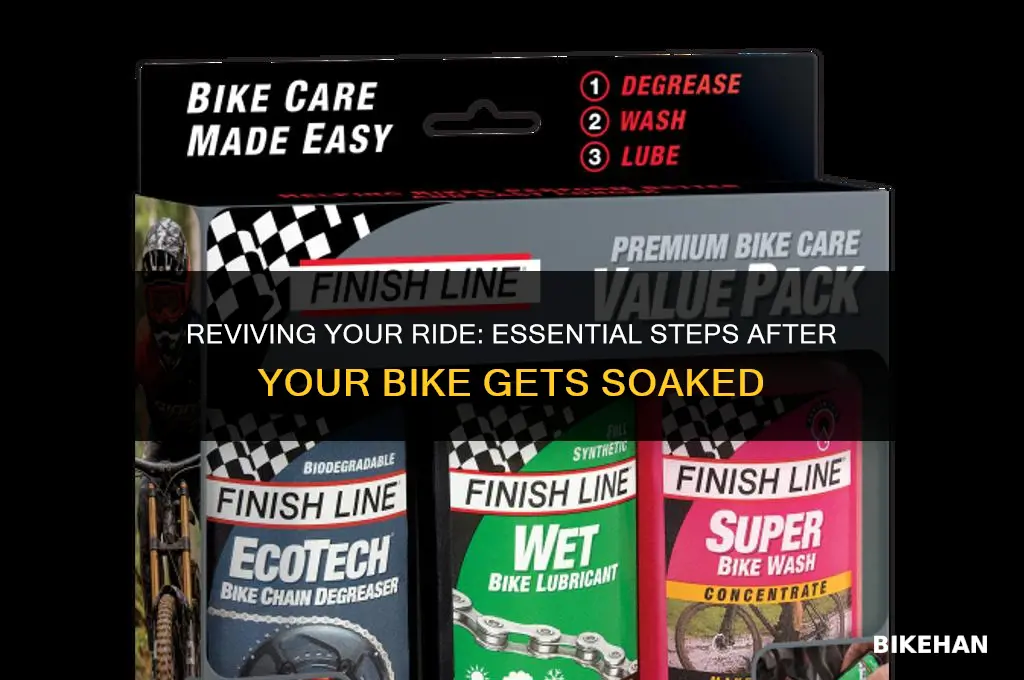
After a bike gets wet, it's crucial to take immediate action to prevent damage and ensure its longevity. Start by thoroughly drying the bike with a soft cloth, paying special attention to the chain, gears, and brakes, as moisture can lead to rust and impaired function. Next, apply lubricant to the chain and any moving parts to reduce friction and protect against corrosion. It's also advisable to check the brake pads for wear and replace them if necessary, as wet conditions can accelerate deterioration. Finally, store the bike in a dry, covered area to shield it from the elements and prolong its lifespan. Regular maintenance after exposure to water will keep your bike in optimal condition and ready for your next ride.
Explore related products


What You'll Learn
- Dry the bike: Use a soft cloth to gently pat down the bike, removing excess water from the frame, wheels, and components
- Lubricate the chain: Apply a suitable lubricant to the bike chain to prevent rust and ensure smooth operation
- Check brakes and gears: Inspect brake pads and gear shifters for proper function, as water can affect their performance
- Clean the bike: Give the bike a thorough cleaning with a mild detergent and water to remove dirt and grime
- Inspect tires and tubes: Check for any punctures or damage to the tires and tubes, which may have been caused by riding on wet surfaces

Dry the bike: Use a soft cloth to gently pat down the bike, removing excess water from the frame, wheels, and components
After a bike gets wet, it's crucial to dry it thoroughly to prevent rust and damage to the components. Use a soft, absorbent cloth to gently pat down the entire bike, focusing on the frame, wheels, and any other parts that may have come into contact with water. Be careful not to rub too vigorously, as this can scratch the paint or damage delicate components.
Start by drying the frame, paying close attention to any areas where water may have pooled, such as the bottom bracket or around the headset. Then, move on to the wheels, making sure to dry both the rims and the spokes. Don't forget to dry the tires as well, as moisture can lead to mold or mildew growth.
Next, dry the bike's components, such as the chain, derailleurs, and brakes. Use a smaller cloth or a brush to reach into tight spaces and remove any excess water. It's especially important to dry the chain thoroughly, as a wet chain can quickly rust and lead to shifting problems.
Once you've removed the excess water, it's a good idea to apply a light coat of lubricant to the chain and other moving parts. This will help protect them from rust and keep them functioning smoothly. Finally, inspect the bike for any signs of damage or wear that may have been exacerbated by the water exposure, and address any issues promptly to ensure the bike remains in good working condition.
Pedal Thieves: Unraveling the Mystery of Bicycle Theft Rates
You may want to see also
Explore related products


Lubricate the chain: Apply a suitable lubricant to the bike chain to prevent rust and ensure smooth operation
After a bike gets wet, one of the most crucial steps is to lubricate the chain. This process not only prevents rust but also ensures the smooth operation of the bike. When water evaporates from the chain, it can leave behind salt and other corrosive substances that can lead to rust. Lubrication creates a protective barrier against these elements.
To lubricate the chain, start by cleaning it thoroughly to remove any dirt or debris. You can use a chain cleaning device or simply wipe it down with a clean cloth. Once the chain is clean, apply a suitable lubricant. There are various types of bike chain lubricants available, including wet and dry formulas. Choose a lubricant that is appropriate for the riding conditions you typically encounter.
When applying the lubricant, make sure to do so sparingly. Excess lubricant can attract dirt and grime, which can lead to a buildup of harmful substances on the chain. Apply the lubricant to each roller of the chain while slowly rotating the pedals backward. This ensures that the lubricant penetrates deep into the chain.
After lubricating the chain, allow it to sit for a few minutes before wiping off any excess lubricant. This gives the lubricant time to work its way into the chain and provides better protection against rust and wear. Regularly lubricating your bike chain after it gets wet can significantly extend its lifespan and maintain optimal performance.
Choosing the Perfect Bike Chain: A Comprehensive Guide
You may want to see also
Explore related products


Check brakes and gears: Inspect brake pads and gear shifters for proper function, as water can affect their performance
After a bike gets wet, it's crucial to check the brakes and gears to ensure they're functioning correctly. Water can seep into the brake pads and gear shifters, affecting their performance and potentially leading to accidents. To inspect the brake pads, start by removing the wheels and examining the pads for any signs of wear or damage. Look for any discoloration, cracks, or uneven wear patterns. If the pads appear worn or damaged, replace them immediately.
Next, check the gear shifters by shifting through all the gears while the bike is stationary. Listen for any unusual noises or feel for any resistance. If the gears aren't shifting smoothly, it may be necessary to clean and lubricate the derailleurs and cables. In severe cases, the cables may need to be replaced.
When inspecting the brakes and gears, it's also important to check for any signs of rust or corrosion. Water can accelerate the rusting process, which can weaken the components and lead to failure. If any rust is found, clean the affected areas thoroughly and apply a rust inhibitor. In some cases, it may be necessary to replace the corroded components.
To prevent water from affecting the brakes and gears in the future, it's a good idea to apply a waterproof lubricant to the cables and pivot points. This will help repel water and keep the components functioning smoothly. Additionally, storing the bike in a dry place and covering it with a waterproof cover can help protect it from the elements.
In conclusion, checking the brakes and gears after a bike gets wet is essential for ensuring safe and reliable performance. By following these steps, cyclists can identify and address any potential issues before they lead to accidents or costly repairs.
Urban Wheels: Choosing the Perfect Bike for Street Biking Adventures
You may want to see also
Explore related products




Clean the bike: Give the bike a thorough cleaning with a mild detergent and water to remove dirt and grime
After a bike gets wet, it's crucial to give it a thorough cleaning to prevent damage and maintain its performance. Start by rinsing the bike with clean water to remove any loose dirt and debris. Then, mix a mild detergent with water in a bucket and use a soft brush or sponge to scrub the bike's frame, wheels, and other components. Be sure to avoid using harsh chemicals or abrasive materials that could damage the bike's paint or metal parts.
When cleaning the bike's chain, use a dedicated chain cleaning device or a soft brush to remove any built-up grime. After cleaning, rinse the bike thoroughly with clean water to remove any remaining soap residue. It's important to dry the bike completely, paying special attention to the chain, gears, and brakes. Use a soft cloth or towel to dry the frame and wheels, and consider using a hairdryer on a low setting to dry the chain and other hard-to-reach areas.
Regular cleaning and maintenance can help prevent rust and corrosion, which can be caused by moisture and dirt buildup. By keeping your bike clean and dry, you can ensure that it continues to perform well and lasts for years to come.
Choosing the Perfect Peloton Bike: A Comprehensive Guide
You may want to see also
Explore related products



Inspect tires and tubes: Check for any punctures or damage to the tires and tubes, which may have been caused by riding on wet surfaces
After a bike has been ridden on wet surfaces, it's crucial to inspect the tires and tubes for any punctures or damage. Wet conditions can significantly increase the risk of tire punctures due to the presence of debris, potholes, and slippery surfaces that can cause accidents. To ensure safety and prevent further damage, follow these steps:
- Remove the wheels: Start by taking off both the front and rear wheels of the bike. This will give you better access to inspect the tires and tubes thoroughly.
- Check the tires: Visually inspect the tires for any signs of damage, such as cuts, abrasions, or punctures. Run your fingers along the tire's surface to feel for any irregularities. Pay special attention to the sidewalls, as they are more susceptible to damage.
- Inspect the tubes: If you suspect a puncture, remove the tube from the tire. Inflate the tube slightly and listen for any hissing sounds, which would indicate a leak. You can also submerge the tube in water to check for bubbles, but be cautious not to fully inflate the tube underwater as it may burst.
- Patch or replace: If you find a puncture, you have two options: patch the tube or replace it. Patching is a temporary fix and should only be used for small punctures. For larger punctures or sidewall damage, it's best to replace the tube entirely.
- Reassemble and test: Once you've patched or replaced the tube, reassemble the wheel and inflate the tire to the recommended pressure. Test the tire by riding on a dry surface to ensure it's holding air properly and there are no further issues.
Regularly inspecting your tires and tubes after riding in wet conditions can help prevent accidents and prolong the life of your bike's components. By following these steps, you can ensure your bike is safe to ride and avoid potential hazards caused by damaged tires.
Secure Your Ride: Choosing the Perfect Bike Lock for Urban Cyclists
You may want to see also
Frequently asked questions
After your bike gets wet, it's important to rinse it off with clean water to remove any dirt, salt, or debris that could cause corrosion or damage to the components.
Use a soft, clean towel to gently pat your bike dry. Avoid using a high-pressure air hose, as this can force water into the bearings and other sensitive parts.
After your bike has been wet, it's a good idea to check and lubricate the chain, gears, and brakes. This will help prevent rust and ensure that your bike continues to function smoothly.
While a hairdryer can be used to dry your bike, it's important to use a low heat setting and keep the dryer at a safe distance from the bike to avoid damaging the paint or components.