Matthew Brooks
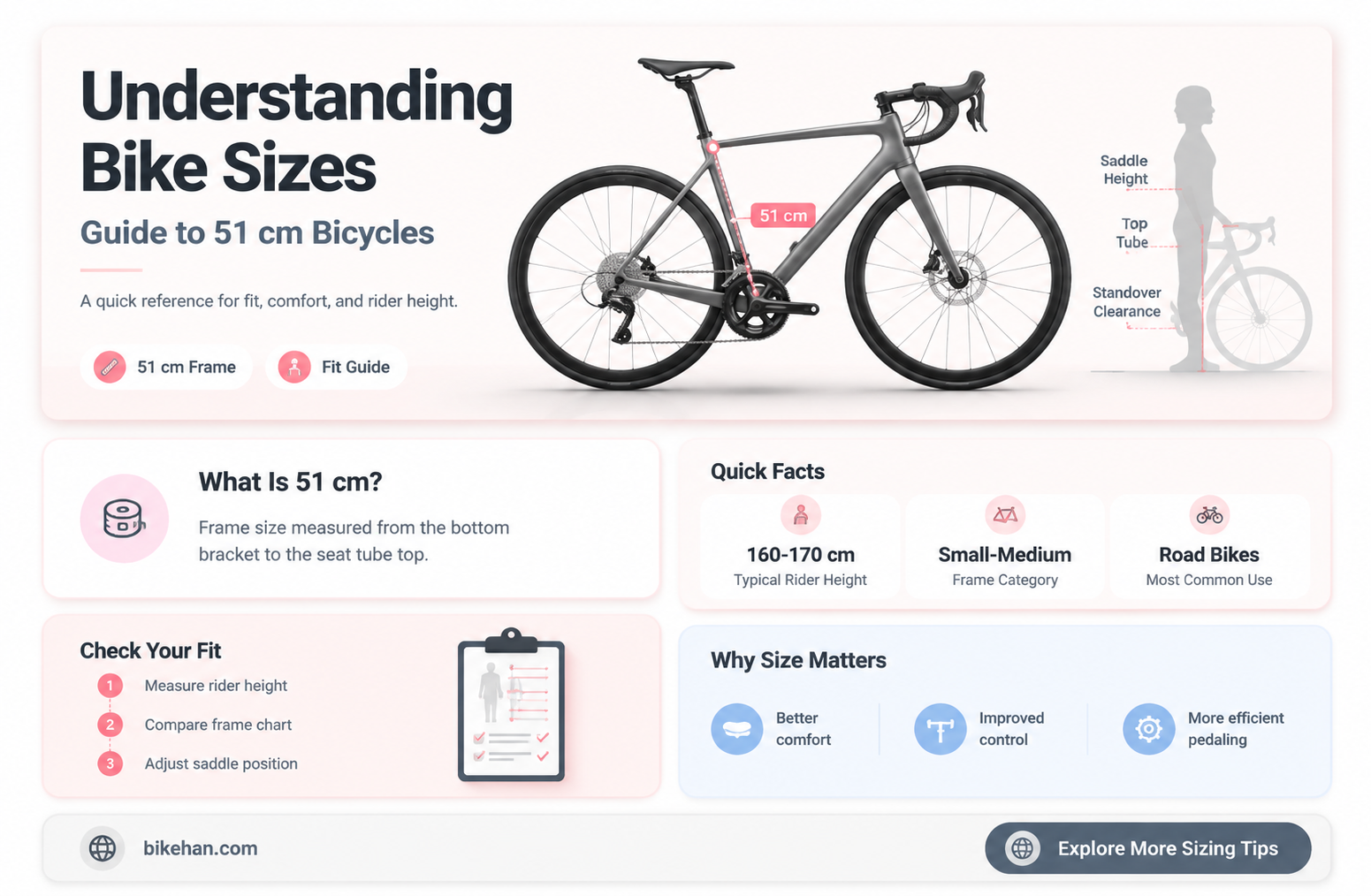
A 51 cm bike typically refers to a bicycle with a frame size of 51 centimeters. This measurement is usually taken from the center of the bottom bracket to the top of the seat tube. A bike of this size is generally suitable for riders who are around 5'7 to 5'9 tall, depending on their inseam length and personal preference for fit. It's important to note that frame size is just one factor in determining the right bike for an individual, as other considerations such as handlebar reach, saddle height, and overall geometry also play significant roles in ensuring a comfortable and efficient riding experience.
Explore related products


What You'll Learn
- Bike Size Chart: Explains how 51 cm fits into standard bike sizing for different types of bicycles
- Rider Height Range: Specifies the ideal height range for a rider to comfortably use a 51 cm bike
- Frame Geometry: Describes the typical frame dimensions and geometry associated with a 51 cm bike
- Suitable Components: Lists common components (e.g., wheels, handlebars) that are compatible with a 51 cm bike frame
- Riding Position: Discusses the riding posture and comfort considerations for someone riding a 51 cm bike

Bike Size Chart: Explains how 51 cm fits into standard bike sizing for different types of bicycles
A 51 cm bike frame is considered a medium size in the world of cycling, but its suitability can vary greatly depending on the type of bicycle and the rider's body proportions. In general, a 51 cm frame is appropriate for road bikes, hybrid bikes, and some mountain bikes, catering to riders who are approximately 5'7" to 5'9" tall. However, the ideal fit can also depend on the rider's inseam length, arm length, and personal preference for riding position.
For road bikes, a 51 cm frame typically offers an aggressive riding position, which is favored by more experienced cyclists for its aerodynamic benefits. The top tube length, which is the horizontal distance from the seat to the handlebars, is usually around 53-55 cm for a 51 cm frame, allowing for a stretched-out posture that reduces air resistance. The stack height, or the vertical distance from the bottom bracket to the top of the head tube, is generally lower on road bikes, further contributing to the forward-leaning position.
In contrast, a 51 cm hybrid bike frame is designed for a more upright and comfortable riding position, making it suitable for commuters and casual riders. The top tube length is often shorter than on road bikes, around 51-53 cm, and the stack height is higher, providing a more relaxed fit. This allows riders to maintain better visibility in traffic and reduces strain on the back and neck during longer rides.
When it comes to mountain bikes, a 51 cm frame is on the smaller side, as mountain bikes tend to have larger frames to accommodate the rough terrain and provide better stability. However, some riders may prefer a smaller frame for better maneuverability and control on technical trails. The top tube length on a 51 cm mountain bike frame is usually around 55-57 cm, and the stack height is higher than on road bikes but lower than on hybrid bikes, offering a balance between comfort and control.
Ultimately, the best way to determine if a 51 cm bike frame is the right size for you is to test ride different models and consult with a professional bike fitter. They can help you find the optimal frame size and adjust the bike's components to ensure a comfortable and efficient riding position.
Choosing the Perfect Inner Tube Size for Your Bike: A Guide
You may want to see also
Explore related products


Rider Height Range: Specifies the ideal height range for a rider to comfortably use a 51 cm bike
Determining the ideal rider height range for a 51 cm bike involves understanding both the bike's geometry and the rider's proportions. A 51 cm bike typically refers to the frame size, which is the distance from the center of the bottom bracket to the top of the seat tube. This measurement is crucial because it affects the overall fit and comfort of the bike for the rider.
To find the ideal height range, consider the rider's inseam length, which is the distance from the crotch to the floor. This measurement is often used as a starting point for bike fitting because it correlates closely with the rider's leg length and overall height. For a 51 cm bike, riders generally have an inseam length of around 79-83 cm (31-33 inches). However, this can vary depending on the specific geometry of the bike and the rider's personal preferences.
Another factor to consider is the rider's torso length and arm reach. These measurements help determine the ideal handlebar height and reach, which are essential for maintaining a comfortable and aerodynamic riding position. A rider with a longer torso may require a higher handlebar position to avoid straining their back, while a rider with shorter arms may need a closer handlebar reach to maintain control and comfort.
Ultimately, the ideal rider height range for a 51 cm bike will depend on a combination of these factors, as well as the rider's individual preferences and riding style. It's always recommended to test ride a bike before purchasing to ensure the best possible fit and comfort.
Understanding Bike Sizes: What Does 24 Inches Really Mean?
You may want to see also
Explore related products


Frame Geometry: Describes the typical frame dimensions and geometry associated with a 51 cm bike
A 51 cm bike frame is typically designed to accommodate riders of a specific height range, generally around 5'7" to 5'9". The frame geometry plays a crucial role in determining the bike's handling characteristics, comfort, and overall performance. One key aspect of a 51 cm frame is the top tube length, which is usually around 56-58 cm. This measurement affects the bike's reach and stability, with a longer top tube providing a more stretched-out riding position and potentially better aerodynamics.
Another important dimension is the seat tube length, which is typically around 48-50 cm for a 51 cm frame. This measurement influences the bike's standover height and rider fit. A longer seat tube can provide more legroom for taller riders, while a shorter seat tube may be more suitable for shorter riders or those who prefer a more compact riding position.
The wheelbase of a 51 cm bike frame is usually around 100-102 cm. This measurement affects the bike's stability and maneuverability, with a longer wheelbase providing a smoother ride and better straight-line stability, while a shorter wheelbase can offer more agility and responsiveness in turns.
The head tube length and angle are also important factors in frame geometry. A 51 cm frame typically has a head tube length of around 12-14 cm, with a head angle of approximately 70-72 degrees. These measurements influence the bike's steering response and handling characteristics, with a longer head tube and slacker head angle providing a more stable and relaxed ride, while a shorter head tube and steeper head angle can offer more aggressive handling and quicker steering.
In summary, the frame geometry of a 51 cm bike is carefully designed to balance comfort, performance, and handling characteristics for riders of a specific height range. By understanding the key dimensions and their effects, riders can better appreciate the nuances of different bike frames and make informed decisions when choosing a bike that suits their needs and preferences.
Compatible Inner Tube Sizes for Thruster Fixie Bikes Explained
You may want to see also
Explore related products


Suitable Components: Lists common components (e.g., wheels, handlebars) that are compatible with a 51 cm bike frame
When selecting components for a 51 cm bike frame, it's essential to consider the compatibility and functionality of each part. The frame size dictates the dimensions and specifications of the components that will fit properly. For instance, the wheelbase, which is the distance between the centers of the two wheels, must align with the frame's geometry to ensure stability and optimal performance.
Wheels are a critical component to consider. For a 51 cm frame, you'll typically need wheels with a diameter of around 700c, which is a common size for road and hybrid bikes. The width of the wheels should also be compatible with the frame's fork and rear dropout spacing. Handlebars are another essential component. The width of the handlebars should be proportional to the frame size, and the stem length should be adjusted to provide a comfortable riding position. For a 51 cm frame, handlebars with a width of approximately 42-44 cm are often suitable.
The drivetrain components, including the crankset, chainrings, cassette, and derailleurs, must also be compatible with the frame size. A 51 cm frame typically accommodates a crankset with a length of around 170-175 mm. The chainring and cassette sizes will depend on the intended use of the bike, whether it's for climbing, speed, or general riding.
Brakes are another crucial component. For a 51 cm frame, you'll need brake calipers that are compatible with the frame's brake mounts and wheel size. The brake lever size should also be considered to ensure a comfortable and safe riding experience.
Lastly, the saddle and seatpost should be chosen based on the rider's comfort and the frame's seat tube diameter. A 51 cm frame typically has a seat tube diameter of around 27.2 mm, which is a standard size for many saddles and seatposts.
In summary, when selecting components for a 51 cm bike frame, it's important to consider the compatibility of each part with the frame's dimensions and specifications. By choosing the right components, you can ensure a comfortable, safe, and efficient riding experience.
Understanding Bike Sizes: A Guide to 50cm Frames
You may want to see also
Explore related products


Riding Position: Discusses the riding posture and comfort considerations for someone riding a 51 cm bike
For a rider on a 51 cm bike, achieving the correct riding position is crucial for both comfort and efficiency. The ideal posture involves a slight forward lean, with the rider's weight distributed evenly between the saddle and the handlebars. This position allows for optimal power transfer while minimizing strain on the back and shoulders.
To find the right riding position, start by adjusting the saddle height so that your feet can rest flat on the pedals with a slight bend in the knees. Next, position the handlebars so that your arms are comfortably extended, with your elbows slightly bent. This setup ensures that you can maintain a stable and aerodynamic position without feeling cramped or stretched out.
Comfort considerations are also important when riding a 51 cm bike. Wearing appropriate cycling attire, such as padded shorts and a moisture-wicking jersey, can help reduce chafing and discomfort during long rides. Additionally, investing in a good quality saddle and handlebar grips can make a significant difference in overall comfort.
It's worth noting that the riding position may need to be adjusted based on the type of riding being done. For example, a more aggressive position may be necessary for racing or time trialing, while a more upright position may be preferable for casual riding or commuting. By experimenting with different positions and making adjustments as needed, riders can find the optimal setup for their individual needs and preferences.
Understanding Bike Frame Sizes: A Guide to the 16-Inch Frame
You may want to see also
Frequently asked questions
A 51 cm bike is generally suitable for children aged 8 to 12 years old, depending on their height and riding experience.
To measure the size of a bike, you need to measure the distance from the center of the bottom bracket to the top of the seat tube. This measurement should be 51 cm for the bike to be considered that size.
Choosing a 51 cm bike for a child provides several benefits, including improved comfort and control while riding, easier handling, and increased safety due to the bike's smaller size and lighter weight.
While it's possible for an adult to ride a 51 cm bike, it may not be the most comfortable or practical choice due to the bike's smaller size and lower weight capacity. Adults typically require larger bikes with more robust frames to accommodate their size and weight.