Eric Johnson
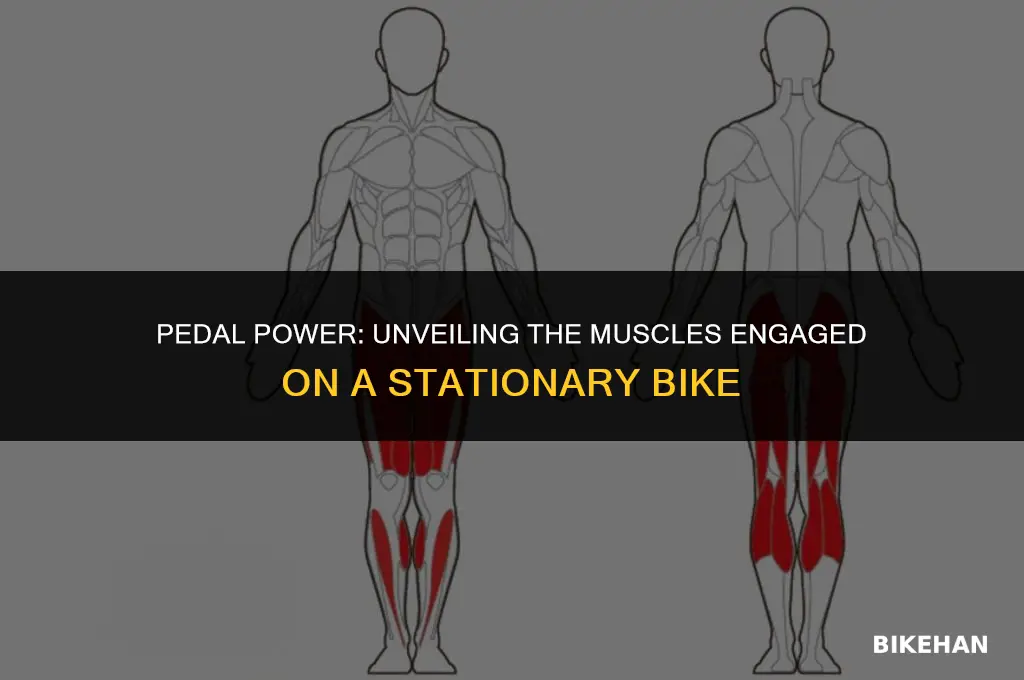
Stationary biking is an excellent form of cardiovascular exercise that also engages various muscle groups. When you pedal on a stationary bike, your primary muscles worked include the quadriceps, hamstrings, glutes, and calves. These muscles are responsible for the pushing and pulling motion of pedaling. Additionally, your core muscles, including the abdominals and lower back, are engaged to maintain stability and posture during the workout. The stationary bike also provides an opportunity to work on your upper body muscles, such as the arms, shoulders, and back, if you incorporate arm movements or use handlebars that require pushing and pulling. Overall, stationary biking is a full-body workout that can help improve muscle strength, endurance, and cardiovascular fitness.
Explore related products


What You'll Learn
- Leg Muscles: Quadriceps, hamstrings, glutes, and calves are engaged during pedaling
- Core Muscles: Abdominals and lower back muscles are activated to maintain stability
- Upper Body: Shoulders, arms, and chest muscles are used to grip handlebars and maintain posture
- Cardiovascular System: Heart and lungs work harder to pump blood and oxygen during exercise
- Muscle Endurance: Regular cycling builds endurance in all major muscle groups over time

Leg Muscles: Quadriceps, hamstrings, glutes, and calves are engaged during pedaling
The quadriceps, hamstrings, glutes, and calves are the primary leg muscles engaged during pedaling on a stationary bike. These muscles work in harmony to facilitate the repetitive motion of cycling, making stationary biking an effective lower-body workout.
The quadriceps, located at the front of the thigh, are responsible for extending the knee joint. During pedaling, they contract to push the pedals downward, providing the necessary force to propel the bike forward. The hamstrings, situated at the back of the thigh, play a crucial role in bending the knee joint. As the pedals ascend, the hamstrings contract to pull the pedals back up, completing the cycling motion.
The glutes, or buttocks, are also actively engaged during stationary biking. These muscles contract to stabilize the hips and provide additional power to the pedaling motion. The calves, located at the back of the lower leg, assist in pushing the pedals downward and help maintain proper foot positioning on the bike.
To maximize the engagement of these leg muscles, it's essential to maintain proper form and technique while stationary biking. This includes keeping the knees slightly bent, the back straight, and the feet securely positioned on the pedals. By focusing on these key areas, individuals can ensure they are effectively targeting the quadriceps, hamstrings, glutes, and calves during their workout.
Secure Your Ride: Choosing the Perfect Bike Lock for Urban Cyclists
You may want to see also
Explore related products


Core Muscles: Abdominals and lower back muscles are activated to maintain stability
Engaging in a stationary bike workout primarily targets the lower body muscles, but it also has a significant impact on the core muscles. The abdominals and lower back muscles are crucial for maintaining stability during the cycling motion. As you pedal, these core muscles contract to keep your torso upright and stable, which is essential for efficient and safe cycling.
The rectus abdominis, obliques, and transverse abdominis are the main abdominal muscles engaged during stationary biking. These muscles work together to stabilize the spine and pelvis, preventing excessive movement that could lead to injury. Additionally, the erector spinae, which run along the spine, and the gluteal muscles, particularly the gluteus medius and minimus, play a vital role in maintaining proper posture and alignment.
To maximize the engagement of these core muscles, it's important to maintain proper form while cycling. This includes keeping your back straight, shoulders relaxed, and core muscles engaged throughout the workout. You can also incorporate interval training or resistance exercises that specifically target the core muscles to enhance their strength and endurance.
In summary, while stationary biking is often associated with leg workouts, it also provides a valuable opportunity to strengthen and tone the core muscles. By focusing on proper form and incorporating targeted exercises, you can effectively engage your abdominals and lower back muscles, leading to improved stability, posture, and overall fitness.
Choosing the Perfect Bike for the MS150: A Comprehensive Guide
You may want to see also
Explore related products


Upper Body: Shoulders, arms, and chest muscles are used to grip handlebars and maintain posture
The upper body plays a crucial role in maintaining stability and control while using a stationary bike. Specifically, the shoulders, arms, and chest muscles are engaged to grip the handlebars and maintain proper posture throughout the workout. This not only helps to prevent injury but also ensures that the rider can effectively transfer power from their legs to the pedals.
One of the key muscles involved in this process is the deltoid, which is responsible for stabilizing the shoulder joint. The deltoid works in conjunction with the trapezius muscle to keep the shoulders level and prevent them from hunching forward. This is particularly important when riding a stationary bike, as maintaining an upright posture can help to reduce strain on the lower back and improve overall comfort.
In addition to the shoulders, the arms and chest muscles are also engaged during a stationary bike workout. The biceps and triceps are used to grip the handlebars, while the chest muscles, including the pectoralis major, help to stabilize the upper body and maintain proper alignment. This engagement of the upper body muscles not only helps to improve posture but also contributes to the overall calorie burn and intensity of the workout.
To maximize the benefits of a stationary bike workout, it is important to focus on proper form and technique. This includes maintaining a firm grip on the handlebars, keeping the shoulders level, and engaging the core muscles to stabilize the torso. By doing so, riders can effectively target the upper body muscles and improve their overall fitness level.
In conclusion, the upper body muscles, including the shoulders, arms, and chest, play a vital role in maintaining proper posture and control during a stationary bike workout. By focusing on proper form and technique, riders can effectively engage these muscles and improve their overall fitness level.
Choosing the Perfect Liter Bike: A Comprehensive Guide
You may want to see also
Explore related products

$29.62 $24


Cardiovascular System: Heart and lungs work harder to pump blood and oxygen during exercise
During exercise, the cardiovascular system undergoes significant changes to meet the increased demand for oxygen and nutrients by the working muscles. The heart rate increases, pumping more blood per minute, while the lungs work harder to take in more oxygen and expel carbon dioxide. This heightened activity is essential for delivering the necessary fuel to the muscles engaged during exercise, such as those used when riding a stationary bike.
The primary muscles worked on a stationary bike include the quadriceps, hamstrings, glutes, and calves in the lower body, as well as the core muscles for stability. As these muscles contract and relax, they require more oxygen and produce more waste products, which the cardiovascular system must efficiently manage. The increased heart rate and breathing rate during exercise help to ensure that the muscles receive the oxygen they need to function optimally and that waste products are removed effectively.
In addition to delivering oxygen and nutrients, the cardiovascular system also plays a crucial role in regulating body temperature during exercise. As the muscles work harder, they generate more heat, which can lead to an increase in body temperature. The cardiovascular system helps to dissipate this heat by increasing blood flow to the skin, where it can be lost through sweating and radiation. This cooling effect is essential for maintaining optimal body temperature and preventing overheating during intense physical activity.
Regular exercise on a stationary bike can lead to improvements in cardiovascular health, including increased cardiac output, improved lung function, and enhanced blood vessel health. These adaptations allow the cardiovascular system to work more efficiently, not only during exercise but also at rest. As a result, individuals who engage in regular cardiovascular exercise may experience a reduced risk of heart disease, stroke, and other health conditions related to poor cardiovascular health.
In conclusion, the cardiovascular system plays a vital role in supporting the muscles worked on a stationary bike during exercise. By increasing heart rate, breathing rate, and blood flow, the cardiovascular system ensures that the working muscles receive the oxygen and nutrients they need to function effectively, while also regulating body temperature and removing waste products. Regular exercise on a stationary bike can lead to significant improvements in cardiovascular health, making it an excellent choice for individuals looking to enhance their overall fitness and well-being.
Choosing the Perfect Bike for Your College Adventures
You may want to see also
Explore related products

$19.95 $19.95

$24 $19.2


Muscle Endurance: Regular cycling builds endurance in all major muscle groups over time
Regular cycling on a stationary bike is a powerful way to build muscle endurance across the body. Over time, consistent cycling sessions can lead to significant improvements in the strength and stamina of various muscle groups. This is because cycling is a low-impact, yet high-intensity exercise that engages multiple muscle groups simultaneously, making it an efficient workout for building overall muscle endurance.
One of the primary muscle groups targeted during cycling is the lower body, particularly the quadriceps, hamstrings, glutes, and calves. As you pedal, these muscles work in unison to generate power and maintain a steady cadence. The quadriceps, located at the front of the thigh, are responsible for extending the knee and driving the pedal downward. The hamstrings, situated at the back of the thigh, work to bend the knee and pull the pedal upward. The glutes, or buttocks, play a crucial role in stabilizing the hips and generating power during each pedal stroke. Lastly, the calves, located at the back of the lower leg, help to push down on the pedals and maintain a smooth pedaling motion.
In addition to the lower body muscles, cycling also engages the core and upper body muscles. The core muscles, including the abdominals and lower back, are essential for maintaining proper posture and stability while cycling. The upper body muscles, such as the shoulders, arms, and chest, are engaged when gripping the handlebars and adjusting the resistance or speed of the bike.
To maximize muscle endurance gains from cycling, it's important to vary the intensity and duration of your workouts. Incorporating interval training, where you alternate between high-intensity sprints and low-intensity recovery periods, can help to improve both muscular strength and endurance. Additionally, gradually increasing the duration of your cycling sessions can help to build stamina and increase the overall workload on your muscles.
In conclusion, regular cycling on a stationary bike is an effective way to build muscle endurance in the lower body, core, and upper body. By varying the intensity and duration of your workouts, you can maximize your muscle endurance gains and improve your overall fitness level.
Choosing the Perfect Bike for UC Davis: A Comprehensive Guide
You may want to see also
Frequently asked questions
The primary muscles engaged while using a stationary bike are the quadriceps, hamstrings, glutes, and calves. These muscles are responsible for the pedaling motion and are crucial for generating power and maintaining balance.
While the primary focus of a stationary bike is on the lower body muscles, you can also engage your upper body muscles by incorporating arm movements or using handlebars that require pushing and pulling motions. This can help to increase the overall intensity of your workout and provide a more comprehensive cardiovascular experience.
To increase the intensity of your stationary bike workout and target more muscles, you can adjust the resistance level, incorporate interval training, or add in strength training exercises such as squats or lunges. Additionally, you can use a heart rate monitor to ensure that you are working within your optimal heart rate zone for maximum muscle engagement and cardiovascular benefits.