Lauren Kennedy
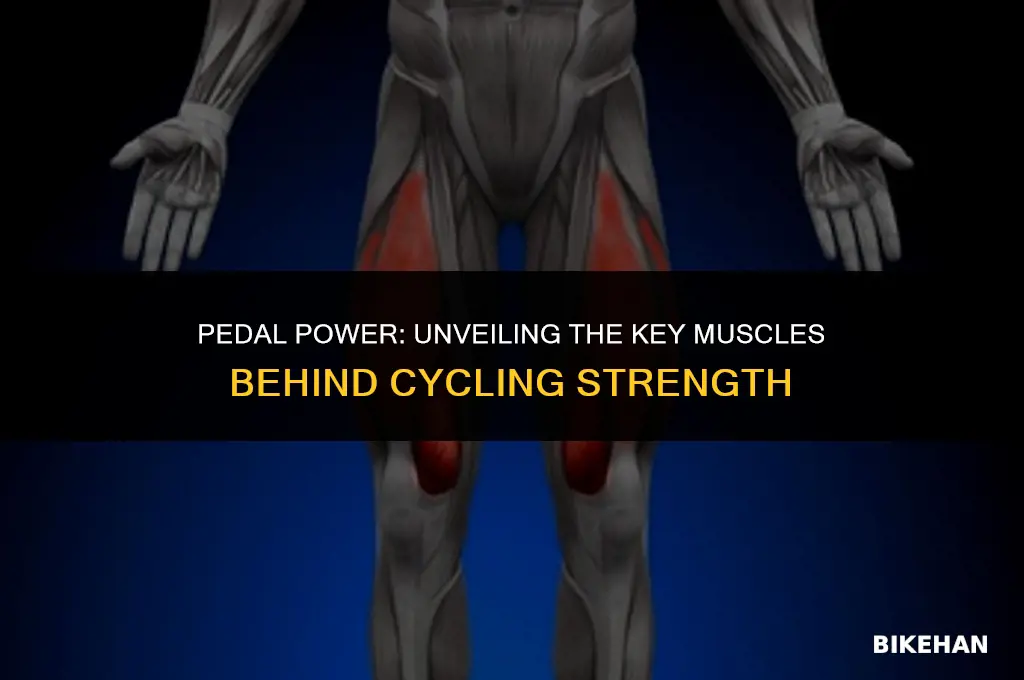
Riding a bike is an activity that engages multiple muscle groups, with the primary focus on the lower body. The most significant muscle used in cycling is the quadriceps femoris, located at the front of the thigh. This muscle group is responsible for the extension of the knee, which is a crucial movement in pedaling. Additionally, the hamstrings, glutes, and calf muscles play essential roles in the cycling motion. The core muscles, including the abdominals and lower back, are also engaged to maintain stability and balance while riding. Understanding which muscles are utilized during cycling can help in designing effective training programs and improving overall performance.
Explore related products


What You'll Learn
- Quadriceps: These front thigh muscles are crucial for pedaling, especially when going uphill or accelerating
- Hamstrings: Located at the back of the thigh, hamstrings help in bending the knees and maintaining a smooth pedal stroke
- Glutes: The gluteal muscles, including the gluteus maximus, provide power and stability during cycling, particularly when standing on the pedals
- Calves: While not the primary movers, calf muscles assist in pushing down on the pedals and maintaining proper foot positioning
- Core Muscles: Engaging the abdominals and lower back muscles helps maintain balance, stability, and proper posture while riding

Quadriceps: These front thigh muscles are crucial for pedaling, especially when going uphill or accelerating
The quadriceps, a group of four muscles located at the front of the thigh, play a pivotal role in cycling. These muscles are essential for extending the knee, which is a fundamental movement in pedaling. When you push down on the pedals, your quadriceps contract to straighten your leg, propelling the bike forward. This action is particularly critical when tackling uphill climbs or accelerating, as it requires greater force and endurance from these muscles.
To effectively engage your quadriceps while cycling, it's important to maintain proper form and technique. This includes keeping your knees aligned over your ankles, avoiding leaning too far forward or backward, and using a smooth, consistent pedaling motion. Additionally, incorporating interval training and hill repeats into your cycling routine can help strengthen your quadriceps and improve your overall performance on the bike.
In terms of injury prevention, it's crucial to warm up properly before cycling and to stretch your quadriceps after your ride. This can help reduce the risk of strains and other injuries. Furthermore, ensuring that your bike is properly fitted to your body can minimize unnecessary strain on your quadriceps and other muscles.
Overall, the quadriceps are a key muscle group for cyclists, and focusing on their strength and endurance can significantly enhance your cycling experience and performance. By understanding the role of these muscles and implementing targeted training and recovery strategies, you can optimize your cycling efficiency and reduce the risk of injury.
Exploring J. Garcia's Moto Bike Preferences: A Comprehensive Guide
You may want to see also
Explore related products


Hamstrings: Located at the back of the thigh, hamstrings help in bending the knees and maintaining a smooth pedal stroke
The hamstrings, a group of three muscles located at the back of the thigh, play a crucial role in cycling. These muscles are responsible for bending the knees, which is an essential part of the pedaling motion. When you push down on the pedals, your hamstrings contract to extend your legs, and when you pull up, they relax to allow your knees to bend. This continuous cycle of contraction and relaxation helps maintain a smooth and efficient pedal stroke.
In addition to their role in pedaling, the hamstrings also contribute to overall stability and balance while riding a bike. They help to keep your knees aligned with your hips and ankles, preventing excessive side-to-side movement that could lead to inefficiency or injury. Furthermore, strong hamstrings can aid in maintaining proper posture on the bike, reducing the risk of back pain and other discomforts associated with long rides.
To optimize your cycling performance and reduce the risk of injury, it's essential to keep your hamstrings strong and flexible. This can be achieved through a combination of regular cycling, strength training exercises, and stretching routines. Strength training exercises such as leg curls, deadlifts, and squats can help build hamstring strength, while stretching exercises like the seated hamstring stretch and the standing hamstring stretch can improve flexibility.
Incorporating these exercises into your training regimen can lead to several benefits. Stronger hamstrings can improve your power output on the bike, allowing you to ride faster and more efficiently. Increased flexibility can reduce the risk of strains and pulls, keeping you on the bike and off the sidelines. Additionally, a well-conditioned hamstring group can contribute to better overall lower body strength and stability, which can translate to improved performance in other activities and sports.
In conclusion, the hamstrings are a vital muscle group for cyclists, playing a key role in pedaling, stability, and overall performance. By focusing on strengthening and stretching these muscles, cyclists can enhance their riding experience, reduce the risk of injury, and achieve better results in their cycling endeavors.
Best Motorcycles for Farm and Ranch Work: A Comprehensive Guide
You may want to see also
Explore related products


Glutes: The gluteal muscles, including the gluteus maximus, provide power and stability during cycling, particularly when standing on the pedals
The gluteal muscles, prominently featuring the gluteus maximus, play a crucial role in cycling, especially when standing on the pedals. This muscle group is responsible for extending the hip joint, which is essential for propelling the bike forward with each pedal stroke. When cyclists stand, the demand on the glutes increases significantly as they must generate more force to maintain balance and power the bicycle.
In addition to providing power, the glutes also contribute to stability during cycling. The gluteus maximus helps to keep the pelvis level and stable, which is vital for maintaining proper posture and preventing excessive side-to-side movement. This stability is particularly important when navigating uneven terrain or making sharp turns, as it allows cyclists to maintain control and avoid accidents.
To optimize cycling performance and reduce the risk of injury, it is essential to strengthen and condition the gluteal muscles. Exercises such as squats, lunges, and deadlifts can help build the necessary strength and endurance. Additionally, incorporating plyometric exercises like jump squats and box jumps can improve explosive power, which is beneficial for sprinting and climbing.
Proper cycling technique also plays a role in engaging the glutes effectively. Cyclists should focus on driving through the pedals with their hips and glutes, rather than relying solely on their quadriceps. This can be achieved by maintaining a smooth, circular pedal stroke and avoiding excessive bouncing or jerking movements. By engaging the glutes properly, cyclists can improve their efficiency, power, and overall performance on the bike.
Unveiling the Strength: Metals That Power Your Bicycle's Performance
You may want to see also
Explore related products


Calves: While not the primary movers, calf muscles assist in pushing down on the pedals and maintaining proper foot positioning
While the quadriceps and hamstrings are often the first muscles that come to mind when thinking about cycling, the calves play a crucial, albeit less prominent, role. The calf muscles, comprising the gastrocnemius and soleus, are essential for maintaining proper foot positioning on the pedals and assisting in the downward push during the power phase of the pedal stroke.
During the power phase, which is the part of the pedal stroke where the cyclist pushes down on the pedals to generate force, the calves help to stabilize the foot and ankle. This stabilization is vital for ensuring that the force generated by the quadriceps and hamstrings is efficiently transferred to the pedals. Without the calves, the foot might slip off the pedal or the ankle might buckle, leading to a loss of power and potentially causing injury.
In addition to their role in the power phase, the calves are also important for maintaining proper foot positioning throughout the entire pedal stroke. Proper foot positioning is crucial for maximizing efficiency and minimizing the risk of injury. The calves help to keep the foot in a neutral position, preventing it from rolling inward or outward, which can lead to strain on the ankle and other parts of the lower leg.
One common mistake that cyclists make is neglecting to engage their calves during the pedal stroke. This can lead to a number of issues, including decreased efficiency, increased risk of injury, and muscle imbalances. To avoid these problems, cyclists should focus on actively engaging their calves during the power phase and maintaining proper foot positioning throughout the entire pedal stroke.
In conclusion, while the calves may not be the primary movers in cycling, they play a vital role in assisting the quadriceps and hamstrings and maintaining proper foot positioning. By focusing on engaging the calves and maintaining proper foot positioning, cyclists can improve their efficiency, reduce their risk of injury, and achieve better overall performance.
Unfolding the Secrets: Materials Behind Foldable Bikes
You may want to see also
Explore related products



Core Muscles: Engaging the abdominals and lower back muscles helps maintain balance, stability, and proper posture while riding
Engaging the core muscles, which include the abdominals and lower back muscles, is crucial for maintaining balance, stability, and proper posture while riding a bike. These muscles act as the body's natural corset, providing support and control during various physical activities, including cycling. When riding a bike, the core muscles help to stabilize the spine, maintain an upright posture, and facilitate smooth and efficient pedal strokes.
To effectively engage the core muscles while riding, cyclists should focus on maintaining a neutral spine position, avoiding excessive leaning forward or backward. This can be achieved by keeping the shoulders relaxed, the chest open, and the gaze directed forward. Additionally, cyclists should avoid gripping the handlebars too tightly, as this can cause tension in the upper body and detract from core engagement.
One effective way to strengthen the core muscles for cycling is through targeted exercises such as planks, bridges, and Russian twists. These exercises help to build endurance and stability in the core, which can translate to improved performance and reduced risk of injury while riding. Incorporating these exercises into a regular training routine can help cyclists develop a stronger, more efficient core for better overall riding experience.
In addition to targeted core exercises, cyclists can also engage their core muscles during regular rides by focusing on proper breathing techniques. Deep, controlled breathing helps to activate the core muscles and maintain stability while riding. Cyclists should aim to take slow, steady breaths, inhaling through the nose and exhaling through the mouth, while keeping the core muscles engaged throughout the ride.
Overall, engaging the core muscles while riding a bike is essential for maintaining balance, stability, and proper posture. By focusing on proper technique, incorporating targeted exercises into training routines, and practicing mindful breathing, cyclists can develop a stronger, more efficient core for a better overall riding experience.
Exploring the Power Behind Specialized E-Bikes: A Motor Guide
You may want to see also
Frequently asked questions
When riding a bike, the primary muscle used is the quadriceps, which is located in the front of your thigh. This muscle is responsible for the extension of the knee, which is the main motion when pedaling.
Yes, in addition to the quadriceps, cycling also engages the hamstrings, glutes, and calf muscles. The hamstrings help in pulling the pedal back up, while the glutes provide power and stability. The calf muscles are used to push down on the pedal.
To strengthen your cycling muscles, you can incorporate exercises such as squats, lunges, and leg presses into your workout routine. These exercises target the quadriceps, hamstrings, and glutes. Additionally, cycling itself is a great way to build endurance and strength in these muscles.