Matthew Brooks
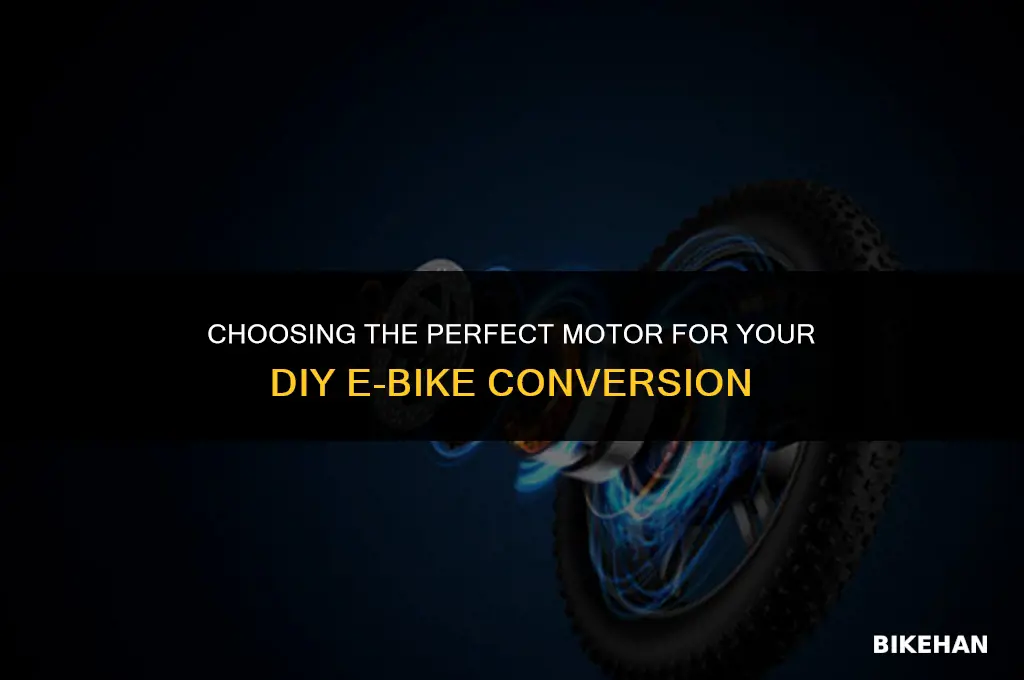
Choosing the right motor for an electric bike (e-bike) is crucial as it directly impacts the performance, efficiency, and overall riding experience. There are several types of motors available, each with its own advantages and disadvantages. Hub motors, for instance, are commonly found in the wheels and are known for their simplicity and ease of installation. They provide a smooth ride and are often more affordable. However, they can add weight to the wheels, affecting handling and acceleration. Mid-drive motors, on the other hand, are mounted near the pedals and offer better weight distribution and more natural pedaling feel. They tend to be more efficient and powerful, making them suitable for hilly terrains and longer distances. When selecting a motor, consider factors such as power output, torque, efficiency, weight, and compatibility with your bike's frame and battery system. Additionally, think about your riding needs and preferences, such as the type of terrain you'll be riding on and the level of assistance you desire. By carefully evaluating these factors, you can choose a motor that best suits your e-bike project and enhances your cycling experience.
Explore related products


What You'll Learn
- Motor Types: Brushless DC, geared hub, direct drive, mid-drive, and stepper motors
- Power and Torque: Consider wattage (250W, 500W, 750W, 1000W+) and torque (80Nm, 120Nm)
- Battery Compatibility: Ensure motor voltage matches battery voltage (36V, 48V)
- Controller and Throttle: Choose compatible controllers and throttle types (Hall effect, potentiometer)
- Mounting and Wiring: Plan for motor mounting (hub, frame) and proper wiring (phase wires, power cables)

Motor Types: Brushless DC, geared hub, direct drive, mid-drive, and stepper motors
Brushless DC motors are a popular choice for e-bikes due to their efficiency, reliability, and low maintenance requirements. These motors use electronic commutation to control the flow of electricity, resulting in smoother operation and longer lifespan compared to brushed motors. They are also quieter and produce less vibration, enhancing the overall riding experience.
Geared hub motors, on the other hand, are known for their high torque output and ability to handle steep inclines. These motors are typically integrated into the rear wheel hub and use a planetary gear system to increase torque while reducing the motor's size and weight. This design makes them ideal for off-road and mountain e-bikes, where power and traction are crucial.
Direct drive motors offer a simpler and more streamlined design, as they do not require a gearbox or additional components. These motors are mounted directly to the wheel hub and provide a smooth, quiet ride. However, they tend to have lower torque output compared to geared hub motors, making them more suitable for urban commuting and flat terrain.
Mid-drive motors are positioned in the middle of the bike frame, between the pedals and the rear wheel. This placement allows for better weight distribution and improved handling, as the motor's weight is not concentrated on the rear wheel. Mid-drive motors also tend to have higher efficiency and better thermal management, as they are not confined to the wheel hub.
Stepper motors, while less common in e-bikes, offer precise control and positioning capabilities. These motors use a series of electromagnetic coils to create a rotating magnetic field, which interacts with a rotor to produce movement. Stepper motors are ideal for applications requiring precise speed and position control, such as in automated systems and robotics.
When choosing a motor for an e-bike, it's essential to consider factors such as power output, torque, efficiency, weight, and intended use. Brushless DC motors are a versatile option suitable for various applications, while geared hub motors excel in high-torque situations. Direct drive motors offer simplicity and smoothness, mid-drive motors provide balanced weight distribution, and stepper motors offer precise control. The right motor choice will depend on the specific requirements and preferences of the e-bike rider.
Understanding Shark Toothing on Bikes: A Comprehensive Guide
You may want to see also
Explore related products


Power and Torque: Consider wattage (250W, 500W, 750W, 1000W+) and torque (80Nm, 120Nm)
When selecting a motor for an e-bike, understanding the relationship between power and torque is crucial. Power, measured in watts (W), determines the speed at which the motor can operate, while torque, measured in newton-meters (Nm), indicates the motor's ability to overcome resistance and climb hills. A higher wattage motor will generally allow for faster speeds, but it may not necessarily provide the necessary torque for steep inclines or heavy loads. Conversely, a motor with higher torque may not reach the same top speeds but will excel in challenging terrain.
For a standard e-bike used primarily on flat terrain or gentle hills, a 250W motor with around 80Nm of torque is often sufficient. This setup provides a good balance between speed and efficiency, making it ideal for commuting or leisurely rides. However, if the e-bike will be used for more demanding applications, such as off-road trails or steep hills, a more powerful motor may be necessary. A 500W motor with 120Nm of torque, for example, would offer significantly better performance in these scenarios, allowing the rider to tackle challenging terrain with greater ease.
It's also important to consider the weight and efficiency of the motor, as these factors can impact the overall performance and range of the e-bike. A lighter motor will contribute to a lower total weight for the bike, which can improve handling and make it easier to transport. Additionally, a more efficient motor will require less energy to operate, potentially extending the range of the e-bike on a single charge.
Ultimately, the choice of motor will depend on the specific needs and preferences of the rider. By carefully considering factors such as power, torque, weight, and efficiency, it's possible to select a motor that provides the ideal balance of performance and practicality for any given e-bike application.
Exploring Modern Street Bikes That Still Embrace Carburetors
You may want to see also
Explore related products


Battery Compatibility: Ensure motor voltage matches battery voltage (36V, 48V)
Ensuring battery compatibility is crucial when selecting a motor for an e-bike. The motor voltage must precisely match the battery voltage to guarantee optimal performance and safety. For instance, a 36V motor should only be paired with a 36V battery, and the same applies to 48V systems. Mismatching voltages can lead to inefficient power transfer, reduced battery life, and even potential damage to the motor or battery.
To determine the correct battery voltage for your e-bike motor, start by checking the motor's specifications. These details are typically provided in the product manual or on the manufacturer's website. Look for the voltage rating, which is usually denoted in volts (V). Once you have this information, you can select a compatible battery. It's important to note that some motors may have a voltage range they can operate within, but for best results, aim to match the voltage exactly.
When sourcing a battery, consider factors such as capacity, weight, and mounting configuration in addition to voltage. The battery's capacity, measured in ampere-hours (Ah), will determine the range of your e-bike. Higher capacity batteries are heavier but provide longer distances between charges. Ensure the battery's mounting configuration is compatible with your e-bike frame to avoid any installation issues.
In summary, battery compatibility is a critical aspect of e-bike motor selection. Always match the motor voltage with the battery voltage to ensure efficient operation and prolong the life of your e-bike's components. By carefully considering voltage, capacity, and mounting, you can create a well-balanced and high-performing e-bike system.
Exploring J. Garcia's Moto Bike Preferences: A Comprehensive Guide
You may want to see also
Explore related products




Controller and Throttle: Choose compatible controllers and throttle types (Hall effect, potentiometer)
When selecting a controller and throttle for an e-bike, compatibility is key. The controller acts as the brain of the e-bike, managing power delivery from the battery to the motor, while the throttle is the interface through which the rider controls speed. There are two main types of throttles: Hall effect and potentiometer.
Hall effect throttles are more common in modern e-bikes due to their durability and reliability. They use a magnetic field to detect the position of the throttle, which is then translated into a signal for the controller. This type of throttle is less prone to wear and tear, as there are no moving parts that can break down over time.
Potentiometer throttles, on the other hand, use a variable resistor to measure the position of the throttle. While they are less expensive and easier to install, they are more susceptible to damage from dirt, moisture, and physical impact. Additionally, potentiometer throttles can wear out over time, leading to inconsistent performance.
When choosing a controller, it's important to consider the power rating and compatibility with the motor and battery. The controller must be able to handle the maximum current draw of the motor and match the voltage of the battery. It's also crucial to ensure that the controller is compatible with the throttle type, as some controllers are designed specifically for Hall effect or potentiometer throttles.
In summary, selecting the right controller and throttle for an e-bike requires careful consideration of compatibility, durability, and performance. By choosing the appropriate components, riders can ensure a smooth and reliable riding experience.
Exploring the High-Performance Materials Behind Sport Bike Fairings
You may want to see also
Explore related products


Mounting and Wiring: Plan for motor mounting (hub, frame) and proper wiring (phase wires, power cables)
When selecting a motor for an e-bike, the mounting and wiring process is a critical aspect that requires careful planning and execution. The motor mounting involves choosing between a hub motor or a frame motor, each with its own set of advantages and disadvantages. Hub motors are typically easier to install as they are mounted directly onto the wheel hub, while frame motors require more complex mounting brackets and alignment. However, frame motors can offer better performance and efficiency, especially for high-power applications.
Proper wiring is essential for the safe and efficient operation of the e-bike motor. This involves connecting the phase wires from the motor to the controller, as well as routing the power cables from the battery to the controller and motor. It is crucial to use the correct gauge of wire to handle the current draw of the motor, and to ensure that all connections are secure and properly insulated. Failure to do so can result in overheating, electrical shorts, or even fires.
In addition to the motor and wiring, it is important to consider the overall system integration. This includes ensuring that the motor, controller, battery, and other components are compatible with each other, and that the system is properly balanced and configured for optimal performance. This may involve programming the controller, setting up the battery management system, and fine-tuning the motor parameters.
When planning the mounting and wiring process, it is also important to consider the maintenance and repair aspects. Easy access to the motor and wiring components can make it simpler to diagnose and fix issues, and can also extend the lifespan of the e-bike. This may involve designing the frame and mounting system to allow for easy removal and replacement of components, as well as routing the wiring in a way that minimizes the risk of damage or wear.
Finally, it is essential to follow all relevant safety standards and regulations when mounting and wiring an e-bike motor. This includes complying with local electrical codes, using approved components, and ensuring that the system is properly grounded and protected from electrical faults. By taking these factors into account, it is possible to create a safe, efficient, and reliable e-bike motor system that meets the specific needs of the rider.
Pedal Power: Unveiling the Key Muscles Engaged in Cycling
You may want to see also