Matthew Brooks
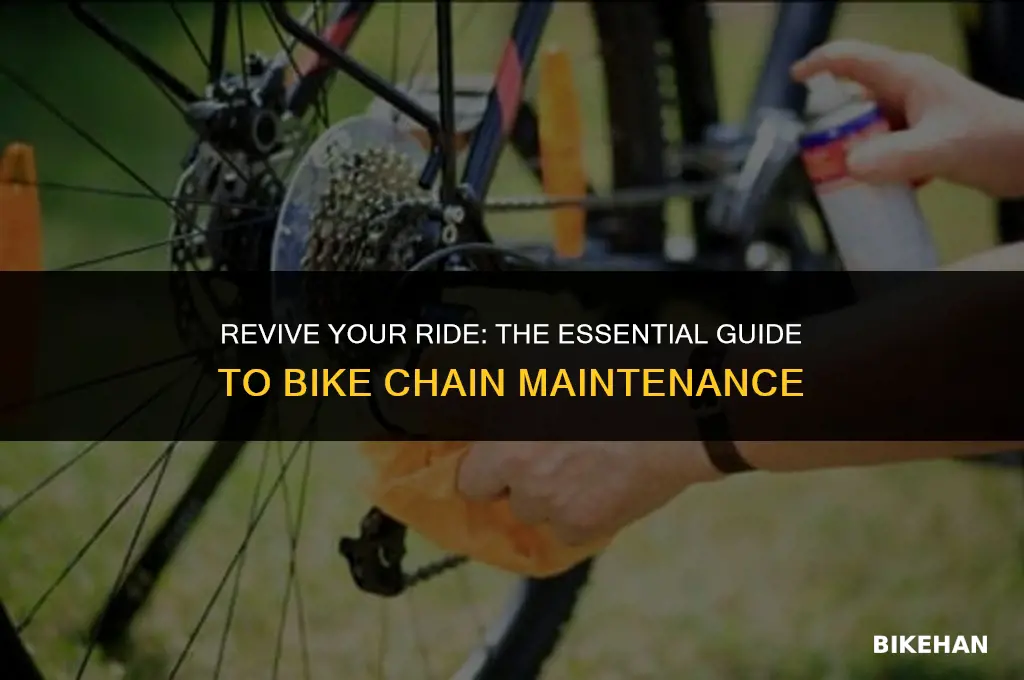
Servicing a bike chain is an essential part of bicycle maintenance that ensures smooth and efficient riding. Over time, a bike chain can accumulate dirt, grime, and wear, which can lead to decreased performance and even damage to the chain or other components. Regular cleaning and lubrication are crucial to prolonging the life of your chain and maintaining optimal function. In this guide, we'll walk you through the steps to properly service your bike chain, including cleaning, lubricating, and checking for wear. By following these simple steps, you can keep your bike running smoothly and enjoy a more pleasant riding experience.
Explore related products


What You'll Learn
- Inspecting the Chain: Check for wear, damage, and proper lubrication. Replace if necessary
- Cleaning the Chain: Use a degreaser and brush to remove dirt and grime. Rinse thoroughly
- Lubricating the Chain: Apply lubricant evenly while slowly rotating the pedals. Wipe off excess
- Adjusting Chain Tension: Ensure proper tension by adjusting the derailleur or chain tensioner. Test by pedaling
- Maintaining Chain Alignment: Check that the chain runs straight through the pulleys. Adjust if misaligned

Inspecting the Chain: Check for wear, damage, and proper lubrication. Replace if necessary
Begin by closely examining the bike chain for signs of wear and damage. Look for any links that are bent, twisted, or stretched out of shape. These can be indicators of a chain that has seen better days and may need replacing. Additionally, check for any signs of rust or corrosion, as these can weaken the chain and lead to breakage.
Next, assess the lubrication of the chain. A well-lubricated chain should have a slight sheen to it, but shouldn't be dripping with oil. If the chain appears dry or squeaky, it's likely in need of lubrication. Use a high-quality bike chain lubricant and apply it sparingly to each link, ensuring that it penetrates the rollers and pins.
When inspecting the chain, it's also important to check the tension. A chain that is too loose can slip off the gears, while a chain that is too tight can cause excessive wear on both the chain and the gears. Use a chain tension gauge to ensure that the chain is at the proper tension.
If you find that the chain is worn, damaged, or improperly lubricated, it's best to replace it. A new chain will not only improve the performance of your bike, but it will also help to prevent damage to the gears and other components. When replacing the chain, be sure to use one that is the correct length and pitch for your bike.
In conclusion, regular inspection and maintenance of your bike chain is crucial for ensuring the longevity and performance of your bike. By checking for wear, damage, and proper lubrication, you can catch potential problems early and prevent them from causing more serious issues down the road.
Mastering the Chain: A Guide to Running a Schwinn Speed Bike
You may want to see also
Explore related products




Cleaning the Chain: Use a degreaser and brush to remove dirt and grime. Rinse thoroughly
To effectively clean a bike chain, it's essential to use the right tools and techniques. A degreaser and brush are the primary tools needed for this task. The degreaser should be applied generously to the chain, ensuring that it penetrates the links and rollers. A brush with stiff bristles is then used to scrub the chain, focusing on the areas with the most dirt and grime buildup. It's important to rotate the pedals slowly while brushing to ensure that the entire chain is cleaned evenly.
After scrubbing, the chain should be rinsed thoroughly with clean water. This step is crucial to remove any remaining degreaser and dirt from the chain. Failure to rinse properly can lead to the degreaser attracting more dirt and grime, ultimately causing more harm than good. Some cyclists prefer to use a dedicated chain cleaning device, which can make the process more efficient and effective. These devices typically use a combination of brushes and rollers to clean the chain as it's rotated through the device.
When cleaning the chain, it's important to avoid using harsh chemicals or abrasive materials that could damage the chain or the bike's components. Additionally, it's recommended to clean the chain in a well-ventilated area to avoid inhaling any fumes from the degreaser. Regular chain cleaning is an essential part of bike maintenance, as it helps to prolong the life of the chain and improve the overall performance of the bike.
In summary, cleaning a bike chain requires the use of a degreaser and brush to remove dirt and grime, followed by a thorough rinse with clean water. This process should be done regularly to maintain the health and performance of the bike chain. By following these steps and using the right tools, cyclists can ensure that their bikes are running smoothly and efficiently.
Mastering the Art of Repinning Your Bike Chain: A Step-by-Step Guide
You may want to see also
Explore related products


Lubricating the Chain: Apply lubricant evenly while slowly rotating the pedals. Wipe off excess
To ensure optimal performance and longevity of your bike chain, proper lubrication is crucial. Begin by selecting a high-quality lubricant designed specifically for bicycle chains. Avoid using household oils or greases, as they can attract dirt and grime, leading to a buildup that can harm your chain.
Before applying the lubricant, it's essential to clean the chain thoroughly. Use a degreaser and a brush to remove any existing lubricant, dirt, or debris. Once the chain is clean and dry, you can proceed with the lubrication process.
Apply the lubricant evenly while slowly rotating the pedals in a clockwise direction. This ensures that the lubricant penetrates the rollers and pins of the chain links. Be cautious not to over-lubricate, as excess lubricant can attract dirt and lead to a buildup. A good rule of thumb is to use a small amount of lubricant, roughly the size of a pea, for each roller.
After applying the lubricant, allow it to sit for a few minutes to penetrate the chain links. Then, use a clean rag or paper towel to wipe off any excess lubricant. This step is crucial, as excess lubricant can lead to a buildup of dirt and grime, which can harm your chain.
Regularly lubricating your bike chain is an essential part of bike maintenance. By following these steps, you can ensure that your chain runs smoothly and efficiently, reducing wear and tear and extending its lifespan.
Fix Your Ride: A Step-by-Step Guide to Replacing a Broken Bike Chain
You may want to see also
Explore related products


Adjusting Chain Tension: Ensure proper tension by adjusting the derailleur or chain tensioner. Test by pedaling
To adjust the chain tension on a bicycle, you'll need to focus on the derailleur or chain tensioner, depending on your bike's setup. The derailleur is the mechanism that shifts the chain across different gears on the cassette, while the chain tensioner maintains consistent tension across the chain. Proper tension is crucial for smooth gear shifting and to prevent the chain from slipping or derailing.
Start by checking the current tension of your chain. You can do this by gently pulling on the chain at the midpoint between the front and rear sprockets. The chain should have a small amount of slack, but not so much that it hangs loosely. If the chain is too loose, it's time to make adjustments.
For bikes with a derailleur, you'll need to locate the barrel adjuster, which is typically found where the derailleur cable enters the derailleur body. Turn the barrel adjuster clockwise to increase tension and counterclockwise to decrease it. Make small adjustments and frequently check the chain tension by pedaling the bike slowly. You're aiming for a smooth, consistent feel without any binding or slipping.
If your bike has a chain tensioner, the process is slightly different. You'll need to locate the tensioner bolt, which is usually found on the frame near the rear wheel. Turn the bolt clockwise to increase tension and counterclockwise to decrease it. As with the derailleur, make small adjustments and test the chain tension by pedaling.
Once you've achieved the proper tension, it's important to test the bike's gear shifting to ensure everything is working smoothly. Pedal the bike and shift through all the gears, paying attention to any unusual noises or resistance. If you encounter any issues, you may need to make further adjustments to the derailleur or chain tensioner.
Remember, proper chain tension is essential for the longevity and performance of your bike's drivetrain. Regularly checking and adjusting the tension can help prevent premature wear and tear on your chain and sprockets, and ensure a safe and enjoyable riding experience.
Effortless Cycling: Mastering the Art of Replacing Your 10-Speed Bike Chain
You may want to see also
Explore related products


Maintaining Chain Alignment: Check that the chain runs straight through the pulleys. Adjust if misaligned
Misalignment of a bike chain can lead to inefficient pedaling, increased wear, and even safety hazards. To ensure your chain runs straight through the pulleys, start by visually inspecting the chain's path. Look for any signs of the chain rubbing against the frame or derailleur, which can cause misalignment. If you notice any issues, adjust the derailleur's limit screws to correct the chain's path.
Next, check the chain's tension. A loose chain can easily derail, while an overly tight chain can cause excessive wear on the pulleys and chainrings. Use a chain tension gauge to ensure the chain has the proper tension. If the tension is too high or too low, adjust the derailleur's barrel adjuster to fine-tune the chain's position.
Another common cause of misalignment is a bent or damaged chainring. Inspect the chainrings for any signs of wear or damage, and replace them if necessary. Additionally, make sure the chainrings are properly aligned with the frame's dropout. If the chainrings are misaligned, adjust the dropout's position or replace the chainrings.
Finally, lubricate the chain and pulleys to reduce friction and wear. Use a high-quality chain lubricant and apply it sparingly to the chain's rollers and pins. Wipe off any excess lubricant with a clean rag to prevent dirt and grime from accumulating.
By following these steps, you can ensure your bike chain is properly aligned, which will improve your bike's performance, reduce wear, and enhance your overall riding experience.
Revive Your Ride: The Complete Guide to Resetting Your Bike Chain
You may want to see also
Frequently asked questions
It's recommended to clean your bike chain every 100-200 miles, or more frequently if you ride in dirty or wet conditions. Regular cleaning helps prevent wear and ensures smooth operation.
For most riding conditions, a synthetic lubricant is best as it provides good protection against wear and doesn't attract dirt. Avoid using WD-40 or other petroleum-based lubricants, as they can cause the chain to wear out faster.
A bike chain should be replaced when it shows signs of significant wear, such as stretching or skipping links. You can measure the chain's elongation using a chain wear indicator tool. If the chain has stretched beyond 0.5%, it's time for a replacement.
To properly lube your bike chain, start by cleaning it thoroughly. Then, apply a small amount of lubricant to each roller while slowly rotating the pedals backward. Wipe off any excess lube with a clean rag to prevent dirt buildup.