Matthew Brooks
Finding the right dirt bike is crucial for both beginners and experienced riders. It involves considering several factors such as your skill level, the type of terrain you'll be riding on, your budget, and personal preferences. For beginners, it's important to start with a bike that's easy to handle and has a smaller engine. As you gain more experience, you can move on to more powerful bikes. The type of terrain you'll be riding on also plays a significant role in choosing the right dirt bike. For example, if you'll be riding on rough terrain, you'll need a bike with a longer suspension travel. On the other hand, if you'll be riding on smoother terrain, a shorter suspension travel will suffice. Your budget is another important factor to consider. Dirt bikes can range from a few hundred to several thousand dollars, so it's important to set a budget and stick to it. Finally, personal preferences such as the bike's weight, seat height, and overall design should also be taken into account. By considering these factors, you can find the right dirt bike that suits your needs and preferences.
Explore related products


What You'll Learn
- Determine Your Skill Level: Assess your experience and comfort with dirt biking to choose a suitable bike
- Consider Bike Size and Weight: Ensure the bike's dimensions and weight match your body size and strength for optimal control
- Engine Size and Power: Select an engine that fits your skill level and the type of terrain you'll be riding
- Suspension and Handling: Look for bikes with suspension systems that can handle the rough terrain you'll encounter
- Budget and Maintenance: Choose a bike that fits your budget and consider the cost of maintenance and repairs

Determine Your Skill Level: Assess your experience and comfort with dirt biking to choose a suitable bike
To determine your skill level in dirt biking, start by honestly evaluating your experience. Have you ridden a dirt bike before? If so, how often and on what types of terrain? Consider the challenges you've faced and overcome. If you're new to dirt biking, don't be discouraged; everyone starts somewhere. It's crucial to choose a bike that matches your current abilities to ensure both safety and enjoyment.
Next, assess your comfort level with different aspects of dirt biking. Are you confident in handling jumps, turns, and rough terrain? Do you feel secure when riding at higher speeds? Your comfort level will influence the type of bike that's right for you. For instance, beginners might prefer a bike with a lower seat height and a more forgiving suspension, while experienced riders may opt for a more aggressive setup.
Consider the frequency and intensity of your dirt biking sessions. If you ride regularly and push yourself to improve, you might benefit from a higher-performance bike. On the other hand, if dirt biking is a casual hobby, a more entry-level or mid-range bike could be a better fit.
It's also important to think about your physical fitness and endurance. Dirt biking can be physically demanding, and having a bike that's too powerful or heavy for your fitness level can lead to fatigue and potential injuries. Conversely, a bike that's too light or underpowered might not provide the challenge you need to improve your skills.
Finally, don't forget to factor in your budget. Dirt bikes can vary significantly in price, and it's essential to choose one that fits within your financial means. Remember that owning a dirt bike also comes with additional costs, such as maintenance, gear, and riding fees.
By carefully assessing your experience, comfort, frequency of riding, physical fitness, and budget, you can narrow down your options and find a dirt bike that's perfectly suited to your needs and skill level.
Decoding the Age of Your Dirt Bike: A Comprehensive Guide
You may want to see also
Explore related products


Consider Bike Size and Weight: Ensure the bike's dimensions and weight match your body size and strength for optimal control
Choosing the right dirt bike involves a careful consideration of size and weight to ensure optimal control and safety. The dimensions of the bike, including seat height, handlebar reach, and overall length, should be proportional to the rider's body size. A bike that is too large can be unwieldy and difficult to maneuver, especially for younger or less experienced riders. Conversely, a bike that is too small may not provide the necessary stability and could lead to discomfort during longer rides.
Weight is another critical factor, as it directly impacts the bike's handling and the rider's ability to control it. A heavier bike may be more stable at high speeds but can be challenging to lift and maneuver in tight spaces. Lighter bikes, on the other hand, are easier to handle and can be more responsive to the rider's inputs. However, they may not provide the same level of stability as their heavier counterparts.
To determine the appropriate size and weight, riders should consider their own physical attributes, such as height, weight, and strength. It's essential to sit on the bike and test its ergonomics, ensuring that the feet can touch the ground comfortably and the arms can reach the handlebars without strain. Additionally, riders should assess their skill level and the type of riding they plan to do, as different styles of dirt biking may require different bike characteristics.
Manufacturers often provide guidelines for bike sizing based on rider height and weight, which can be a useful starting point. However, these guidelines are not definitive, and individual preferences may vary. It's advisable to test ride multiple bikes to find the one that feels most comfortable and responsive.
In conclusion, selecting a dirt bike that matches the rider's size and strength is crucial for optimal control and enjoyment. By carefully considering the bike's dimensions and weight, riders can find a bike that suits their needs and abilities, ultimately leading to a safer and more rewarding riding experience.
Effortless Dirt Bike Tire Removal: A Step-by-Step Guide
You may want to see also
Explore related products


Engine Size and Power: Select an engine that fits your skill level and the type of terrain you'll be riding
Selecting the right engine size and power for your dirt bike is crucial as it directly impacts your riding experience and safety. Beginners should opt for smaller engines, typically ranging from 125cc to 250cc, which offer a good balance of power and control. These engines are less intimidating and allow new riders to develop their skills without being overwhelmed by excessive power. As you progress and gain more experience, you can consider upgrading to a more powerful engine.
For intermediate riders, engines in the 250cc to 450cc range are often ideal. These bikes provide a significant increase in power and performance, allowing riders to tackle more challenging terrain and improve their riding techniques. However, it's essential to ensure that you have the necessary skills and physical strength to handle the increased power output.
Advanced riders may prefer engines ranging from 450cc to 500cc or even larger. These high-performance bikes are designed for experienced riders who can handle the intense power and speed. They are typically used for competitive racing or tackling extremely challenging off-road conditions.
When selecting an engine size, it's also important to consider the type of terrain you'll be riding. For example, if you primarily ride on tight, technical trails, a smaller engine with more torque may be preferable. Conversely, if you ride on open, fast-flowing tracks, a larger engine with more horsepower may be more suitable.
Ultimately, the key is to choose an engine that matches your skill level and riding style. It's always better to start with a smaller engine and gradually move up as your skills improve, rather than starting with a bike that's too powerful and potentially dangerous for your experience level.
Mastering the Semi-Automatic Dirt Bike: A Beginner's Guide
You may want to see also
Explore related products


Suspension and Handling: Look for bikes with suspension systems that can handle the rough terrain you'll encounter
When selecting a dirt bike, the suspension system is a critical component that can significantly impact your riding experience, especially on rough terrain. A robust suspension system absorbs shocks, maintains tire contact with the ground, and provides better control and stability. Here’s what to consider:
First, evaluate the type of suspension system. Most dirt bikes feature a telescopic fork at the front and a mono-shock absorber at the rear. The front fork should have adjustable compression and rebound settings to fine-tune the bike’s response to bumps and jumps. The rear mono-shock should also be adjustable, allowing you to customize the preload, compression, and rebound to your riding style and the terrain you’ll encounter.
Next, consider the travel of the suspension. Travel refers to the distance the suspension can move, and it’s essential for handling rough terrain. A longer travel suspension can absorb larger bumps and provide a smoother ride, but it may also make the bike less responsive on smoother surfaces. Conversely, a shorter travel suspension is more suitable for smoother trails but may not handle large obstacles as well.
Additionally, the quality of the suspension components matters. Look for high-quality materials and construction, as well as reputable brands known for their performance and durability. Aftermarket upgrades can also be an option if you find that the stock suspension doesn’t meet your needs.
Finally, test ride the bike to assess how the suspension feels under real-world conditions. Pay attention to how the bike handles bumps, jumps, and uneven surfaces. Does it maintain traction and control? Does it feel comfortable and responsive? By evaluating the suspension system carefully, you can find a dirt bike that’s well-suited to your riding style and the terrain you’ll encounter.
Mastering the Art of Road Riding on a Dirt Bike
You may want to see also
Explore related products


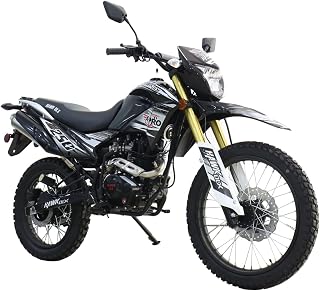


Budget and Maintenance: Choose a bike that fits your budget and consider the cost of maintenance and repairs
When selecting a dirt bike, it's crucial to consider your budget and the ongoing costs of maintenance and repairs. Dirt bikes can range significantly in price, from a few hundred to several thousand dollars, depending on factors like brand, model, and features. To find a bike that fits your budget, start by researching different models and their prices. Look for reviews and comparisons to get an idea of the best value for your money.
Once you've narrowed down your options, consider the cost of maintenance and repairs. Dirt bikes require regular maintenance, such as oil changes, tire replacements, and brake adjustments. The cost of these services can add up quickly, so it's important to factor them into your budget. Additionally, consider the availability and cost of replacement parts. Some bikes may have parts that are more expensive or harder to find than others.
Another important aspect to consider is the bike's reliability. A bike that is more reliable may cost more upfront but could save you money in the long run by requiring fewer repairs. Look for information on the bike's build quality, materials used, and common issues that owners have experienced.
If you're new to dirt biking, it may be beneficial to start with a less expensive bike and learn the basics before investing in a more costly model. This will allow you to gain experience and determine if dirt biking is a hobby you want to pursue long-term.
In conclusion, when choosing a dirt bike, it's essential to consider not only the initial purchase price but also the ongoing costs of maintenance and repairs. By doing your research and factoring in these costs, you can find a bike that fits your budget and provides a reliable and enjoyable riding experience.
Mastering the Art of Enduro on Your Dirt Bike: Tips and Tricks
You may want to see also
Frequently asked questions
When selecting a dirt bike, consider factors such as your skill level, the type of terrain you'll be riding on, your body weight, and your budget. Beginners should opt for bikes with lower power and simpler controls, while experienced riders can choose more powerful models. The suspension, tire tread, and overall build quality are also crucial for handling different terrains.
To find the right size dirt bike, you'll need to consider both your height and weight. Most dirt bikes come with size charts that correlate engine size with rider height and weight. Generally, taller and heavier riders will require larger bikes with more powerful engines. You can also visit a local dealership to sit on different models and see which one feels most comfortable and manageable.
Dirt bikes and motocross bikes are both off-road motorcycles, but they have some key differences. Dirt bikes are designed for a variety of off-road conditions and are typically more versatile, with features like longer suspension travel and more durable construction. Motocross bikes, on the other hand, are specifically built for racing on closed-circuit tracks and have lighter frames, more powerful engines, and specialized suspension for jumps and tight turns.
Whether to buy a new or used dirt bike depends on your budget and preferences. New bikes come with the latest features and technology, and you'll have the peace of mind knowing it hasn't been previously owned. However, used bikes can be a more affordable option, especially for beginners. Just be sure to inspect the bike thoroughly for any signs of wear or damage, and consider having a mechanic check it out before making a purchase.
Regular maintenance is essential to keep your dirt bike running smoothly and safely. This includes tasks like checking and changing the oil, cleaning and lubricating the chain, inspecting the brakes, and replacing worn tires. You'll also need to clean the bike after each ride to remove dirt and debris that can cause damage over time. It's a good idea to familiarize yourself with your bike's maintenance schedule and to keep up with routine checks to prevent more serious issues down the line.