Lauren Kennedy
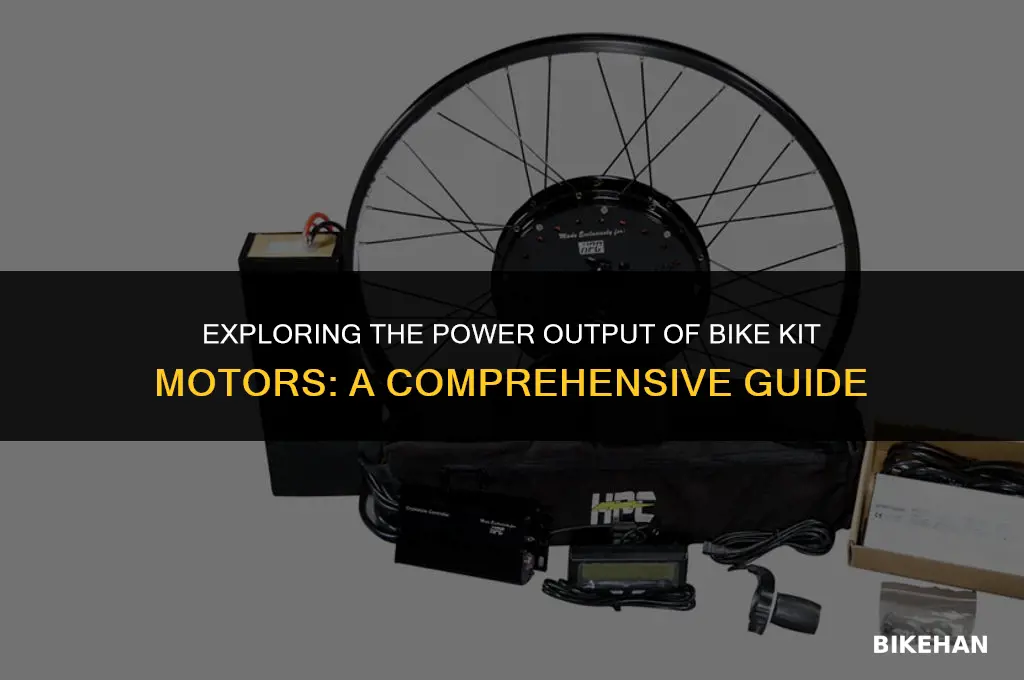
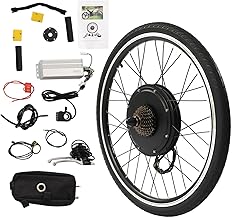
Bike kit motors are electric motors designed to be installed on bicycles to provide pedal assistance. The power output of these motors can vary significantly depending on the model and intended use. Typically, bike kit motors range from 250 watts to 1000 watts or more. Lower-powered motors are often used for casual riding and commuting, providing a gentle boost to the rider's pedaling efforts. In contrast, higher-powered motors are favored by enthusiasts and those tackling steep terrain or longer distances, as they offer more substantial assistance and can reach higher speeds. It's important to note that the power output not only affects the performance but also the legal classification of the bike in many regions, with some jurisdictions imposing limits on motor power for certain types of electric bicycles.
Explore related products




What You'll Learn
- Motor Wattage: Understanding the wattage output of bike kit motors and its implications on performance
- Torque and RPM: Exploring the relationship between torque, RPM, and the motor's efficiency in providing power
- Battery Influence: How battery voltage and capacity affect the overall power output of the bike kit motor
- Controller Role: The function of the motor controller in regulating power delivery and ensuring optimal performance
- Real-World Performance: Examining how environmental factors and rider input impact the effective power output during rides

Motor Wattage: Understanding the wattage output of bike kit motors and its implications on performance
The wattage output of a bike kit motor is a critical factor in determining its performance capabilities. Wattage is a measure of power, and in the context of electric bike motors, it indicates how much energy the motor can convert into mechanical power to propel the bike forward. Typically, bike kit motors can range from 250 watts to over 1000 watts, with higher wattage motors providing greater power and torque.
Understanding the wattage output is essential for several reasons. Firstly, it directly impacts the speed at which the bike can travel. Higher wattage motors can achieve higher top speeds, making them suitable for commuters or those looking for a more thrilling ride. Secondly, wattage affects the motor's ability to handle inclines and rough terrain. A motor with higher wattage will be better equipped to tackle steep hills and provide a smoother ride on uneven surfaces.
Moreover, the wattage output has implications for battery life and efficiency. A higher wattage motor will generally consume more power, which can lead to shorter battery life if not managed properly. However, advancements in technology have led to the development of more efficient motors that can provide high power output while minimizing energy consumption.
When selecting a bike kit motor, it's important to consider the intended use and the rider's needs. For casual riders or those using the bike for short commutes, a lower wattage motor may be sufficient. On the other hand, for more demanding applications such as off-road biking or long-distance commuting, a higher wattage motor may be necessary to achieve the desired performance.
In conclusion, the wattage output of a bike kit motor plays a crucial role in determining its performance, speed, and efficiency. By understanding the implications of wattage, riders can make informed decisions when choosing a motor that best suits their needs and riding style.
Unleashing the Beast: Power Output of Pro Motocross Bikes Explained
You may want to see also
Explore related products


Torque and RPM: Exploring the relationship between torque, RPM, and the motor's efficiency in providing power
The relationship between torque, RPM (revolutions per minute), and a motor's efficiency is crucial in understanding how much power a bike kit motor can provide. Torque is the force that causes an object to rotate about an axis, while RPM measures the number of rotations per minute. In the context of bike kit motors, these two factors are intertwined and directly impact the motor's power output.
To explore this relationship, let's consider a hypothetical scenario. Imagine a bike kit motor with a torque of 10 Newton-meters (Nm) and an RPM of 1000. This motor would be able to provide a certain amount of power, but if we were to increase the torque to 15 Nm while keeping the RPM constant, the power output would increase proportionally. Conversely, if we were to increase the RPM to 1500 while keeping the torque constant, the power output would also increase.
However, it's important to note that there's a trade-off between torque and RPM. As the torque increases, the RPM typically decreases, and vice versa. This is because the motor's efficiency is not constant across all torque and RPM values. For example, a motor may be more efficient at providing high torque at low RPMs, but less efficient at providing high RPMs at low torque.
To maximize the power output of a bike kit motor, it's essential to find the optimal balance between torque and RPM. This can be done by considering the specific application and requirements of the bike kit. For instance, if the bike kit is designed for off-road use, a higher torque may be more important than a high RPM. On the other hand, if the bike kit is designed for racing, a higher RPM may be more critical than a high torque.
In conclusion, the relationship between torque, RPM, and a motor's efficiency is complex and multifaceted. By understanding this relationship and finding the optimal balance between torque and RPM, it's possible to maximize the power output of a bike kit motor and achieve the desired performance.
Unleashing the Beast: The Surprising Power of Pro Stock Bikes
You may want to see also
Explore related products


Battery Influence: How battery voltage and capacity affect the overall power output of the bike kit motor
The power output of a bike kit motor is significantly influenced by the battery's voltage and capacity. Higher voltage batteries can provide more power to the motor, resulting in faster acceleration and higher top speeds. For instance, a 48V battery will generally offer more power than a 36V battery, assuming all other factors are equal. This is because the voltage directly affects the motor's torque, which is a key determinant of its power output.
Battery capacity, measured in ampere-hours (Ah), also plays a crucial role. A higher capacity battery can deliver more current to the motor over a longer period, which translates to sustained power output and longer riding distances. For example, a 10Ah battery will provide more current than a 5Ah battery, allowing the motor to maintain its peak power output for a longer duration.
The relationship between voltage and capacity is not straightforward, however. While higher voltage can increase power output, it also tends to reduce battery capacity. This means that a 48V battery might have a lower capacity than a 36V battery, which could offset some of the power advantages. Manufacturers often have to balance these factors to achieve the desired performance characteristics.
In practical terms, this means that riders need to consider their specific needs when choosing a battery for their bike kit motor. If speed and acceleration are priorities, a higher voltage battery might be preferable. However, if longer riding distances are more important, a higher capacity battery could be a better choice.
It's also worth noting that the efficiency of the motor and the overall system can affect power output. A more efficient motor will be able to convert more of the battery's energy into mechanical power, resulting in better performance. Additionally, factors such as the bike's weight, the rider's weight, and the terrain can all influence the power output and performance of the bike kit motor.
Finding the Perfect Balance: Optimal Play for Bike Wheel Hubs
You may want to see also
Explore related products


Controller Role: The function of the motor controller in regulating power delivery and ensuring optimal performance
The motor controller in an electric bike kit plays a crucial role in regulating power delivery to ensure optimal performance. It acts as the brain of the system, managing the flow of electricity from the battery to the motor. This regulation is essential for maintaining the desired speed, torque, and efficiency of the electric bike.
One of the primary functions of the motor controller is to modulate the power output based on the rider's input. When the rider pedals harder, the controller increases the power delivered to the motor, resulting in higher speed and torque. Conversely, when the rider pedals lightly, the controller reduces the power output, conserving energy and extending the battery's range.
In addition to regulating power delivery, the motor controller also monitors various parameters to ensure the system operates within safe limits. It checks the battery's voltage and current, the motor's temperature, and the overall system load. If any of these parameters exceed predefined thresholds, the controller can reduce power output or even shut down the system to prevent damage or overheating.
The motor controller also plays a role in optimizing the efficiency of the electric bike. By carefully managing the power delivery, it can minimize energy losses and maximize the range of the bike on a single charge. This is particularly important for electric bikes, as battery life is a critical factor in their usability and appeal.
Overall, the motor controller is a vital component in an electric bike kit, responsible for regulating power delivery, ensuring optimal performance, and maintaining the safety and efficiency of the system. Its proper functioning is essential for a smooth and enjoyable riding experience.
Exploring the Earnings Potential of Ola Bike: A Comprehensive Guide
You may want to see also
Explore related products


Real-World Performance: Examining how environmental factors and rider input impact the effective power output during rides
The real-world performance of a bike kit motor can vary significantly based on several environmental factors and rider inputs. Temperature, for instance, plays a crucial role. High temperatures can reduce the efficiency of the motor, leading to a decrease in power output. Conversely, extremely low temperatures can also impact performance, as the motor may require more energy to operate effectively.
Another environmental factor to consider is altitude. As altitude increases, the air becomes thinner, which can affect the motor's ability to cool down and maintain optimal performance. This can result in a reduction of power output, especially during strenuous climbs.
Rider input also has a substantial impact on the effective power output of a bike kit motor. The weight of the rider and any additional cargo can influence the motor's workload. Heavier loads will require more power to maintain the same speed, which can strain the motor and reduce its overall efficiency.
Furthermore, the riding style of the cyclist can affect power output. Aggressive riding, characterized by rapid acceleration and high speeds, will demand more power from the motor compared to a more leisurely pace. The terrain also plays a role; rough or uneven surfaces can increase the energy required to maintain stability and speed, thereby reducing the effective power output.
To optimize the performance of a bike kit motor, riders should be aware of these factors and adjust their riding style and expectations accordingly. For example, in high temperatures or at high altitudes, it may be necessary to reduce speed or take more frequent breaks to allow the motor to cool down. Similarly, riders carrying heavy loads should anticipate a decrease in power output and plan their routes and riding strategies to accommodate this.
In conclusion, understanding how environmental factors and rider input impact the effective power output of a bike kit motor is crucial for maximizing performance and ensuring a safe and enjoyable riding experience. By being mindful of these variables, riders can make informed decisions about how to use their e-bikes to get the most out of their motors.
Unleashing the Beast: The Incredible Power of MotoGP Bikes Revealed
You may want to see also
Frequently asked questions
A typical electric bike kit motor provides between 250 to 500 watts of power. This range is suitable for most urban and suburban riding conditions, offering a good balance between performance and battery life.
Several factors can influence the power output of an electric bike motor, including the motor's design (hub vs. mid-drive), the battery's voltage and capacity, the controller's settings, and the rider's weight and riding style. Additionally, environmental factors such as terrain and weather conditions can also impact the motor's performance.
More power isn't always better for an electric bike motor. While higher power motors can provide faster acceleration and higher top speeds, they also consume more battery power, which can reduce the bike's overall range. It's important to consider the intended use of the bike and the rider's needs when choosing a motor power level.
The power of an electric bike motor is significantly higher than the power output of a human rider on a traditional bicycle. A fit adult cyclist can sustain about 100 to 200 watts of power over a long period, while an electric bike motor can provide this level of power continuously, with some motors offering even higher power outputs. This additional power can make electric bikes more suitable for longer distances, hilly terrain, and carrying heavier loads.