Matthew Brooks
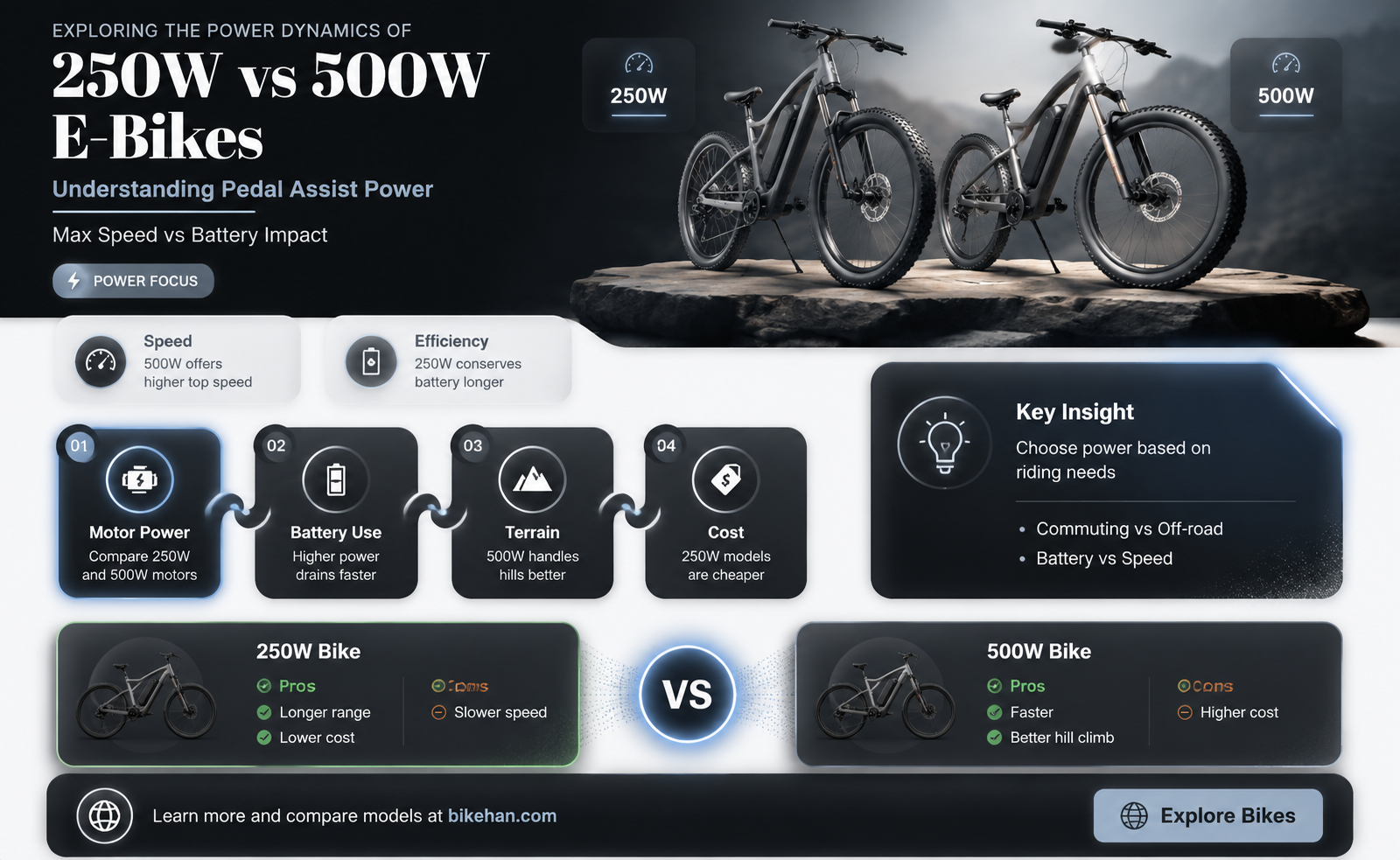
When considering the power output of a pedal assist e-bike, the numbers 250W and 500W are significant benchmarks. A 250W motor is generally considered the standard for many urban and commuter e-bikes, offering a good balance between assistance and battery life. It's suitable for riders who need help on hills or for longer distances without requiring a large battery pack. On the other hand, a 500W motor provides more robust assistance, making it ideal for steeper terrains, heavier loads, or riders who desire a more aggressive riding style. This higher power output can significantly impact the bike's performance, especially in challenging conditions, but it also affects the battery consumption and overall weight of the bike. Understanding the differences between these power outputs is crucial for potential buyers to choose the e-bike that best fits their needs and riding preferences.
Explore related products


What You'll Learn
- Motor Power: 250W vs 500W - Understanding the difference in motor power for pedal assist e-bikes
- Battery Life: How power affects battery life - Exploring the impact of 250W and 500W motors on e-bike battery duration
- Speed and Performance: Comparing speeds - Analyzing how 250W and 500W motors influence the speed and overall performance of e-bikes
- Legal Regulations: Power limits and laws - Discussing the legal implications and regulations surrounding 250W and 500W e-bike motors
- Rider Experience: Comfort and control - Evaluating the rider experience with 250W versus 500W pedal assist e-bikes in terms of comfort and handling

Motor Power: 250W vs 500W - Understanding the difference in motor power for pedal assist e-bikes
The motor power of an e-bike significantly impacts its performance and suitability for different types of riders and terrains. When comparing 250W and 500W motors, the differences are quite pronounced. A 250W motor is generally considered the standard for many urban and commuter e-bikes. It provides sufficient power for flat terrain and moderate inclines, making it ideal for daily commutes and casual rides. This motor power is also more energy-efficient, which can result in longer battery life and lower operating costs.
On the other hand, a 500W motor offers more power and torque, making it better suited for more demanding riding conditions. This includes steeper hills, rough terrain, and higher speeds. E-bikes with 500W motors are often preferred by riders who need more assistance due to physical limitations or those who simply desire a more powerful riding experience. However, the increased power comes at the cost of higher energy consumption, which can lead to shorter battery life and higher costs.
When choosing between a 250W and 500W motor, it's essential to consider the rider's needs and the type of terrain they will be riding on. For urban commuters and casual riders, a 250W motor is likely sufficient. However, for those tackling more challenging routes or requiring additional power, a 500W motor may be the better choice.
In terms of practical applications, the difference in motor power can be seen in the bike's acceleration and top speed. A 500W motor will typically accelerate faster and reach higher speeds than a 250W motor. This can be particularly important for riders who need to keep up with traffic or navigate busy urban environments.
Ultimately, the choice between a 250W and 500W motor comes down to the rider's specific needs and preferences. By understanding the differences in motor power, riders can make an informed decision that will enhance their overall e-biking experience.
Precision Packing: The Ideal Play in Axel for Bike Bearings
You may want to see also
Explore related products


Battery Life: How power affects battery life - Exploring the impact of 250W and 500W motors on e-bike battery duration
The battery life of an e-bike is significantly influenced by the power of its motor. A 250W motor, which is common in many e-bikes, consumes less energy compared to a 500W motor. This means that, all other factors being equal, an e-bike with a 250W motor will generally have a longer battery life than one with a 500W motor. However, the actual battery life will also depend on factors such as the weight of the rider, the terrain, and the level of pedal assist used.
When considering the impact of motor power on battery life, it's important to understand the relationship between power consumption and battery capacity. A higher power motor will drain the battery faster, but it will also provide more assistance to the rider, potentially reducing the physical effort required. This trade-off between power and battery life is a key consideration for e-bike users, especially those who plan to use their bikes for longer distances or in challenging conditions.
In practical terms, an e-bike with a 250W motor might offer a battery life of around 40-60 miles on a single charge, depending on the factors mentioned above. In contrast, an e-bike with a 500W motor might have a battery life of around 20-30 miles under similar conditions. This difference in battery life can be significant for riders who need to travel longer distances without access to charging facilities.
To maximize battery life, e-bike users can adopt several strategies. These include using lower power settings when possible, maintaining a consistent speed, and avoiding steep inclines or rough terrain that can increase power consumption. Additionally, riders can invest in higher capacity batteries or carry spare batteries for longer trips.
In conclusion, the power of an e-bike's motor has a direct impact on its battery life. While a 500W motor provides more power and assistance, it also consumes more energy, resulting in a shorter battery life compared to a 250W motor. E-bike users should carefully consider their riding needs and habits when choosing between different motor powers and battery capacities.
Pedal Power: Maximizing Passenger Capacity on Solar-Powered Bikes
You may want to see also
Explore related products

$29.98


Speed and Performance: Comparing speeds - Analyzing how 250W and 500W motors influence the speed and overall performance of e-bikes
The speed and performance of e-bikes are significantly influenced by the power of their motors. A 250W motor is generally considered the minimum power required for an e-bike, providing adequate assistance for urban commuting and light off-road use. These motors typically offer a top speed of around 25 km/h (15.5 mph), which is suitable for most city environments where higher speeds are not necessary or safe. The performance of a 250W motor is ideal for riders who prioritize efficiency and ease of use over high-speed capabilities.
In contrast, a 500W motor offers a substantial increase in power, resulting in higher top speeds and improved performance, especially in challenging terrains. E-bikes equipped with 500W motors can reach speeds of up to 40 km/h (24.8 mph) or more, depending on the specific model and configuration. This additional power is beneficial for riders who need to cover longer distances quickly or tackle steep hills and rough trails. However, the increased speed and power also require more robust braking systems and may necessitate additional safety precautions.
When comparing the two motor options, it is essential to consider the rider's intended use and preferences. For casual riders who primarily use their e-bikes for short commutes and leisurely rides, a 250W motor may be sufficient. However, for more serious cyclists or those who require higher speeds and better performance in demanding conditions, a 500W motor is likely a better choice. It is also important to note that higher power motors often come with higher price tags and may require more maintenance due to their increased complexity and power output.
Ultimately, the decision between a 250W and 500W motor depends on the rider's specific needs and priorities. By understanding the differences in speed and performance between these two motor options, riders can make an informed decision that best suits their cycling requirements and preferences.
Exploring the Price Range of Peloton Bikes: A Comprehensive Guide
You may want to see also
Explore related products


Legal Regulations: Power limits and laws - Discussing the legal implications and regulations surrounding 250W and 500W e-bike motors
The legal landscape surrounding e-bikes, particularly those with 250W and 500W motors, is complex and varies significantly by jurisdiction. In many countries, e-bikes are subject to specific regulations that dictate their maximum power output, speed, and other operational parameters. For instance, in the European Union, e-bikes are generally limited to a maximum power output of 250W and a top speed of 25 km/h (15.5 mph) to be classified as 'pedelecs,' which are subject to the same regulations as traditional bicycles.
In contrast, some countries, such as the United States, have more nuanced regulations. The U.S. Consumer Product Safety Commission (CPSC) classifies e-bikes into three categories based on their power output and speed capabilities. Class 1 e-bikes, which are limited to 20 mph (32 km/h) and have a maximum power output of 750W, are subject to the same regulations as traditional bicycles. Class 2 e-bikes, which can reach speeds of up to 28 mph (45 km/h) and have a maximum power output of 750W, are subject to additional regulations, including a mandatory throttle. Class 3 e-bikes, which can reach speeds of up to 28 mph (45 km/h) and have a maximum power output of 1000W, are subject to the most stringent regulations and are often prohibited on certain roads and paths.
In addition to these general regulations, there are often specific rules and restrictions that apply to e-bikes with higher power outputs, such as 500W motors. For example, some jurisdictions may require e-bikes with higher power outputs to be registered and insured, similar to motor vehicles. Others may restrict the use of e-bikes with higher power outputs to certain types of roads or paths, or impose additional safety requirements, such as the use of helmets or reflective gear.
Navigating these legal complexities can be challenging for e-bike manufacturers, retailers, and riders alike. It is essential for all parties involved to be aware of the specific regulations that apply in their jurisdiction and to ensure that their e-bikes comply with all applicable laws and standards. Failure to do so can result in legal penalties, fines, or even the confiscation of the e-bike.
In conclusion, the legal implications and regulations surrounding 250W and 500W e-bike motors are multifaceted and vary widely by jurisdiction. It is crucial for e-bike enthusiasts and industry professionals to stay informed about the latest developments in e-bike legislation and to ensure that their e-bikes meet all relevant legal requirements. By doing so, they can help to promote the safe and responsible use of e-bikes and contribute to the growth of this rapidly evolving industry.
Understanding Bike Chain Slack: A Comprehensive Guide
You may want to see also
Explore related products


Rider Experience: Comfort and control - Evaluating the rider experience with 250W versus 500W pedal assist e-bikes in terms of comfort and handling
The rider experience with 250W versus 500W pedal assist e-bikes is a critical aspect to consider when choosing between these two options. The lower power output of a 250W e-bike generally provides a more natural pedaling experience, closely mimicking the feel of a traditional bicycle. This can be particularly appealing to riders who prefer a more authentic cycling experience or who are looking to maintain a higher level of physical activity.
On the other hand, a 500W e-bike offers significantly more power, which can greatly enhance comfort during long rides or when tackling steep inclines. The increased torque provided by the higher wattage motor allows riders to pedal less strenuously, reducing fatigue and making the ride more enjoyable. Additionally, the 500W e-bike can achieve higher speeds, which can be beneficial for commuters or those looking to cover greater distances in a shorter amount of time.
In terms of handling, the 250W e-bike tends to be more agile and responsive, making it easier to maneuver through tight spaces or navigate busy urban environments. The lighter weight of the 250W motor also contributes to better handling characteristics. Conversely, the 500W e-bike, with its more substantial motor, may feel slightly heavier and less nimble, which could impact its handling in certain situations.
Ultimately, the choice between a 250W and 500W pedal assist e-bike comes down to individual preferences and riding needs. Riders who prioritize a more natural pedaling experience and agile handling may opt for the 250W model, while those seeking greater comfort and speed may prefer the 500W option. It is essential to consider factors such as the type of terrain, the distance of the ride, and personal fitness levels when evaluating which e-bike will provide the best rider experience.
Optimal Fueling: How Much Petrol Does Your Bike Really Need?
You may want to see also
Frequently asked questions
The primary difference in power between a 250W and a 500W pedal assist e-bike is the motor's wattage. A 500W motor provides double the power of a 250W motor, which generally translates to faster acceleration and the ability to tackle steeper inclines with less effort from the rider.
The power of the motor directly affects the speed of the e-bike. A higher wattage motor, like the 500W, can typically reach higher top speeds compared to a lower wattage motor, such as the 250W. However, the actual top speed also depends on factors like the bike's design, the rider's weight, and the terrain.
The advantages of a 500W pedal assist e-bike over a 250W model include increased power for faster acceleration, the ability to handle steeper hills more easily, and potentially higher top speeds. Additionally, a 500W motor can provide more assistance in challenging riding conditions, making the ride more comfortable and less strenuous for the cyclist.
Yes, there are some disadvantages to choosing a 500W pedal assist e-bike over a 250W model. These may include a higher cost, increased weight due to the more powerful motor, and potentially shorter battery life because the higher power output requires more energy. Additionally, some riders may find the extra power unnecessary for their needs, making the 250W model a more suitable and cost-effective choice.