Eric Johnson
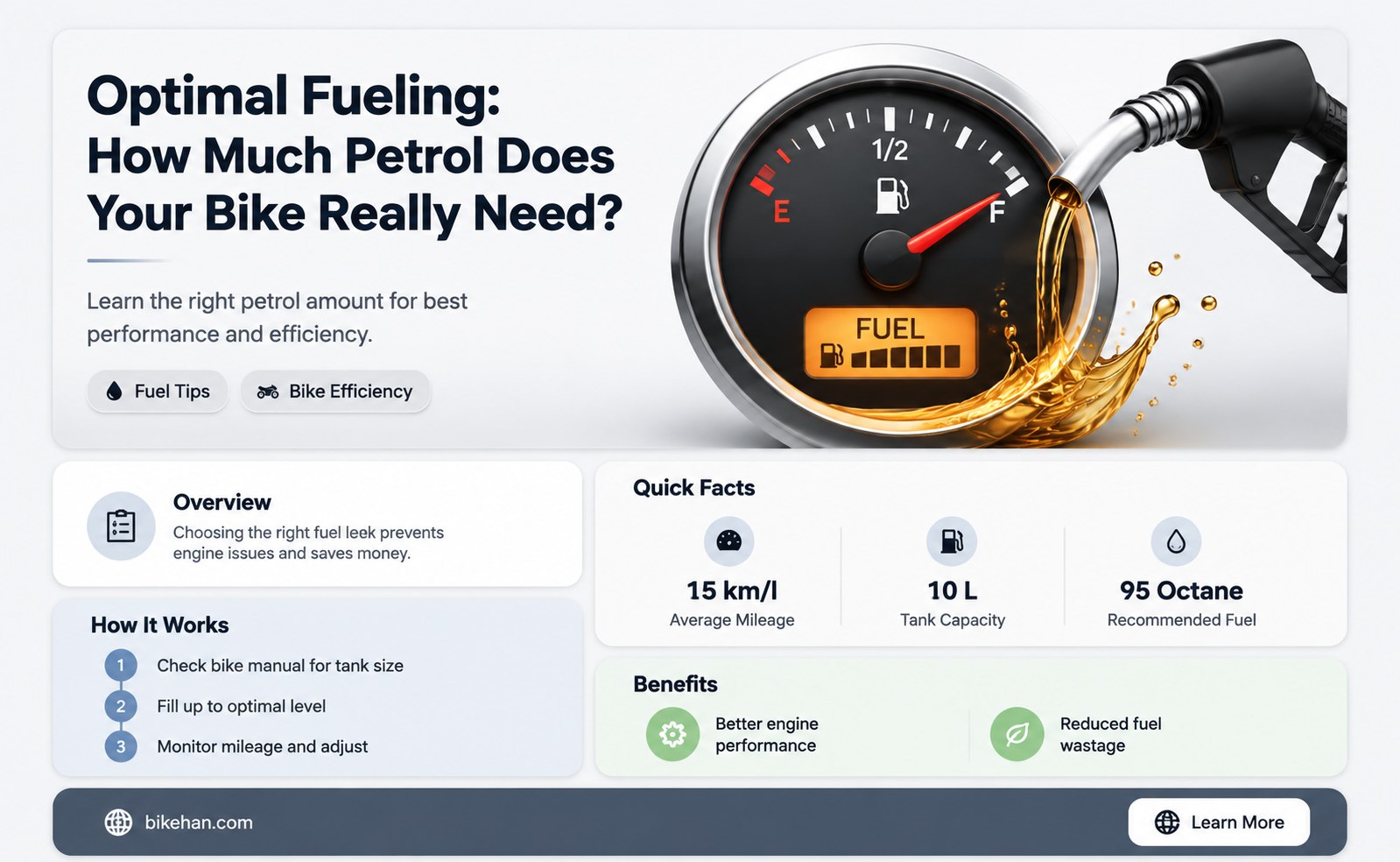
When considering how much petrol to put in your bike, several factors come into play. Firstly, it's essential to know your bike's fuel capacity, which can vary depending on the make and model. Typically, this information can be found in your bike's manual or by doing a quick online search. Secondly, consider your riding habits and the distance you plan to travel. If you're a frequent rider or planning a long trip, it might be more economical to fill up completely. However, if you only use your bike for short, occasional trips, a partial fill-up might suffice. Additionally, current petrol prices and your budget should be taken into account. It's also worth noting that overfilling can lead to fuel spillage and potential damage to your bike's engine, so it's best to avoid this. Lastly, always ensure you're using the correct type of fuel for your bike, as using the wrong type can cause significant damage.
Explore related products


What You'll Learn
- Fuel Efficiency: Understanding your bike's fuel consumption rate to optimize petrol usage and save costs
- Tank Capacity: Knowing your motorcycle's fuel tank capacity to avoid overfilling and potential hazards
- Petrol Types: Choosing the right type of petrol (e.g., unleaded, premium) for your bike's engine
- Fuel Additives: Considering the use of fuel additives to improve performance and protect the engine
- Environmental Impact: Evaluating the environmental effects of petrol usage and exploring eco-friendly alternatives

Fuel Efficiency: Understanding your bike's fuel consumption rate to optimize petrol usage and save costs
To optimize fuel efficiency on your bike, it's crucial to understand your specific model's fuel consumption rate. This rate varies significantly between different motorcycles, influenced by factors such as engine size, weight, and riding style. For instance, a sportbike might consume more fuel due to its high-performance engine and aggressive riding posture, while a cruiser might be more fuel-efficient due to its lower power output and relaxed riding position.
Start by consulting your bike's owner's manual for the manufacturer's estimated fuel consumption rate. This will give you a baseline to work from. Next, track your own fuel usage over several trips to get a real-world understanding of how your bike performs under your specific riding conditions. Keep a log of the distance traveled and the amount of fuel used, then calculate the miles per gallon (or kilometers per liter) to determine your bike's actual fuel efficiency.
Once you have a clear understanding of your bike's fuel consumption rate, you can take steps to optimize it. This might include adjusting your riding style to be more fuel-efficient, such as avoiding sudden acceleration and maintaining a steady speed. Additionally, regular maintenance, like keeping your tires properly inflated and ensuring your engine is running smoothly, can also improve fuel efficiency.
Another strategy to save costs is to plan your trips to minimize fuel usage. For example, combining multiple errands into a single trip can reduce the overall distance traveled and thus the amount of fuel consumed. Using a fuel-efficient route, avoiding traffic congestion, and riding during off-peak hours can also help to lower your fuel costs.
Finally, consider investing in fuel-saving accessories or modifications for your bike. These might include a more efficient air filter, a fuel injection controller, or even a different exhaust system. However, be sure to research these options thoroughly to ensure they are compatible with your bike and will provide the desired results without compromising performance or safety.
By understanding your bike's fuel consumption rate and taking steps to optimize it, you can significantly reduce your petrol usage and save money in the long run. This not only benefits your wallet but also helps to reduce your environmental impact by lowering your carbon footprint.
Exploring the Cost of Peloton Bikes: A Comprehensive Guide
You may want to see also
Explore related products


Tank Capacity: Knowing your motorcycle's fuel tank capacity to avoid overfilling and potential hazards
Knowing your motorcycle's fuel tank capacity is crucial for safe and efficient riding. Overfilling the tank can lead to a range of problems, from fuel spillage to potential hazards while riding. To avoid these issues, it's essential to understand your motorcycle's specific tank capacity and how to properly fill it.
One way to determine your motorcycle's fuel tank capacity is to consult the owner's manual. This information is typically listed in the specifications section, along with other important details about your bike. If you don't have access to the manual, you can also check the manufacturer's website or contact a local dealership for assistance.
Once you know your motorcycle's tank capacity, it's important to follow proper filling procedures. Always fill the tank slowly and carefully, using a funnel if necessary to avoid spillage. Be sure to leave some space at the top of the tank to allow for expansion and to prevent fuel from overflowing.
In addition to knowing your motorcycle's tank capacity, it's also important to be aware of the potential hazards of overfilling. Overfilling can cause fuel to spill onto the ground, which can be a fire hazard and can also damage the environment. Additionally, overfilling can cause fuel to enter the engine, which can lead to engine damage and poor performance.
To avoid these hazards, it's important to always fill your motorcycle's tank to the recommended level and to never overfill it. By following these guidelines, you can ensure safe and efficient riding while also protecting your motorcycle and the environment.
Revamping Your Ride: A Guide to Estimating Paint for Your Bike Makeover
You may want to see also
Explore related products


Petrol Types: Choosing the right type of petrol (e.g., unleaded, premium) for your bike's engine
Choosing the right type of petrol for your bike's engine is crucial for optimal performance and longevity. Unleaded petrol is the most common type and is suitable for most modern bikes. It contains additives that help keep the engine clean and reduce emissions. However, some high-performance bikes may require premium petrol, which has a higher octane rating and can provide better acceleration and fuel efficiency.
To determine the correct petrol type for your bike, consult the owner's manual or check the fuel cap for any specific recommendations. Using the wrong type of petrol can lead to engine knocking, reduced power, and even damage to the engine components. It's also important to note that older bikes may require leaded petrol, but this is less common and should only be used if specified by the manufacturer.
When selecting petrol, consider the environmental impact as well. Unleaded petrol is generally more eco-friendly than leaded petrol, and some premium options may contain additives that help reduce carbon emissions. Additionally, ethanol-blended petrol can be a more sustainable choice, as it is made from renewable resources.
In terms of how much petrol to put in your bike, it's essential to refer to the manufacturer's guidelines for the recommended fuel capacity. Overfilling the tank can lead to fuel spillage and potential damage to the bike's paintwork, while underfilling may result in the bike running out of fuel unexpectedly. Always use a funnel when refueling to avoid spills and ensure that the fuel cap is securely fastened to prevent leaks.
Regularly checking your bike's fuel level and quality can help prevent issues related to petrol. If you notice any signs of fuel degradation, such as a change in color or odor, it's best to drain the tank and refill with fresh petrol. Proper maintenance of your bike's fuel system, including cleaning the fuel filter and checking for leaks, can also help ensure optimal performance and fuel efficiency.
Revamping Your Ride: A Guide to Painting Your Street Bike
You may want to see also
Explore related products



Fuel Additives: Considering the use of fuel additives to improve performance and protect the engine
Fuel additives are substances added to gasoline to enhance its performance and protect the engine. They can serve various functions, such as improving fuel efficiency, reducing emissions, preventing corrosion, and cleaning the engine. When considering the use of fuel additives, it's essential to understand their specific benefits and how they interact with your motorcycle's engine.
One common type of fuel additive is an octane booster, which increases the octane rating of the fuel. This can help improve engine performance, especially in high-compression engines that require higher octane fuel. Another type is a fuel system cleaner, which helps remove deposits and grime from the fuel system, improving fuel flow and engine efficiency.
When choosing a fuel additive, it's crucial to select one that is compatible with your motorcycle's engine and fuel system. Consult your owner's manual or speak with a mechanic to determine the best type of additive for your specific needs. Additionally, be cautious not to overdo it, as excessive use of fuel additives can lead to negative effects, such as increased emissions or engine damage.
In terms of dosage, follow the manufacturer's instructions carefully. Typically, fuel additives are added in small quantities, often measured in ounces or milliliters, and mixed with a specific amount of fuel. For example, a fuel system cleaner might instruct you to add 1 ounce of the product to every 10 gallons of fuel.
Remember that fuel additives are not a substitute for regular maintenance and proper fuel usage. They should be used in conjunction with other good practices, such as using the correct fuel type, maintaining proper tire pressure, and performing regular engine tune-ups. By using fuel additives responsibly and in accordance with your motorcycle's needs, you can help improve performance and protect your engine for the long haul.
Exploring the Earnings Potential of Ola Bike: A Comprehensive Guide
You may want to see also
Explore related products


Environmental Impact: Evaluating the environmental effects of petrol usage and exploring eco-friendly alternatives
Petrol usage has significant environmental implications, contributing to air pollution, climate change, and resource depletion. Each liter of petrol burned emits approximately 2.3 kilograms of carbon dioxide, a potent greenhouse gas. Additionally, petrol combustion releases harmful pollutants such as nitrogen oxides, particulate matter, and volatile organic compounds, which can have detrimental effects on human health and the environment.
To mitigate these impacts, it's essential to explore eco-friendly alternatives to petrol. One promising option is the use of biofuels, which are derived from renewable sources such as plants, algae, or waste materials. Biofuels can reduce greenhouse gas emissions by up to 80% compared to traditional petrol. Another alternative is the adoption of electric vehicles (EVs), which produce zero tailpipe emissions and can significantly reduce our reliance on fossil fuels.
Furthermore, improving fuel efficiency through technological advancements and better driving practices can also help reduce petrol consumption and its associated environmental impacts. Simple measures such as maintaining proper tire pressure, avoiding rapid acceleration, and reducing idling time can all contribute to more efficient fuel use.
Governments and industries must also play a role in promoting sustainable transportation options. Investing in public transportation infrastructure, incentivizing the development of EVs, and implementing policies to reduce fuel consumption can all help mitigate the environmental effects of petrol usage.
Ultimately, a multifaceted approach is needed to address the environmental impacts of petrol. By combining technological innovation, policy changes, and individual actions, we can work towards a more sustainable transportation system that reduces our reliance on fossil fuels and minimizes harm to the environment.
Exploring the Cost of Peloton Bikes: A Comprehensive Guide
You may want to see also
Frequently asked questions
For a long trip, it's advisable to fill your bike's tank completely to ensure you have enough fuel to reach your destination without frequent stops. Check your bike's fuel capacity and plan your refueling stops accordingly.
It's generally better to leave a small amount of space at the top of your bike's tank when filling up. This allows for expansion of the fuel due to temperature changes and prevents overflow, which can be dangerous and wasteful.
To calculate your bike's fuel efficiency, keep track of the distance you travel and the amount of fuel you use. Divide the total distance by the total fuel consumed to get your fuel efficiency in miles per gallon (mpg) or kilometers per liter (km/l).
Several factors can affect your bike's fuel consumption, including your riding style, the weight of your bike and any additional load, the condition of your bike's engine and tires, the terrain you're riding on, and the weather conditions.
It's a good practice to check your bike's fuel level regularly, especially before starting a trip. This will help you plan your refueling stops and ensure you don't run out of fuel unexpectedly. Most bikes have a fuel gauge on the dashboard that you can use to monitor your fuel level.