Eric Johnson
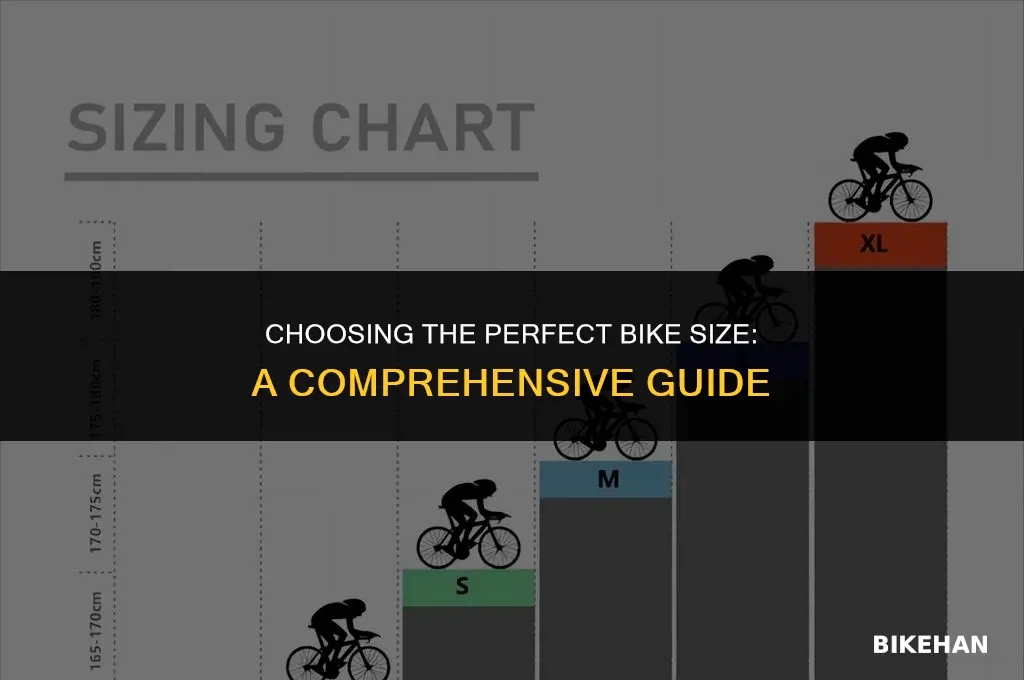
Choosing the right bike size is crucial for both comfort and performance. The ideal bike size for an individual depends on several factors, including height, inseam length, and personal preference. A common method to determine bike size is by measuring the inseam and using a sizing chart provided by bike manufacturers. Generally, road bikes are sized based on the seat tube length, measured from the center of the bottom bracket to the top of the seat tube, while mountain bikes are often sized based on the top tube length, measured from the head tube to the seat tube. It's important to consider not just the frame size but also the fit, which includes factors like saddle height, handlebar reach, and stack height. Consulting with a professional at a local bike shop can provide personalized advice and ensure the best possible fit for your unique body dimensions and riding style.
Explore related products


What You'll Learn
- Height and Weight Considerations: Factors influencing bike size selection based on rider's physical attributes
- Type of Biking: Different bike sizes for various activities like road biking, mountain biking, and commuting
- Frame Geometry: Understanding how frame design impacts sizing and fit for different body types
- Sizing Charts and Calculators: Tools and resources to determine the appropriate bike size based on measurements
- Test Riding and Adjustments: Importance of testing bikes and making necessary adjustments for comfort and performance

Height and Weight Considerations: Factors influencing bike size selection based on rider's physical attributes
The relationship between a rider's height and weight and the appropriate bike size is complex and multifaceted. Generally, taller riders require larger bikes to accommodate their longer limbs and torso, ensuring a comfortable and efficient riding position. However, weight also plays a crucial role, as heavier riders may need bikes with stronger frames and components to support their body weight safely.
One common method for determining bike size based on height is the inseam measurement, which involves measuring the distance from the rider's crotch to the ground. This measurement can then be used to estimate the appropriate bike size, with most manufacturers providing size charts that correlate inseam length to bike size. However, this method has its limitations, as it does not take into account the rider's weight or body proportions.
In addition to height and weight, other factors such as riding style and personal preference can also influence bike size selection. For example, a rider who prefers a more aggressive riding position may opt for a smaller bike size, while a rider who values comfort may choose a larger size. It is also important to consider the type of riding the bike will be used for, as different disciplines may require different bike sizes and geometries.
Ultimately, the best way to determine the appropriate bike size is to consult with a knowledgeable bike shop professional who can take into account the rider's height, weight, riding style, and personal preferences. They can also provide guidance on proper bike fit and setup, ensuring that the rider is comfortable and safe on their new bike.
Burn Calories, Not Time: The Ultimate Guide to Cycling for Weight Loss
You may want to see also
Explore related products


Type of Biking: Different bike sizes for various activities like road biking, mountain biking, and commuting
Road biking, mountain biking, and commuting each require different bike sizes to optimize performance and comfort. For road biking, a bike size that allows for an aerodynamic position is crucial. Typically, road bikes range from 49 to 62 cm in frame size, with the size determined by the rider's height and inseam length. A properly sized road bike will enable the rider to maintain a high cadence and speed while minimizing wind resistance.
Mountain biking, on the other hand, requires a bike size that provides stability and control on rough terrain. Mountain bikes generally range from 37 to 50 cm in frame size, with the size determined by the rider's height, inseam length, and riding style. A properly sized mountain bike will allow the rider to navigate obstacles and maintain balance on uneven surfaces.
Commuting bikes, also known as hybrid or city bikes, are designed for comfort and practicality. These bikes typically range from 44 to 56 cm in frame size, with the size determined by the rider's height and inseam length. A properly sized commuting bike will provide an upright riding position, reducing strain on the back and neck during long rides.
To determine the appropriate bike size for each activity, riders should consider their height, inseam length, and riding style. Consulting a bike sizing chart or visiting a local bike shop for a professional fitting can help ensure the best possible fit. Remember, a properly sized bike will not only improve performance but also enhance safety and comfort during rides.
Pedaling to Burn: Unraveling the Caloric Mystery of a Mile Bike Ride
You may want to see also
Explore related products


Frame Geometry: Understanding how frame design impacts sizing and fit for different body types
Frame geometry plays a crucial role in determining the ideal bike size for different body types. The design of a bike frame can significantly impact the rider's comfort, control, and overall cycling experience. For instance, a frame with a longer wheelbase may provide more stability, while a shorter wheelbase can offer better maneuverability. Additionally, the angle of the head tube and the position of the bottom bracket can influence the bike's handling characteristics.
When considering frame geometry, it's essential to understand the various measurements that define a bike's size. These include the seat tube length, top tube length, and chainstay length, among others. Each of these measurements can affect how the bike fits a rider and how it handles on the road. For example, a longer seat tube may be more suitable for taller riders, while a shorter top tube can provide a more aggressive riding position.
To find the right bike size, riders should consider their body measurements, such as height, inseam, and arm length. These measurements can be used to calculate the ideal frame size and ensure a proper fit. It's also important to consider the type of cycling the rider will be doing, as different styles of riding may require different frame geometries. For instance, a road bike may have a more aggressive geometry for speed and efficiency, while a mountain bike may have a more relaxed geometry for comfort and control on rough terrain.
In addition to frame geometry, other factors can influence the fit and feel of a bike, such as the choice of handlebars, saddle, and pedals. By understanding how frame design impacts sizing and fit, riders can make informed decisions when selecting a bike that meets their specific needs and preferences. This knowledge can help ensure a more enjoyable and comfortable cycling experience, regardless of the rider's body type or riding style.
Revving Up the Facts: MotoGP Bike Engine Capacities Explained
You may want to see also
Explore related products


Sizing Charts and Calculators: Tools and resources to determine the appropriate bike size based on measurements
To determine the appropriate bike size based on measurements, sizing charts and calculators are essential tools. These resources take into account various factors such as height, inseam length, and riding style to recommend the ideal bike size. Sizing charts are typically provided by bike manufacturers and can be found on their websites or in bike shops. They often include a grid or table that correlates body measurements with bike sizes. For example, a chart might indicate that a person with a height of 170-175 cm and an inseam length of 81-86 cm should consider a bike size of 54-56 cm.
Calculators, on the other hand, are interactive tools that allow users to input their measurements and receive a personalized bike size recommendation. These calculators can be found online and are often more precise than sizing charts, as they can take into account additional factors such as arm length and torso length. Some calculators also provide a visual representation of the recommended bike size, making it easier for users to understand the fit.
When using sizing charts and calculators, it's important to note that they are only a starting point. The recommended bike size may not be perfect for every individual, as factors such as personal preference and riding style can also influence the ideal fit. It's always a good idea to test ride a bike before purchasing to ensure that it feels comfortable and handles well.
In addition to sizing charts and calculators, there are other resources available to help determine the appropriate bike size. For example, some bike shops offer professional fitting services, where a trained technician will take detailed measurements and make personalized recommendations. These services can be particularly helpful for riders who are new to cycling or who have unique body proportions.
Ultimately, the key to finding the right bike size is to use a combination of resources and to prioritize comfort and performance. By taking the time to properly assess bike size, riders can ensure that they have a safe and enjoyable cycling experience.
Burn Calories Fast: 15-Minute Bike Ride Workout
You may want to see also
Explore related products


Test Riding and Adjustments: Importance of testing bikes and making necessary adjustments for comfort and performance
Once you've determined the appropriate bike size based on your height and inseam, the next crucial step is to test ride the bike to ensure it's the right fit for you. This is because bike sizing charts can only provide a general guideline, and individual preferences and body proportions can vary significantly. Testing the bike allows you to assess the comfort and performance of the bike in real-world conditions.
During the test ride, pay attention to several key factors. First, check the saddle height and position. The saddle should be at a height where your leg is almost fully extended when pedaling, with a slight bend at the knee. The saddle position should also be comfortable, without causing any pressure points or discomfort. Next, assess the handlebar height and reach. The handlebars should be at a comfortable height where you can maintain an upright riding position without straining your back or shoulders. The reach to the handlebars should also be comfortable, without causing you to stretch or lean forward excessively.
Another important aspect to consider during the test ride is the bike's handling and responsiveness. Does the bike feel stable and responsive to your movements? Are the brakes and gears functioning smoothly? Take note of any issues or concerns you have during the test ride, as these can be addressed through adjustments or by trying a different bike model.
After the test ride, make any necessary adjustments to the bike to ensure a comfortable and efficient riding experience. This may include adjusting the saddle height or position, the handlebar height or reach, or even the pedal position. Many bikes also have adjustable components, such as the seat post or handlebars, which can be fine-tuned to suit your preferences.
Remember, the goal of testing and adjusting the bike is to find the optimal fit for your body and riding style. This may take some time and experimentation, but it's worth the effort to ensure a comfortable and enjoyable riding experience. By following these steps, you can ensure that your bike is not only the right size, but also properly adjusted to meet your individual needs and preferences.
Choosing the Right CC for a Two-Person Motorcycle Adventure
You may want to see also
Frequently asked questions
To determine the correct bike size in centimeters, you need to consider your height and the type of bike you're interested in. For road bikes, your height in centimeters is a good starting point. For mountain bikes, you may want to subtract 10-15 cm from your height to account for the more upright riding position. Additionally, consider your inseam length and the reach to the handlebars for a comfortable fit.
Besides your height, consider factors such as your inseam length, arm length, and the type of riding you'll be doing. For example, if you have a longer inseam, you may need a larger bike size to ensure proper leg extension while pedaling. Similarly, if you have shorter arms, a smaller bike size might be more comfortable to handle. The intended use of the bike, whether it's for racing, touring, or casual riding, also plays a role in determining the appropriate size.
Yes, you can use your current bike's measurements as a reference to find a new bike of the same size. Measure the seat tube length (from the center of the bottom bracket to the top of the seat tube), the top tube length (from the center of the head tube to the center of the seat tube), and the wheelbase (from the center of the front wheel to the center of the rear wheel). These measurements can help you compare different bike models and find one that closely matches your current bike's size and geometry.