Megan Blake
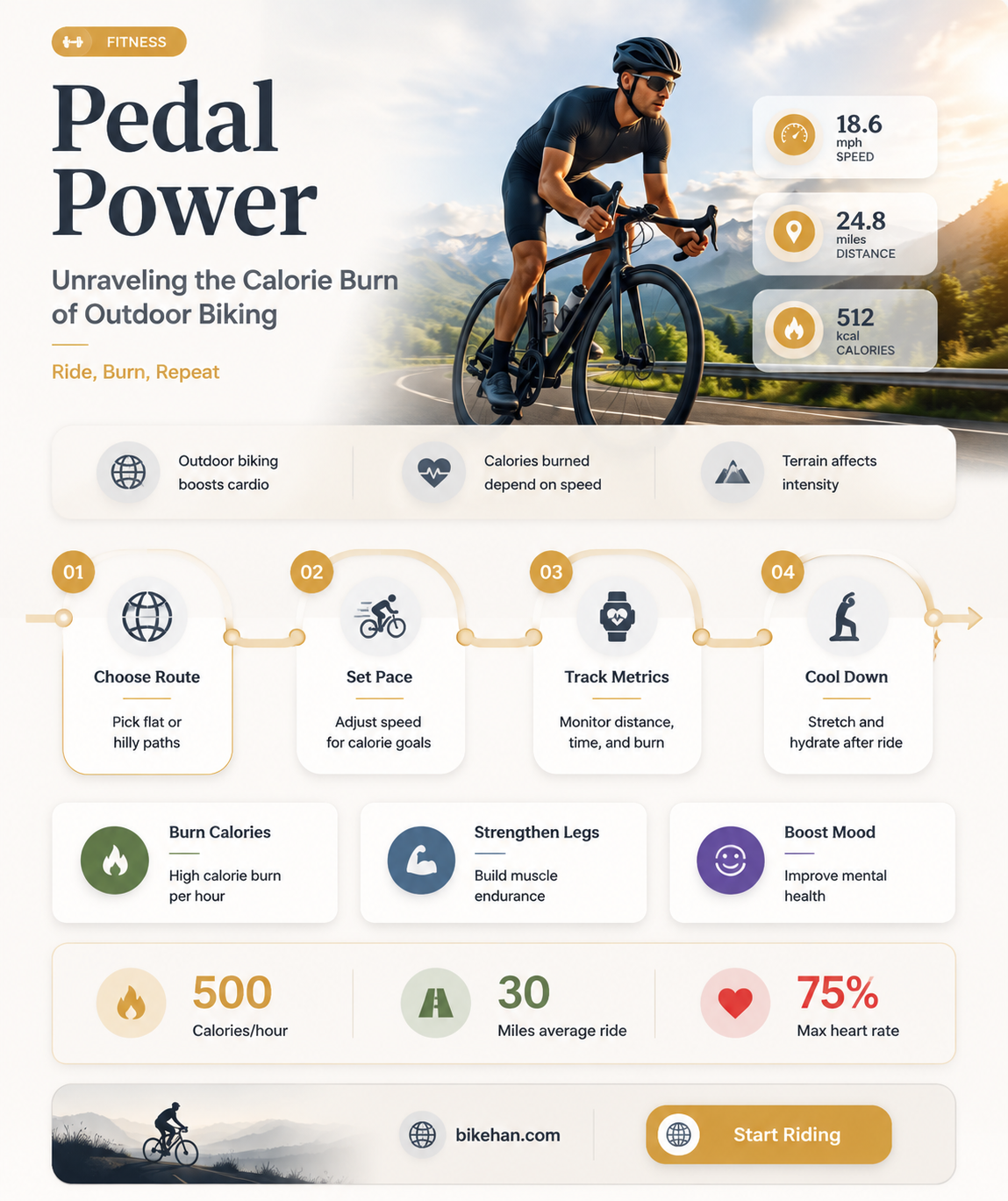
The number of calories burned during an outdoor bike ride can vary significantly based on several factors, including the rider's weight, the intensity of the ride, the duration, and the terrain. On average, a person can burn anywhere from 400 to 1000 calories per hour of cycling. For instance, a 150-pound individual cycling at a moderate pace of 12-14 miles per hour can expect to burn around 400-500 calories in an hour. In contrast, a more vigorous ride, such as cycling uphill or at a racing pace, can significantly increase calorie expenditure. Additionally, longer rides naturally result in higher calorie burn due to the extended duration of physical activity. Understanding these variables can help individuals tailor their cycling workouts to meet specific fitness and weight management goals.
Explore related products


What You'll Learn

Factors Affecting Calorie Burn
Several factors can significantly influence the number of calories burned during an outdoor bike ride. Understanding these variables can help cyclists optimize their workouts and achieve their fitness goals more effectively.
One of the primary factors affecting calorie burn is the intensity of the ride. Higher intensity cycling, such as sprinting or climbing steep hills, engages more muscle groups and requires more energy, leading to a higher calorie expenditure. For example, a cyclist may burn approximately 400-500 calories per hour during a moderate ride, but this can increase to 600-800 calories per hour during a high-intensity interval training session.
Another important factor is the duration of the ride. Longer rides naturally result in more calories burned, as the body continues to expend energy over an extended period. However, the relationship between duration and calorie burn is not linear. As the body adapts to the exercise, the calorie expenditure per hour may decrease slightly, especially during low-intensity, long-duration rides.
The cyclist's body weight also plays a role in determining calorie burn. Heavier individuals generally burn more calories during cycling, as their bodies require more energy to move and maintain balance. For instance, a 150-pound person may burn around 200 calories during a 30-minute moderate ride, while a 200-pound person may burn approximately 260 calories in the same time frame.
Environmental factors, such as wind resistance and temperature, can also impact calorie expenditure. Cycling against strong headwinds or in extreme temperatures requires more effort and energy, leading to a higher calorie burn. Additionally, the type of bicycle and its maintenance can affect efficiency and resistance, further influencing the overall calorie expenditure.
To maximize calorie burn during outdoor cycling, cyclists can focus on varying their workout intensity, incorporating interval training, and gradually increasing the duration of their rides. Additionally, maintaining a well-tuned bicycle and choosing routes with challenging terrain or wind conditions can further enhance the effectiveness of their workouts.
Calories Burned in a 4-Mile Bike Ride: A Comprehensive Guide
You may want to see also
Explore related products


Average Calories Burned per Hour
The average calories burned per hour while outdoor biking can vary significantly based on several factors. Primarily, the intensity of the ride, the weight of the rider, and the terrain all play crucial roles in determining the caloric expenditure. For instance, a moderate-intensity ride for a 150-pound individual can burn approximately 400-500 calories per hour on flat terrain. However, if the same individual were to cycle uphill, the calorie burn could increase to around 600-700 calories per hour.
Another important factor to consider is the type of bicycle used. Road bikes, designed for speed and efficiency on paved surfaces, generally allow for a higher calorie burn due to the ability to maintain higher speeds. In contrast, mountain bikes, built for off-road terrain, may result in a lower calorie burn per hour due to the slower speeds and more varied terrain.
Additionally, the rider's fitness level and cycling experience can influence the average calories burned. More experienced cyclists with higher fitness levels tend to burn more calories, as they can maintain higher intensities and speeds over longer periods. For example, an experienced cyclist might burn 500-600 calories per hour on a moderate ride, while a beginner might burn only 300-400 calories in the same conditions.
To maximize calorie burn during an outdoor bike ride, it's essential to focus on maintaining a consistent and challenging intensity. Incorporating interval training, where periods of high intensity are alternated with periods of lower intensity, can also be an effective strategy for increasing calorie expenditure. Furthermore, ensuring proper hydration and nutrition before and during the ride can help maintain energy levels and support a higher calorie burn.
In summary, the average calories burned per hour while outdoor biking depend on a variety of factors, including the rider's weight, the intensity and terrain of the ride, the type of bicycle used, and the rider's fitness level. By understanding these factors and implementing strategies to maintain a high intensity and proper nutrition, cyclists can optimize their calorie burn and achieve their fitness goals more effectively.
Calories Burned: Unraveling the Mystery of a 15-Mile Bike Ride
You may want to see also
Explore related products


Intensity Levels and Calorie Expenditure
The intensity level of your outdoor bike ride plays a crucial role in determining the number of calories you burn. A leisurely ride at a low intensity will burn fewer calories compared to a high-intensity cycling session. This is because the body requires more energy, in the form of calories, to sustain higher levels of physical exertion. For instance, a person weighing 150 pounds (68 kg) can burn approximately 240 calories in a 30-minute moderate-intensity bike ride, whereas the same duration at a vigorous intensity can burn around 480 calories.
To measure the intensity of your bike ride, you can use various methods such as monitoring your heart rate, using a perceived exertion scale, or tracking your speed and distance. The heart rate method involves calculating your maximum heart rate and then aiming to cycle at a percentage of this rate. For example, a moderate-intensity ride would typically be around 50-60% of your maximum heart rate, while a high-intensity ride would be closer to 70-80%. The perceived exertion scale is a subjective measure where you rate how hard you feel you are working on a scale of 1 to 10, with 1 being very easy and 10 being extremely hard.
Another factor that influences calorie expenditure during outdoor biking is the terrain. Riding on hilly or uneven terrain requires more effort and thus burns more calories than cycling on flat ground. Additionally, the resistance encountered while pedaling, such as wind or the weight of the bike, can also increase the calorie burn. For example, cycling against a strong headwind can increase the energy expenditure by up to 30%.
To maximize calorie burn during your outdoor bike ride, consider incorporating interval training. This involves alternating between periods of high-intensity cycling and lower-intensity recovery periods. Interval training not only increases the overall calorie expenditure but also improves cardiovascular fitness and endurance. For instance, you could cycle at a high intensity for 1 minute, followed by a 2-minute recovery period at a lower intensity, and repeat this cycle for the duration of your ride.
In conclusion, the intensity level, terrain, and resistance encountered during an outdoor bike ride all contribute to the number of calories burned. By understanding these factors and incorporating strategies such as interval training, you can optimize your cycling sessions to achieve your fitness and weight loss goals.
Rev Up Your Metabolism: Calories Burned on an Exercise Bike
You may want to see also
Explore related products


Duration and Distance Traveled
The number of calories burned during an outdoor bike ride is directly influenced by the duration and distance traveled. This relationship is fundamental to understanding how cycling can be used as an effective form of exercise. The longer you ride and the greater the distance you cover, the more calories you will burn. This is because cycling is an aerobic activity that requires the body to use oxygen to produce energy, and the more energy you expend, the more calories you burn.
To calculate the approximate number of calories burned, you can use the following formula: Calories burned = Distance traveled (in miles) x Calories burned per mile. The average person burns about 40-50 calories per mile when cycling at a moderate pace. However, this number can vary depending on factors such as your weight, fitness level, and the intensity of your ride.
For example, if you weigh 150 pounds and cycle at a moderate pace of 12 miles per hour, you will burn approximately 45 calories per mile. If you ride for 30 minutes, covering a distance of 6 miles, you will burn about 270 calories. However, if you increase your pace to 15 miles per hour, you will burn about 55 calories per mile, resulting in a total of 330 calories burned for the same distance.
It's also important to consider the terrain and weather conditions when calculating calories burned. Riding uphill or in windy conditions will require more energy and therefore result in a higher calorie burn. Additionally, the type of bike you use can also impact your calorie burn. For example, riding a mountain bike on rough terrain will require more energy than riding a road bike on smooth pavement.
In summary, the duration and distance traveled are key factors in determining the number of calories burned during an outdoor bike ride. By understanding these factors and using the appropriate formula, you can estimate your calorie burn and tailor your cycling workouts to meet your fitness goals.
Calories Burned in an Hour of Stationary Biking: A Comprehensive Guide
You may want to see also
Explore related products




Comparing Outdoor Biking to Indoor Cycling
Outdoor biking and indoor cycling are two popular forms of exercise that offer distinct benefits and challenges. While both activities involve pedaling a bike, the environment and conditions in which they take place can significantly impact the calorie burn and overall workout experience.
One key difference between outdoor biking and indoor cycling is the resistance encountered. Outdoor biking involves riding on varied terrain, which can include hills, wind, and uneven surfaces. This natural resistance can increase the calorie burn and provide a more challenging workout. In contrast, indoor cycling typically takes place on a stationary bike with adjustable resistance settings. While this allows for a controlled workout environment, it may not provide the same level of resistance as outdoor biking.
Another factor to consider is the intensity of the workout. Outdoor biking often involves longer rides at a moderate pace, while indoor cycling can include high-intensity interval training (HIIT) and other structured workouts. HIIT involves short bursts of intense exercise followed by periods of rest, which can be an effective way to burn calories and improve cardiovascular fitness. However, outdoor biking can also be adapted to include HIIT by incorporating sprints or hill climbs into the ride.
In terms of calorie burn, outdoor biking generally burns more calories than indoor cycling due to the additional resistance and longer duration of the rides. On average, a person can burn between 400-600 calories per hour of outdoor biking, depending on factors such as weight, intensity, and terrain. Indoor cycling, on the other hand, can burn between 300-500 calories per hour, depending on the resistance settings and workout intensity.
Ultimately, the choice between outdoor biking and indoor cycling depends on personal preference, fitness goals, and available resources. Both activities offer a great way to improve cardiovascular fitness, build muscle strength, and burn calories. By understanding the differences between the two, individuals can choose the option that best suits their needs and preferences.
Rev Up Your Fitness: Calories Burned Biking for Navy PRT
You may want to see also
Frequently asked questions
The number of calories burned during a 30-minute outdoor bike ride can vary depending on several factors, including your weight, intensity level, and the terrain. On average, a person weighing 155 pounds (70 kg) can burn approximately 260-390 calories during a moderate-intensity 30-minute bike ride.
Yes, the intensity of your bike ride significantly affects the number of calories burned. Higher intensity rides, such as interval training or hill climbs, can burn more calories both during and after the ride due to increased cardiovascular demand and muscle engagement.
Your body weight plays a crucial role in determining the number of calories burned while biking outdoors. Generally, the more you weigh, the more calories you will burn during a bike ride, as your body requires more energy to move a larger mass.
Yes, biking on hilly terrain can burn more calories compared to flat terrain. This is because cycling uphill requires more effort and engages more muscle groups, leading to a higher caloric expenditure. Additionally, the incline increases the resistance, making your workout more challenging and effective.
Yes, several other factors can influence the number of calories burned during an outdoor bike ride. These include your fitness level, the type of bicycle used (e.g., road bike, mountain bike), the weather conditions (e.g., wind resistance), and any additional gear or accessories that add weight or resistance.