Samantha Lee
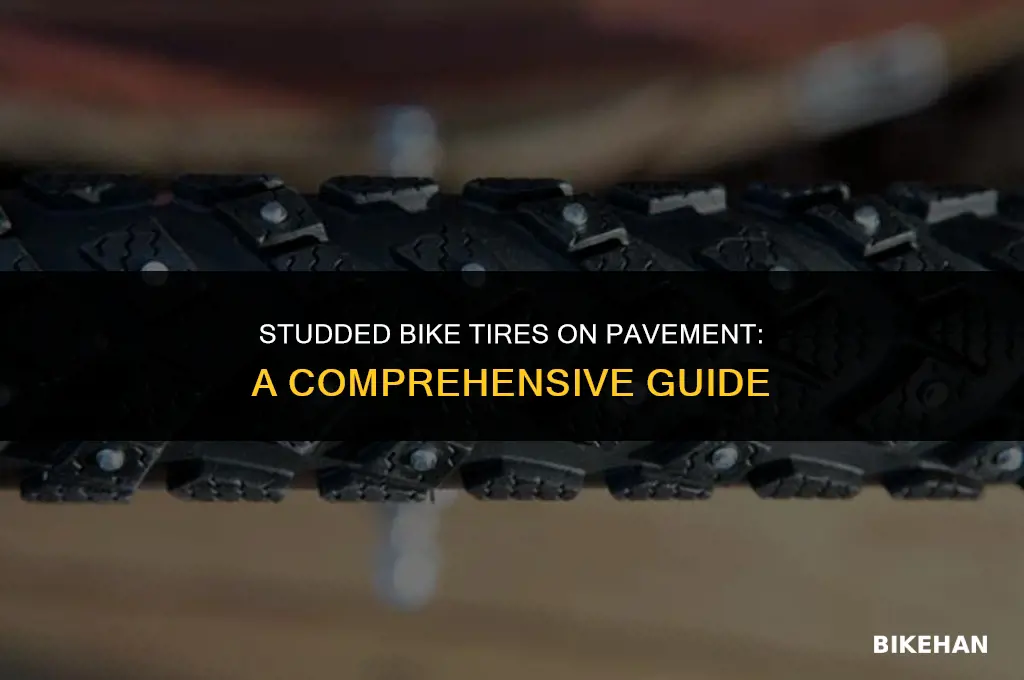
Studded bike tires are primarily designed for traction on icy and snowy surfaces, making them a popular choice for winter cycling. However, their suitability for pavement is a topic of debate among cyclists. The metal studs on these tires can provide additional grip on wet or slippery pavement, but they may also cause increased wear and tear on the tire itself and the road surface. Additionally, the studs can make the ride feel harsher and noisier compared to regular tires. While some cyclists swear by studded tires for all-weather riding, others argue that they are best reserved for truly treacherous conditions. Ultimately, the decision to ride studded bike tires on pavement depends on individual preferences, local road conditions, and the specific type of studded tire being used.
Explore related products


What You'll Learn
- Tire Damage: Studded tires can damage pavement surfaces, leading to costly repairs and potential hazards
- Ride Quality: Studded tires provide a rougher ride on pavement compared to smoother tires designed for road use
- Noise Level: Studded tires can generate significant noise on pavement, which may be disruptive and potentially harmful to hearing
- Legal Restrictions: Some jurisdictions have laws prohibiting the use of studded tires on pavement due to potential damage and safety concerns
- Alternative Options: There are alternative tire options available that provide better performance and less damage on pavement surfaces

Tire Damage: Studded tires can damage pavement surfaces, leading to costly repairs and potential hazards
Studded tires, while beneficial for traction in snowy or icy conditions, pose a significant risk to pavement surfaces. The metal studs embedded in these tires are designed to grip into slippery roads, but they also have the potential to tear into and damage the pavement, leading to costly repairs and creating potential hazards for other road users.
The damage caused by studded tires on pavement can vary depending on several factors, including the type of pavement, the speed at which the vehicle is traveling, and the weight of the vehicle. Asphalt, for example, is more susceptible to damage from studded tires than concrete. The studs can create grooves and ruts in the asphalt, which can lead to further deterioration and the need for expensive repairs.
In addition to the financial costs associated with repairing damaged pavement, there are also safety concerns. Damaged pavement can create uneven surfaces, which can lead to accidents for other road users, including cyclists and pedestrians. Furthermore, the debris created by the damaged pavement can become airborne and potentially cause damage to other vehicles or injure road users.
To mitigate the risks associated with studded tires on pavement, it is important for drivers to be aware of the potential damage and to take steps to minimize it. This can include reducing speed when driving on pavement with studded tires, avoiding sudden turns or stops, and ensuring that the tires are properly inflated. Additionally, drivers should be aware of local regulations regarding the use of studded tires on pavement, as some areas may have restrictions in place to protect the road surfaces.
In conclusion, while studded tires can provide valuable traction in winter conditions, they also pose a risk to pavement surfaces. By being aware of this risk and taking steps to minimize it, drivers can help to protect the road infrastructure and ensure the safety of all road users.
Exploring the Legality of Pit Bikes on UK Roads: A Comprehensive Guide
You may want to see also
Explore related products


Ride Quality: Studded tires provide a rougher ride on pavement compared to smoother tires designed for road use
Studded tires, designed primarily for traction in snowy or icy conditions, have metal spikes embedded in the tread. These spikes can significantly impact the ride quality on pavement, making it rougher and less comfortable compared to tires designed specifically for road use. The metal studs create additional vibration and noise, which can be particularly noticeable at higher speeds or during longer rides.
The rougher ride quality is due to the increased friction between the metal studs and the hard surface of the pavement. This friction not only makes the ride less smooth but can also lead to increased wear on both the tires and the bike's components, such as the chain and gears. Additionally, the studs can cause the bike to feel less responsive and more sluggish, especially when cornering or accelerating.
For cyclists who frequently ride on pavement, using studded tires can lead to discomfort and fatigue over time. The constant vibration and noise can be distracting and may even cause hand and arm fatigue. Furthermore, the reduced responsiveness of the bike can make it more challenging to navigate through traffic or avoid obstacles on the road.
In contrast, smoother tires designed for road use are made with a focus on reducing rolling resistance and providing a comfortable ride. These tires typically have a more uniform tread pattern and are made from materials that offer better shock absorption. As a result, they provide a quieter and more responsive ride, which is ideal for cyclists who spend a lot of time on pavement.
While studded tires can be beneficial in certain conditions, such as winter commuting or off-road adventures, they are not the best choice for regular pavement riding. Cyclists who frequently ride on paved surfaces should consider investing in smoother, road-specific tires to improve their overall ride quality and comfort.
Daily Stationary Bike Riding: Benefits and Considerations for Your Fitness Routine
You may want to see also
Explore related products




Noise Level: Studded tires can generate significant noise on pavement, which may be disruptive and potentially harmful to hearing
Studded tires, while excellent for traction on icy and snowy roads, can generate considerable noise when ridden on pavement. This noise is produced by the metal studs embedded in the tire tread, which strike the hard surface of the pavement, creating a loud, repetitive sound. The noise level can be particularly high at higher speeds or when multiple studded tires are in use, such as on a tandem bicycle or in a group ride.
The noise generated by studded tires on pavement can be disruptive to the surrounding environment. It can disturb pedestrians, wildlife, and other cyclists, potentially causing annoyance or even safety concerns if it startles someone or interferes with their ability to hear important sounds, such as approaching vehicles. In residential areas or near schools and hospitals, the use of studded tires on pavement may be particularly problematic due to the increased sensitivity to noise pollution in these locations.
Furthermore, prolonged exposure to the noise generated by studded tires can be potentially harmful to hearing. The loud, high-frequency sound produced by the studs striking the pavement can cause temporary or even permanent hearing damage if exposure is frequent or prolonged. Cyclists who regularly ride studded tires on pavement should consider wearing hearing protection, such as earplugs or earmuffs, to mitigate this risk.
In addition to the noise concerns, riding studded tires on pavement can also lead to increased wear and tear on the tires themselves. The hard surface of the pavement can cause the studs to wear down more quickly, reducing their effectiveness on icy and snowy roads. It can also lead to increased rolling resistance, making it more difficult to pedal and reducing the overall efficiency of the bicycle.
For these reasons, it is generally recommended to use studded tires only on icy and snowy roads, and to switch to regular tires when riding on pavement. This will not only reduce noise pollution and protect hearing but will also extend the life of the studded tires and improve the overall performance of the bicycle.
Exploring Bon Tempe: Mountain Biking Adventures Await
You may want to see also
Explore related products


Legal Restrictions: Some jurisdictions have laws prohibiting the use of studded tires on pavement due to potential damage and safety concerns
Studded bike tires, while excellent for traction on icy or snowy surfaces, are subject to legal restrictions in many areas when used on pavement. These laws are primarily in place to protect the integrity of road surfaces and to ensure the safety of all road users. The studs on these tires can cause significant damage to asphalt and concrete, leading to costly repairs and potentially hazardous road conditions.
In jurisdictions where such laws exist, cyclists are required to remove their studded tires before riding on pavement. Failure to comply can result in fines or other penalties. It's important for cyclists to be aware of these regulations, as they can vary by location and may change over time.
One way to navigate these legal restrictions is to use a bike with quick-release wheels, allowing for easy swapping of tires. Cyclists can then switch to studded tires when riding on snow or ice and revert to regular tires when on pavement. This not only helps in adhering to the law but also ensures optimal performance and safety in different conditions.
Another consideration is the development of alternative tire technologies that provide better traction on pavement without the need for studs. These include tires with specialized tread patterns or those made from materials that offer improved grip. By exploring these options, cyclists can find ways to enhance their safety and performance while remaining compliant with local laws.
In conclusion, while studded bike tires are invaluable in certain weather conditions, their use on pavement is often prohibited due to the damage they can cause. Cyclists must be diligent in understanding and following these legal restrictions, and in seeking out alternative solutions that allow them to ride safely and responsibly in all conditions.
Exploring the Appalachian Trail: Mountain Biking Adventures Await
You may want to see also
Explore related products


Alternative Options: There are alternative tire options available that provide better performance and less damage on pavement surfaces
Studded bike tires are often used for winter cycling on snowy or icy surfaces, but they can cause significant damage to pavement. The metal studs on these tires are designed to grip slippery surfaces, but they can also tear up asphalt and concrete, leading to costly repairs and potential safety hazards. Fortunately, there are alternative tire options available that provide better performance on pavement surfaces without causing damage.
One option is to use tires with a smoother tread pattern. These tires are designed for riding on paved surfaces and provide better traction and handling than studded tires. They also have a lower rolling resistance, which can improve your overall speed and efficiency. Another option is to use tires with a softer rubber compound. These tires provide better grip on wet or slippery surfaces, and they are less likely to cause damage to pavement.
If you're looking for a more specialized option, there are also tires designed specifically for winter cycling on pavement. These tires typically have a unique tread pattern that provides better traction on wet or icy surfaces, while also being gentle on pavement. They may also have a reflective sidewall for added visibility in low-light conditions.
When choosing alternative tire options, it's important to consider your specific needs and riding conditions. If you primarily ride on paved surfaces, a smoother tread pattern or softer rubber compound may be the best choice. However, if you frequently encounter wet or icy conditions, a specialized winter tire may be a better option.
In conclusion, while studded bike tires can be useful for winter cycling on snowy or icy surfaces, they can cause significant damage to pavement. Alternative tire options, such as those with smoother tread patterns, softer rubber compounds, or specialized winter designs, can provide better performance on pavement surfaces without causing damage. By choosing the right tire option for your specific needs and riding conditions, you can enjoy a safer and more efficient cycling experience.
Skateboarding on Bike Trails: A Thrilling Adventure or a Risky Move?
You may want to see also
Frequently asked questions
While studded bike tires are primarily designed for traction on ice and snow, they can be ridden on pavement. However, it's important to note that studded tires will not perform as efficiently on pavement as they do on icy surfaces. The studs can make the ride feel rougher and may cause increased wear on the pavement.
Riding studded bike tires on pavement can have several drawbacks. Firstly, the studs can make the ride feel rougher and less comfortable. Secondly, the studs can cause increased wear on the pavement, potentially damaging the surface over time. Thirdly, studded tires may not provide the same level of traction on pavement as they do on ice and snow, which could affect braking and handling.
Yes, there are several alternatives to studded bike tires for riding on pavement. One option is to use regular road bike tires, which are designed specifically for pavement and will provide a smoother ride and better traction. Another option is to use hybrid or commuter tires, which are designed to work well on a variety of surfaces, including pavement and light gravel. These tires typically have a smoother tread pattern than studded tires and will not cause as much wear on the pavement.