Eric Johnson
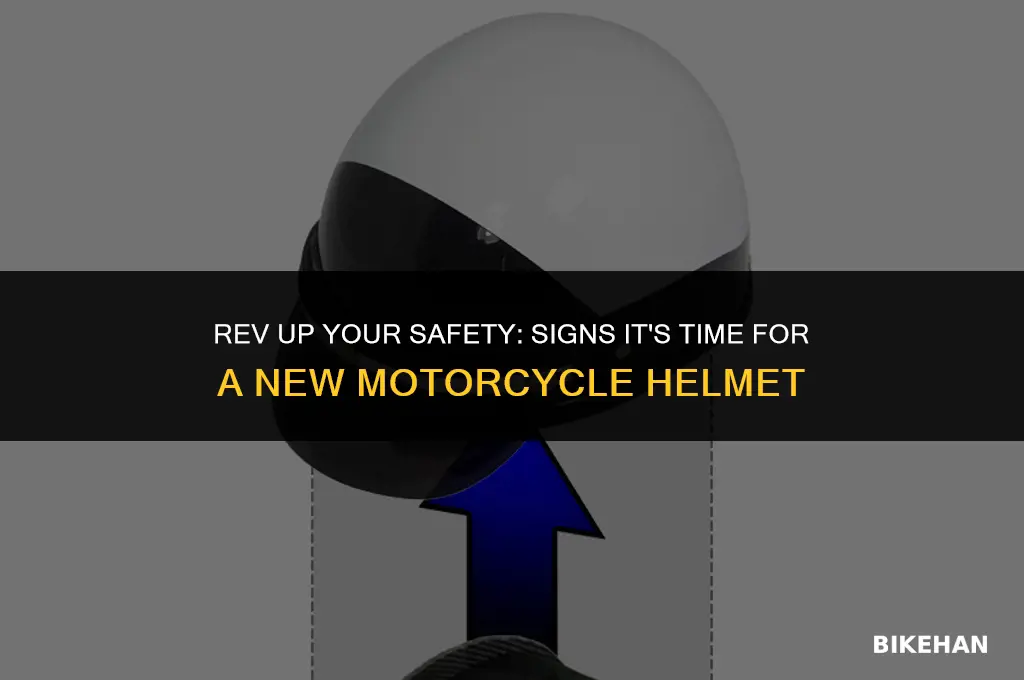
Knowing when to replace your motorcycle helmet is crucial for safety and performance. Over time, helmets can suffer from wear and tear, exposure to the elements, and potential impacts that compromise their structural integrity. In this guide, we'll explore the key indicators that signal it's time to replace your helmet, ensuring you're well-protected on the road.
Explore related products



What You'll Learn
- After an accident: Replace your helmet if it has been involved in a crash to ensure safety
- Expiration date: Check your helmet's expiration date and replace it if it has passed
- Damage inspection: Regularly inspect your helmet for any signs of damage, such as cracks or dents
- Comfort and fit: Replace your helmet if it no longer fits comfortably or securely on your head
- Technology upgrades: Consider replacing your helmet if newer models offer improved safety features or technology

After an accident: Replace your helmet if it has been involved in a crash to ensure safety
If your helmet has been involved in a crash, it's crucial to replace it immediately to ensure your safety. Even if the helmet appears to be in good condition, the impact of a collision can compromise its structural integrity, putting you at risk in future accidents.
When a helmet is subjected to the forces of a crash, the materials can become stressed or fatigued, reducing their ability to absorb impact energy. This can lead to a higher risk of head injuries, including concussions, skull fractures, and traumatic brain injuries. In addition, the helmet's outer shell may have sustained damage that isn't visible to the naked eye, such as micro-cracks or delamination, which can further weaken its protective capabilities.
To ensure your safety, it's essential to replace your helmet after any accident, regardless of the severity. This includes not only high-speed collisions but also low-speed impacts, such as being rear-ended or colliding with a stationary object. Even if you don't feel any pain or discomfort, the helmet may still have been compromised, and it's better to err on the side of caution.
When selecting a new helmet, make sure to choose one that meets or exceeds safety standards, such as those set by the Department of Transportation (DOT) or the Snell Memorial Foundation. Look for a helmet that fits properly, is comfortable to wear, and provides adequate ventilation. Additionally, consider choosing a helmet with a visor or face shield to protect your eyes and face from debris and wind.
Remember, your helmet is your most critical piece of safety gear when riding a motorcycle. By replacing it after an accident, you're taking an important step to protect yourself and reduce the risk of serious injury in the event of another crash.
Decoding the Mystery: What Does a Motorcycle Helmet on the Ground Mean?
You may want to see also
Explore related products


Expiration date: Check your helmet's expiration date and replace it if it has passed
Manufacturers assign an expiration date to motorcycle helmets to ensure their safety and performance over time. This date is crucial because it indicates the period during which the helmet is guaranteed to provide optimal protection in the event of an accident. After this date, the materials may degrade, reducing the helmet's ability to absorb impact and protect the rider's head. Therefore, it is essential to regularly check the expiration date on your helmet and replace it if it has passed.
To locate the expiration date, examine the label inside the helmet, usually found on the inner shell or the chin strap. The date is often printed or stamped and may be accompanied by a warning symbol or text indicating its significance. If the label is missing or the date is unclear, it is advisable to contact the manufacturer or a professional retailer for assistance.
Replacing a helmet that has exceeded its expiration date is a critical safety measure. Even if the helmet appears to be in good condition, its structural integrity may be compromised, putting the rider at risk. It is recommended to replace the helmet immediately upon discovering that the expiration date has passed, rather than waiting for a more convenient time.
In addition to checking the expiration date, it is also important to inspect the helmet regularly for any signs of wear or damage, such as cracks, dents, or frayed straps. If any issues are detected, the helmet should be replaced regardless of whether the expiration date has passed. By staying vigilant about helmet safety, riders can significantly reduce their risk of head injuries in the event of an accident.
Breaking In Your Motorcycle Helmet: A Rider's Guide to Comfort and Safety
You may want to see also
Explore related products


Damage inspection: Regularly inspect your helmet for any signs of damage, such as cracks or dents
Regularly inspecting your motorcycle helmet for damage is crucial to ensure your safety on the road. Helmets are designed to protect your head in the event of an accident, but they can only do so effectively if they are in good condition. Here are some specific steps and tips for conducting a thorough damage inspection:
- Visual Inspection: Start by examining the helmet's exterior for any visible cracks, dents, or scratches. Pay close attention to the areas around the visor, chin guard, and any ventilation openings, as these are common impact points.
- Check the Interior: Remove the helmet's padding and liner to inspect the interior for any signs of damage. Look for cracks in the foam padding, tears in the fabric, or any deformation that could compromise the helmet's ability to absorb impact.
- Assess the Visor: The visor is a critical component of your helmet, providing protection for your eyes and face. Check for any cracks, chips, or scratches that could impair your vision or weaken the visor's structural integrity.
- Inspect the Retention System: Ensure that the helmet's retention system, including the chin strap and buckle, is in good working order. A damaged retention system could fail to keep the helmet securely in place during an accident.
- Look for Signs of Wear: Even if your helmet hasn't been involved in an accident, regular wear and tear can compromise its safety. Check for any signs of deterioration, such as fading colors, peeling paint, or worn-out padding.
If you discover any damage during your inspection, it's essential to replace the helmet immediately. A damaged helmet may not provide adequate protection in the event of an accident, putting you at risk of serious injury. Remember, your safety is paramount, and investing in a new helmet is a small price to pay for peace of mind on the road.
Decoding Roadside Symbols: The Significance of a Helmet Behind a Motorcycle
You may want to see also
Explore related products


$11.99


Comfort and fit: Replace your helmet if it no longer fits comfortably or securely on your head
A helmet that fits well is crucial for both comfort and safety while riding a motorcycle. Over time, helmets can become less secure due to wear and tear, changes in head shape, or exposure to the elements. If your helmet no longer fits snugly, it's essential to replace it to ensure optimal protection in the event of an accident.
To determine if your helmet fits properly, start by checking the chin strap. It should be tight enough to stay in place but not so tight that it causes discomfort. Next, move your head from side to side and up and down. If the helmet shifts significantly or feels loose, it's a sign that it no longer fits securely. Additionally, if you can fit more than one finger between the helmet and your forehead, it's too big and should be replaced.
Another factor to consider is the padding inside the helmet. Over time, the padding can compress and lose its shape, reducing the helmet's ability to absorb impact. If the padding feels worn or uneven, it's a good indication that the helmet needs to be replaced.
It's also important to consider the overall condition of the helmet. If it has any cracks, dents, or other damage, it should be replaced immediately, regardless of how well it fits. A damaged helmet may not provide adequate protection in the event of an accident.
In conclusion, a helmet that fits comfortably and securely is essential for motorcycle safety. Regularly checking the fit and condition of your helmet can help ensure that you're always riding with the best possible protection. If your helmet no longer fits well or shows signs of wear and tear, it's time to invest in a new one.
Florida Motorcycle Helmet Laws: What You Need to Know
You may want to see also
Explore related products


Technology upgrades: Consider replacing your helmet if newer models offer improved safety features or technology
Motorcycle helmets are critical safety gear, and staying up-to-date with the latest technology can significantly enhance rider protection. One key reason to consider replacing your helmet is the introduction of newer models that boast improved safety features or cutting-edge technology. These advancements can range from better impact absorption materials to integrated communication systems, all designed to provide a safer and more comfortable riding experience.
For instance, some modern helmets come equipped with MIPS (Multi-Directional Impact Protection System) technology, which helps reduce the risk of brain injury during angled impacts. Others may feature advanced ventilation systems that improve airflow and reduce fogging, ensuring clearer vision on the road. Additionally, newer helmets might offer better integration with other safety devices, such as Bluetooth connectivity for communication with other riders or emergency services.
When evaluating whether to upgrade your helmet for technological reasons, it's essential to research the specific features that are important to you. Consider factors such as your riding style, the type of motorcycle you own, and the conditions in which you typically ride. For example, a long-distance touring rider might prioritize comfort and communication features, while a track day enthusiast might focus on aerodynamics and impact protection.
It's also crucial to ensure that any new helmet you purchase meets or exceeds relevant safety standards, such as those set by the Department of Transportation (DOT) or SNELL. These certifications guarantee that the helmet has undergone rigorous testing and is capable of providing the necessary protection in the event of a crash.
In conclusion, keeping abreast of technological advancements in motorcycle helmets can be a vital aspect of maintaining optimal safety on the road. By carefully considering the latest features and how they align with your specific needs, you can make an informed decision about whether it's time to upgrade your helmet.
Indiana Motorcycle Helmet Laws: What You Need to Know
You may want to see also
Frequently asked questions
It's generally recommended to replace your motorcycle helmet every 3 to 5 years, or sooner if it has been involved in an accident or shows signs of wear and tear.
Signs that you need to replace your motorcycle helmet include visible damage such as cracks or dents, a worn-out or frayed chin strap, faded or peeling paint, and any other signs of deterioration. Additionally, if the helmet has been involved in an accident, it's important to replace it even if there are no visible signs of damage.
Regularly replacing your motorcycle helmet is important for safety reasons. Over time, helmets can become less effective at protecting your head in the event of an accident due to wear and tear, exposure to the elements, and changes in safety standards. By replacing your helmet regularly, you can ensure that you have the best possible protection while riding.