Matthew Brooks
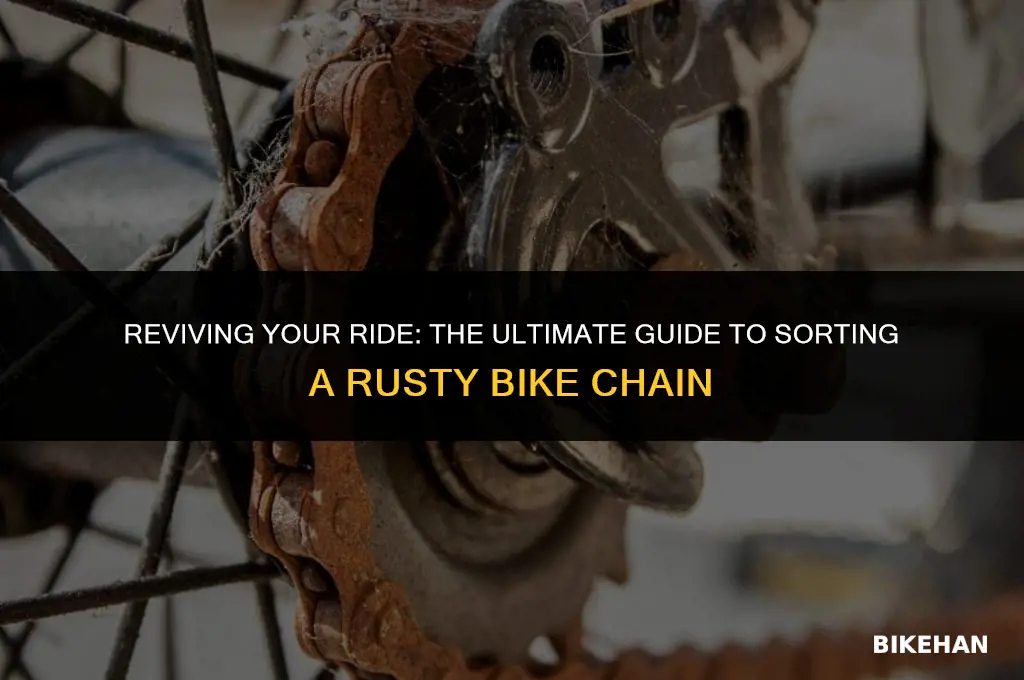
Sorting a rusty bike chain can be a challenging task, especially if the chain has been exposed to the elements for an extended period. Rust can cause the chain links to seize and become difficult to separate. To effectively sort a rusty bike chain, you'll need to gather a few essential tools and follow a systematic approach. First, you'll want to remove the chain from the bike and soak it in a rust-removing solution. Once the rust has been loosened, you can use a soft brush to gently scrub away any remaining rust particles. After the chain is clean, it's important to thoroughly dry it to prevent further rusting. Finally, you can apply a lubricant to the chain to ensure smooth operation and protect it from future corrosion.
Explore related products




What You'll Learn
- Preparation: Gather necessary tools and materials, such as gloves, degreaser, and lubricant
- Cleaning: Thoroughly clean the chain using degreaser and a brush to remove dirt and rust
- Inspection: Check the chain for damage, such as broken links or excessive wear, and replace if necessary
- Lubrication: Apply lubricant to the chain, ensuring it penetrates the rollers and pins
- Reassembly: Reattach the chain to the bike, ensuring proper alignment and tension

Preparation: Gather necessary tools and materials, such as gloves, degreaser, and lubricant
Before diving into the task of sorting a rusty bike chain, it's crucial to prepare adequately. This preparation phase involves gathering the necessary tools and materials to ensure the process is both effective and safe. Essential items include gloves to protect your hands from grease and rust, a degreaser to remove the built-up grime, and a lubricant to ensure the chain runs smoothly after cleaning. Additionally, having a clean rag, a brush, and possibly a chain tool can make the task more manageable.
When selecting gloves, opt for ones that are durable and provide good grip, such as nitrile or latex gloves. For the degreaser, choose a product specifically designed for bike chains, as these are formulated to break down the tough grease without damaging the chain. Popular options include WD-40 or specialized bike chain degreasers. As for the lubricant, a silicone-based or Teflon-based lubricant is recommended for its long-lasting and water-resistant properties.
Once you have all the materials, lay them out in a well-ventilated area to avoid inhaling any fumes from the degreaser. It's also a good idea to cover the surface you'll be working on with a drop cloth or old newspapers to catch any drips or spills. With everything in place, you're ready to begin the process of sorting and cleaning your rusty bike chain.
Remember, safety should always be a priority. Wear protective eyewear if you're concerned about splashes, and work in a space where you won't be disturbed. Take your time to gather all the necessary items, as rushing this preparation phase could lead to mistakes or accidents down the line. By being thorough and methodical, you'll set yourself up for success in restoring your bike chain to its former glory.
Effortless SRAM Bike Chain Replacement: A Step-by-Step Guide
You may want to see also
Explore related products


Cleaning: Thoroughly clean the chain using degreaser and a brush to remove dirt and rust
Begin the cleaning process by gathering the necessary supplies: a degreaser specifically designed for bike chains, a stiff-bristled brush, and a clean rag or paper towels. Ensure the bike is positioned in a well-ventilated area to avoid inhaling fumes from the degreaser.
Apply the degreaser liberally to the chain, making sure to cover all links and rollers. Allow the degreaser to penetrate for a few minutes, which will help break down the dirt and rust. Use the brush to scrub the chain vigorously, focusing on areas with heavy buildup. Be thorough, as any remaining dirt can cause further rusting and wear.
Rinse the chain with clean water to remove the degreaser and loosened debris. Dry the chain completely with a clean rag or paper towels, ensuring no moisture remains. Moisture is a primary cause of rust, so it's crucial to dry the chain thoroughly.
Inspect the chain for any remaining rust spots or damage. If rust persists, consider using a rust remover or replacing the chain entirely. Regular cleaning and maintenance can prevent rust from forming in the first place, extending the life of your bike chain.
Remember to dispose of the used degreaser and cleaning materials responsibly, following local regulations for chemical waste. By keeping your bike chain clean and rust-free, you'll ensure smoother rides and prolong the life of your bicycle.
Mastering Chain Maintenance: Shortening Your 10-Speed Bike Chain
You may want to see also
Explore related products


Inspection: Check the chain for damage, such as broken links or excessive wear, and replace if necessary
Begin the inspection process by carefully examining each link of the bike chain for signs of damage. Look for any broken or fractured links, as these can compromise the chain's integrity and lead to accidents. Additionally, check for excessive wear, such as stretched or misshapen links, which can also affect the chain's performance and safety.
To perform a thorough inspection, it's best to remove the chain from the bike and lay it out on a flat surface. This will allow you to easily access all parts of the chain and identify any potential issues. Use a chain tool to remove the chain, if necessary, and be sure to follow the manufacturer's instructions for your specific bike model.
Once the chain is removed, inspect it under good lighting conditions to ensure you don't miss any damage. You can use a magnifying glass or a jeweler's loupe to get a closer look at the links and identify any cracks, bends, or other deformities. Pay particular attention to the areas where the chain connects to the bike's gears and pedals, as these are common points of failure.
If you find any damage or excessive wear, it's important to replace the chain immediately. Continuing to use a damaged chain can lead to further problems, such as skipped gears or even a complete chain failure, which can be dangerous while riding. When replacing the chain, be sure to choose one that is compatible with your bike's specifications and follow the manufacturer's instructions for installation.
In addition to regular inspections, it's a good idea to clean and lubricate your bike chain regularly to prevent rust and wear. This will help extend the life of the chain and ensure smooth, reliable performance. Remember to always follow the manufacturer's recommendations for cleaning and maintenance to avoid damaging the chain or other components of your bike.
Mastering the Art of Setting Your RadMini Bike Chain
You may want to see also
Explore related products


Lubrication: Apply lubricant to the chain, ensuring it penetrates the rollers and pins
To effectively lubricate a bike chain, it's crucial to select the right type of lubricant. Avoid using household oils like WD-40 or motor oil, as these can attract dirt and grime, leading to a buildup that's harder to clean than the original rust. Instead, opt for a dedicated bike chain lubricant, which is designed to penetrate the rollers and pins while also providing a protective barrier against future rust. Look for lubricants that are specifically formulated for wet or dry conditions, depending on the environment in which you typically ride.
Once you've chosen the appropriate lubricant, clean the chain thoroughly to remove any existing dirt, grime, or old lubricant. This can be done using a chain cleaning device or by wiping the chain with a clean rag soaked in degreaser. After cleaning, allow the chain to dry completely before applying the new lubricant. This ensures that the lubricant penetrates the rollers and pins effectively, rather than being diluted by residual moisture.
When applying the lubricant, start by placing a small amount on the top of the chain, near the front sprocket. Then, slowly rotate the pedals backwards, allowing the lubricant to spread evenly along the length of the chain. Be sure to apply the lubricant to the rollers and pins, as these are the areas most prone to rust and wear. A common mistake is to over-lubricate the chain, which can lead to a buildup of dirt and grime. Use a moderate amount of lubricant, and wipe off any excess with a clean rag.
After lubricating the chain, it's important to let the lubricant sit for a few minutes to allow it to penetrate the rollers and pins fully. Then, wipe off any excess lubricant with a clean rag, paying special attention to the jockey wheels and derailleur pulleys. This will help prevent the buildup of dirt and grime in these areas, which can lead to shifting problems and other issues.
Regular maintenance is key to keeping your bike chain in good condition. Aim to lubricate your chain every 100-200 miles, or more frequently if you ride in wet or dirty conditions. By following these steps and maintaining a consistent lubrication schedule, you can help prevent rust and wear, ensuring a smooth and efficient ride.
Revive Your Ride: The Essential Guide to Soaking Your Bike Chain
You may want to see also
Explore related products


Reassembly: Reattach the chain to the bike, ensuring proper alignment and tension
Begin by carefully threading the cleaned and lubricated chain back onto the bike's drivetrain. Ensure that the chain aligns correctly with the front and rear sprockets, as misalignment can lead to further damage or inefficiency. Use a chain tool to adjust the tension of the chain, making sure it is snug but not overly tight. Over-tensioning can cause the chain to wear out more quickly, while under-tensioning can lead to slippage and reduced efficiency.
Once the chain is properly tensioned, test it by pedaling the bike and shifting through the gears. Listen for any unusual noises or feel for any resistance, which may indicate that the chain is not properly aligned or tensioned. If everything feels smooth, take the bike for a short ride to ensure that the chain performs well under real-world conditions.
Remember to regularly check and maintain the chain to prevent future rust and wear. This includes cleaning the chain after each ride, especially in wet or dirty conditions, and lubricating it according to the manufacturer's recommendations. By following these steps, you can extend the life of your bike chain and ensure smooth and efficient operation.
Mastering the Art of Riveting a Bike Chain: A Step-by-Step Guide
You may want to see also
Frequently asked questions
To sort a rusty bike chain, you'll need to clean it thoroughly first. Use a degreaser and a brush to remove any dirt and grime. Once clean, apply a lubricant to the chain while slowly rotating the pedals backward. Wipe off any excess lubricant with a clean rag.
You'll need a few basic tools to clean a rusty bike chain. These include a degreaser, a brush (preferably a stiff-bristled one), a clean rag, and a lubricant specifically designed for bike chains.
It's recommended to clean and lubricate your bike chain every 100-200 miles, or more frequently if you ride in wet or dirty conditions. Regular maintenance will help prolong the life of your chain and ensure smooth shifting.
A worn-out bike chain will often show signs such as rust, excessive wear on the rollers and pins, and a decrease in performance (e.g., slipping or difficulty shifting). If your chain is severely rusted or damaged, it may be time to replace it.
While WD-40 can be used as a temporary solution to reduce rust, it's not recommended as a long-term lubricant for your bike chain. WD-40 is a solvent and can actually strip away the protective oils from your chain. Instead, use a lubricant specifically designed for bike chains, which will provide better protection and performance.