Samantha Lee
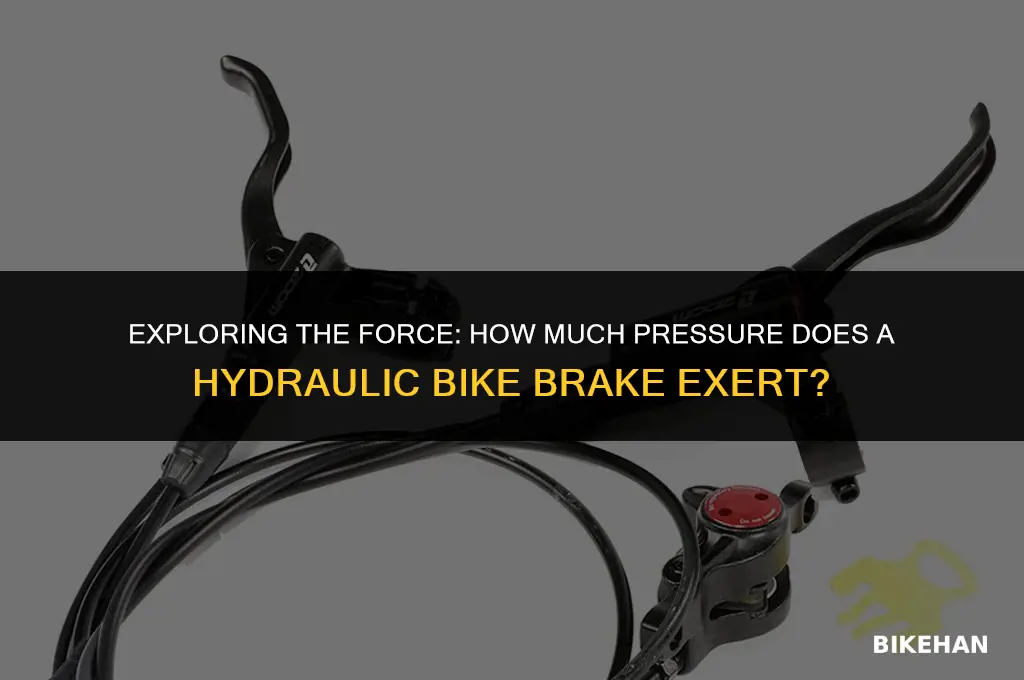
Hydraulic bike brakes are renowned for their superior stopping power and reliability, especially under varied weather conditions. They operate by using hydraulic fluid to transfer the force applied by the brake lever to the brake calipers, which then clamp onto the brake rotors to slow down or stop the bike. The pressure exerted by a hydraulic bike brake can vary significantly depending on several factors, including the design of the brake system, the force applied by the rider, and the condition of the brake components. Typically, the pressure can range from a few hundred to over a thousand pounds per square inch (PSI). This high pressure is what allows hydraulic brakes to provide consistent and powerful braking performance, making them a popular choice among cyclists who demand precise control and safety.
Explore related products


What You'll Learn
- Brake Lever Force: The force applied by the rider on the brake lever to initiate braking
- Hydraulic Fluid Pressure: The pressure of the hydraulic fluid transmitted through the brake lines
- Caliper Force: The force exerted by the brake caliper on the brake pads and rotor
- Brake Pad Contact Pressure: The pressure at which the brake pads contact the rotor surface
- System Efficiency: The efficiency of the hydraulic system in converting lever force into braking power

Brake Lever Force: The force applied by the rider on the brake lever to initiate braking
The force applied by the rider on the brake lever is a critical factor in the effectiveness of a hydraulic bike brake system. This force, often referred to as brake lever force, is what initiates the braking process by activating the hydraulic circuit. The rider's ability to apply consistent and adequate force on the brake lever directly impacts the stopping power and control of the bicycle.
In a hydraulic brake system, the force applied to the brake lever is transferred through the hydraulic fluid to the brake calipers. The calipers then apply this force to the brake pads, which in turn press against the brake rotors to slow down or stop the bike. The efficiency of this system relies on the rider's ability to apply the necessary force to the brake lever.
Several factors can influence the amount of force required to effectively operate a hydraulic bike brake. These include the type of brake system (e.g., disc or rim brakes), the condition of the brake pads and rotors, the hydraulic fluid pressure, and the rider's braking technique. For instance, disc brakes typically require less force to operate compared to rim brakes due to their larger contact area and more efficient heat dissipation.
To ensure optimal braking performance, riders should be aware of the correct braking technique for their specific bike and brake system. This includes understanding how to modulate the brake lever force to achieve the desired level of braking power and control. Additionally, regular maintenance of the brake system, such as checking and adjusting the hydraulic fluid pressure and replacing worn brake pads, is essential to maintain consistent braking performance.
In conclusion, the force applied by the rider on the brake lever is a crucial element in the operation of a hydraulic bike brake system. By understanding the factors that influence this force and practicing proper braking techniques, riders can ensure effective and safe braking performance on their bicycles.
Unleashing the Beast: The Incredible Power of MotoGP Bikes
You may want to see also
Explore related products


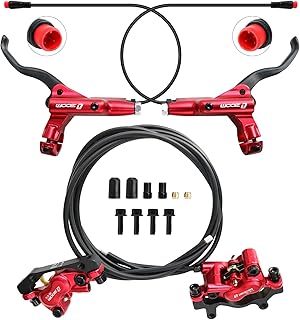


Hydraulic Fluid Pressure: The pressure of the hydraulic fluid transmitted through the brake lines
Hydraulic fluid pressure is a critical component in the functioning of hydraulic bike brakes. It is the force exerted by the hydraulic fluid within the brake lines that ultimately leads to the braking action. When the brake lever is engaged, it pushes the hydraulic fluid through the brake lines, creating pressure. This pressure is then transferred to the brake calipers, which clamp onto the brake rotors, slowing down or stopping the bike.
The pressure of the hydraulic fluid can vary depending on several factors, including the type of brake system, the condition of the brake lines, and the force applied by the rider on the brake lever. In general, hydraulic bike brakes can exert pressures ranging from 100 to 200 bar (1450 to 2900 psi). This is significantly higher than the pressure exerted by mechanical bike brakes, which typically range from 20 to 50 bar (290 to 725 psi).
One of the advantages of hydraulic bike brakes is their ability to maintain consistent pressure over time. This is due to the fact that hydraulic systems are closed, meaning that the fluid is contained within the brake lines and calipers. As a result, the pressure does not dissipate as quickly as it would in a mechanical system, where air can leak out of the brake cables.
However, it is important to note that hydraulic bike brakes require regular maintenance to ensure optimal performance. This includes checking the hydraulic fluid level, inspecting the brake lines for leaks or damage, and bleeding the brakes to remove any air bubbles that may have entered the system. Failure to properly maintain the hydraulic system can lead to a decrease in braking performance, which can be dangerous, especially in critical situations.
In conclusion, hydraulic fluid pressure plays a vital role in the effectiveness of hydraulic bike brakes. By understanding the factors that influence this pressure and taking steps to maintain the hydraulic system, riders can ensure that their brakes are functioning at their best, providing reliable and consistent stopping power.
Exploring the Cost of Peloton Bikes: A Comprehensive Guide
You may want to see also
Explore related products


Caliper Force: The force exerted by the brake caliper on the brake pads and rotor
The caliper force in a hydraulic bike brake system is a critical factor in determining the overall braking performance. This force is generated by the hydraulic pressure within the brake lines, which is converted into mechanical force by the brake caliper. The caliper then applies this force to the brake pads, which in turn press against the rotor to slow down or stop the bike.
The amount of caliper force exerted depends on several factors, including the hydraulic pressure in the brake lines, the size and design of the brake caliper, and the friction coefficient between the brake pads and rotor. In general, higher hydraulic pressure will result in greater caliper force and improved braking performance. However, it is important to note that excessive pressure can lead to brake fade, where the brake pads overheat and lose their friction properties.
To calculate the caliper force, one can use the formula F = P x A, where F is the force, P is the hydraulic pressure, and A is the effective area of the brake caliper piston. The effective area is the area of the piston that is in contact with the brake fluid and is typically smaller than the total piston area due to the presence of seals and other components.
In practice, the caliper force can be measured using a dynamometer or by applying a known weight to the brake lever and measuring the resulting force at the caliper. This information can be used to adjust the brake system for optimal performance and to ensure that the brakes are functioning safely and effectively.
One unique aspect of caliper force in hydraulic bike brakes is the ability to adjust the force distribution between the front and rear brakes. This can be done by adjusting the hydraulic pressure in the brake lines or by using different size brake rotors and calipers. For example, a rider may choose to have more braking force at the front wheel for improved stopping power in steep descents, or more force at the rear wheel for better control during technical maneuvers.
In conclusion, understanding and optimizing the caliper force in a hydraulic bike brake system is essential for achieving safe and effective braking performance. By considering factors such as hydraulic pressure, caliper design, and friction coefficient, riders can tailor their brake systems to meet their specific needs and riding conditions.
Understanding the Weight Capacity of Your Carbon Bike
You may want to see also
Explore related products


Brake Pad Contact Pressure: The pressure at which the brake pads contact the rotor surface
The brake pad contact pressure is a critical factor in the performance of a hydraulic bike brake system. It refers to the force exerted by the brake pads onto the rotor surface when the brake lever is engaged. This pressure is directly responsible for the friction that slows down and stops the bike. In a hydraulic system, this pressure is generated by the hydraulic fluid being forced through the brake lines when the lever is squeezed.
The optimal brake pad contact pressure can vary depending on several factors, including the type of bike, the riding conditions, and the rider's preferences. For instance, a higher contact pressure might be necessary for a mountain bike navigating steep and rough terrain, while a lower pressure might be sufficient for a road bike on smooth pavement.
One of the key benefits of hydraulic bike brakes is their ability to maintain consistent brake pad contact pressure under various conditions. Unlike mechanical brakes, which can be affected by changes in cable tension or contamination, hydraulic brakes provide a more reliable and predictable braking performance. This is because the hydraulic fluid is less susceptible to environmental factors and provides a more direct transfer of force from the lever to the brake pads.
To ensure optimal brake pad contact pressure, it is essential to properly maintain the hydraulic brake system. This includes regularly checking the brake fluid level, inspecting the brake pads for wear, and ensuring that the brake lines are free from leaks or blockages. Additionally, the brake lever should be adjusted to the rider's preference to ensure that the desired level of braking force can be achieved without causing excessive wear on the brake pads or rotor.
In conclusion, understanding and maintaining the brake pad contact pressure is crucial for ensuring the safety and performance of a hydraulic bike brake system. By taking the time to properly adjust and maintain the brakes, riders can enjoy a more reliable and efficient braking experience, regardless of the riding conditions.
Understanding Bike Chain Slack: A Comprehensive Guide
You may want to see also
Explore related products


System Efficiency: The efficiency of the hydraulic system in converting lever force into braking power
Hydraulic bike brakes are renowned for their efficiency in converting lever force into braking power. This efficiency is a result of the hydraulic system's ability to multiply the force applied by the rider through the use of fluid pressure. When the brake lever is engaged, it pushes fluid through a narrow tube, which increases the pressure. This pressurized fluid then moves to the brake caliper, where it forces the brake pads against the rotor, creating friction that slows down the bike.
The efficiency of this system can be attributed to several factors. Firstly, hydraulic systems are highly effective at transmitting force over long distances with minimal loss of power. This is due to the incompressibility of the fluid used, which ensures that the force applied at the lever is almost entirely transferred to the brake caliper. Secondly, the use of a master cylinder and slave cylinder setup allows for a significant mechanical advantage, meaning that a relatively small amount of force at the lever can generate a much larger force at the brake pads.
Another factor contributing to the efficiency of hydraulic bike brakes is the design of the brake caliper and pads. The caliper is typically designed to apply even pressure across the entire surface area of the brake pads, which maximizes the frictional force generated. Additionally, the brake pads themselves are often made from high-performance materials that provide excellent friction and wear resistance.
In terms of practical implications, the efficiency of hydraulic bike brakes means that riders can achieve powerful braking performance with relatively little effort. This is particularly beneficial in situations where quick and effective braking is necessary, such as when navigating steep descents or avoiding obstacles. Furthermore, the reliability and consistency of hydraulic brakes make them a popular choice for both recreational and professional cyclists.
Overall, the efficiency of the hydraulic system in converting lever force into braking power is a key factor in the effectiveness of hydraulic bike brakes. By understanding the principles behind this efficiency, riders can better appreciate the performance and reliability of their braking systems, and make informed decisions when choosing and maintaining their bikes.
Coating Your Ride: A Guide to Powder Amount for Bike Frames
You may want to see also
Frequently asked questions
The pressure exerted by a hydraulic bike brake can vary, but it typically ranges from 100 to 200 bar (1450 to 2900 psi). This pressure is generated by the rider's force on the brake lever and is transferred through the hydraulic fluid to the brake calipers, which then apply this force to the brake pads and rotor.
Several factors can influence the pressure exerted by a hydraulic bike brake, including the rider's hand strength, the size and design of the brake lever, the type and viscosity of the hydraulic fluid, the condition of the brake system (e.g., whether it's well-maintained or has air bubbles), and the environmental conditions (e.g., temperature and altitude).
Hydraulic bike brakes generally exert more pressure than mechanical brakes. While mechanical brakes rely on the rider's hand strength to apply force directly to the brake pads, hydraulic brakes use the rider's force to move hydraulic fluid, which then amplifies the force applied to the brake pads. This amplification can result in a more powerful and consistent braking performance, especially in wet or dirty conditions.