Samantha Lee
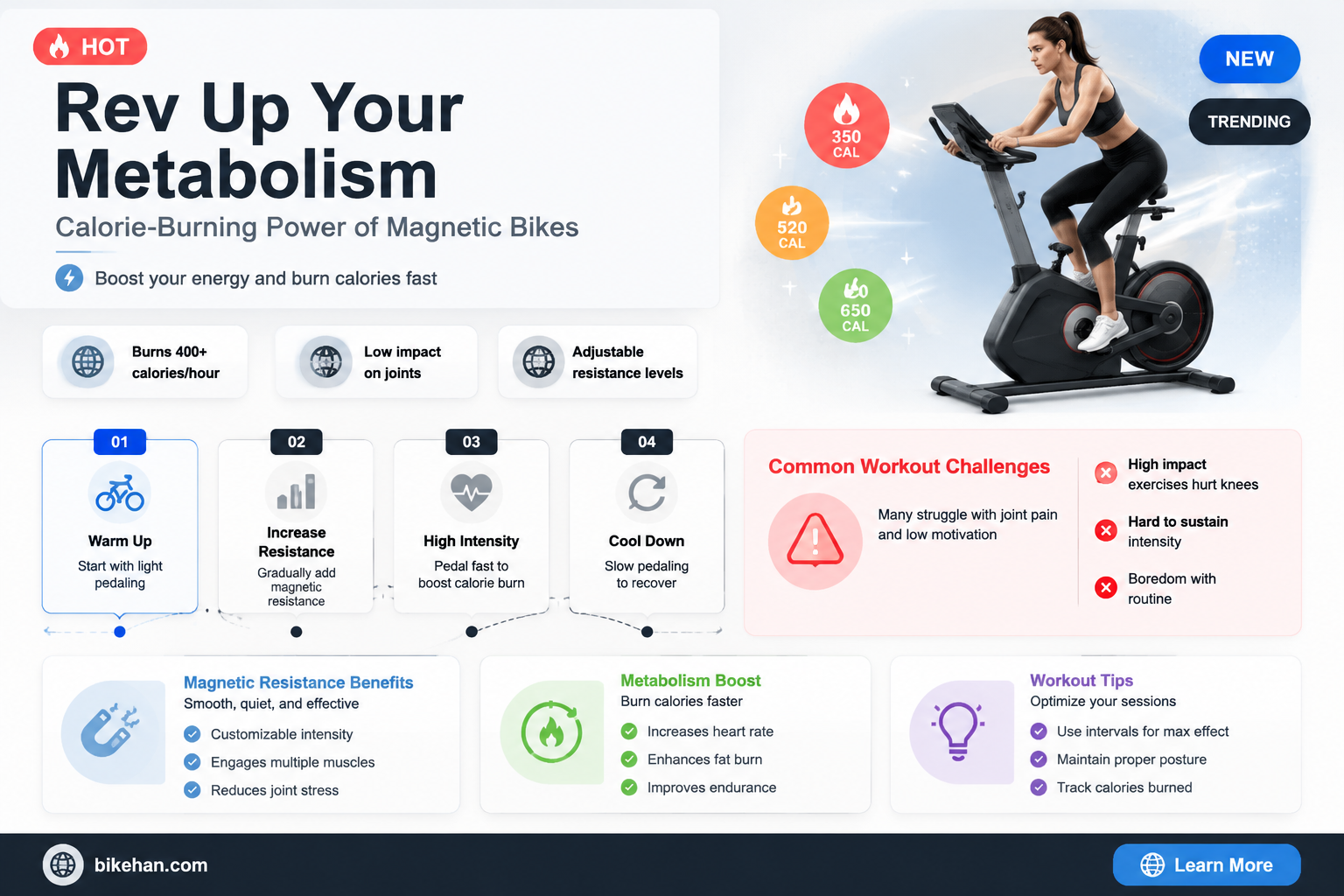
Magnetic bikes are a popular choice for indoor cycling enthusiasts due to their quiet operation and low maintenance. They provide an effective cardiovascular workout that can help burn calories and improve overall fitness. The number of calories burned during a magnetic bike session depends on several factors, including the intensity of the workout, the duration of the session, and the individual's weight and fitness level. On average, a moderate-intensity workout on a magnetic bike can burn anywhere from 400 to 600 calories per hour for a person weighing around 150 pounds. However, this number can vary significantly based on the factors mentioned above. It's important to note that consistency and gradually increasing the intensity of workouts can lead to better calorie-burning results over time.
Explore related products



What You'll Learn
- Calorie Burn Rate: Factors influencing calorie burn rate on a magnetic bike, such as intensity and duration
- User Weight and Fitness Level: How an individual's weight and fitness level affect the number of calories burned
- Resistance Settings: The impact of different resistance levels on calorie expenditure during a workout
- Comparison with Other Exercises: Calorie burn comparison between magnetic biking and other forms of exercise
- Tracking and Monitoring: Methods for accurately tracking and monitoring calorie burn during magnetic bike workouts

Calorie Burn Rate: Factors influencing calorie burn rate on a magnetic bike, such as intensity and duration
The calorie burn rate on a magnetic bike is influenced by several key factors, primarily the intensity of the workout and its duration. Intensity can be measured in terms of resistance level, speed, and the effort exerted by the cyclist. The higher the resistance and speed, the more calories are burned. For instance, a high-intensity interval training (HIIT) session on a magnetic bike can significantly increase calorie expenditure compared to a steady-state, low-intensity ride.
Duration also plays a crucial role in determining the total calorie burn. Longer workouts naturally burn more calories, but the body's efficiency can change over time. For example, during the initial stages of a workout, the body may burn more calories per minute as it adjusts to the increased demand. However, as the workout progresses and the body becomes more efficient, the calorie burn rate may decrease slightly.
Another factor to consider is the individual's body weight and composition. Heavier individuals tend to burn more calories during exercise due to the increased energy required to move their body. Additionally, muscle mass can influence calorie burn rate, as muscle tissue is more metabolically active than fat tissue.
Environmental factors, such as temperature and humidity, can also impact calorie expenditure. Exercising in a hot and humid environment can increase the body's energy expenditure as it works harder to regulate body temperature.
To maximize calorie burn on a magnetic bike, it's essential to vary the intensity and duration of workouts. Incorporating HIIT sessions, where periods of high-intensity exercise are alternated with recovery periods, can be particularly effective. Additionally, monitoring heart rate and perceived exertion can help ensure that the workout remains challenging and efficient.
In summary, the calorie burn rate on a magnetic bike is a complex interplay of factors including intensity, duration, individual body characteristics, and environmental conditions. By understanding and manipulating these variables, individuals can optimize their workouts to achieve their fitness goals.
Pedaling Towards Fitness: Calorie Burn Insights for Sedentary Cyclists
You may want to see also
Explore related products


User Weight and Fitness Level: How an individual's weight and fitness level affect the number of calories burned
The number of calories burned during a magnetic bike workout is significantly influenced by an individual's weight and fitness level. Heavier individuals tend to burn more calories because their bodies require more energy to perform the same amount of work. For example, a person weighing 180 pounds may burn approximately 400-500 calories in a 30-minute moderate-intensity magnetic bike session, while a person weighing 120 pounds may burn around 250-300 calories in the same duration.
Fitness level also plays a crucial role in determining calorie burn. As fitness improves, the body becomes more efficient at using energy, which can lead to a decrease in the number of calories burned during a workout. However, this doesn't necessarily mean that the workout is less effective. Instead, it indicates that the body is adapting to the exercise and becoming more energy-efficient. To continue burning a significant number of calories, individuals may need to increase the intensity or duration of their workouts.
In addition to weight and fitness level, other factors such as age, gender, and muscle mass can also affect calorie burn. For instance, older adults may have a lower resting metabolic rate, which means they burn fewer calories at rest and during exercise. Similarly, women tend to have a lower muscle mass than men, which can result in a lower calorie burn during a workout.
To maximize calorie burn during a magnetic bike workout, individuals can focus on increasing their intensity and duration. High-intensity interval training (HIIT) is a particularly effective way to boost calorie burn, as it involves short bursts of intense exercise followed by periods of rest. Additionally, incorporating strength training exercises off the bike can help build muscle mass, which in turn can increase overall calorie burn.
In conclusion, while an individual's weight and fitness level are key factors in determining the number of calories burned during a magnetic bike workout, there are other variables that can also influence calorie burn. By understanding these factors and adjusting their workouts accordingly, individuals can optimize their calorie burn and achieve their fitness goals more effectively.
Rev Up Your Workout: The Calorie-Burning Power of Arm Biking
You may want to see also
Explore related products


Resistance Settings: The impact of different resistance levels on calorie expenditure during a workout
The resistance setting on a magnetic bike plays a crucial role in determining the intensity of your workout and, consequently, the number of calories you burn. Higher resistance levels increase the difficulty of pedaling, engaging more muscle groups and elevating your heart rate more effectively than lower resistance settings. This increased effort translates into a higher calorie expenditure, making it an essential factor for those looking to maximize their workout efficiency.
For instance, a study published in the Journal of Sports Science and Medicine found that cycling at a higher resistance level can increase calorie burn by up to 50% compared to cycling at a lower resistance. This is because the body has to work harder to overcome the resistance, leading to a greater energy expenditure. Additionally, high-resistance workouts tend to build more muscle mass, which can further boost your metabolism and calorie burn even at rest.
However, it's important to note that the optimal resistance level for calorie burning can vary depending on individual fitness levels and goals. Beginners may benefit from starting at lower resistance levels to build endurance and gradually increase the intensity as their fitness improves. On the other hand, more advanced cyclists may need to challenge themselves with higher resistance settings to continue making progress and burning calories effectively.
In practical terms, adjusting the resistance level on a magnetic bike is typically done through a knob or digital interface located on the bike's console. By experimenting with different settings, you can find the optimal resistance level that challenges you without being too overwhelming. It's also worth noting that many magnetic bikes come with pre-set programs that automatically adjust the resistance level throughout the workout, providing a structured and varied exercise routine.
In conclusion, understanding the impact of resistance settings on calorie expenditure is key to optimizing your magnetic bike workouts. By selecting the appropriate resistance level for your fitness level and goals, you can maximize your calorie burn and achieve better workout results. Remember to gradually increase the resistance as your fitness improves to continue challenging your body and reaping the benefits of your exercise routine.
Rev Up Your Workout: Calorie-Burning Benefits of Desk Biking
You may want to see also
Explore related products


Comparison with Other Exercises: Calorie burn comparison between magnetic biking and other forms of exercise
Magnetic biking is often compared to other forms of exercise in terms of calorie burn. One of the most common comparisons is with traditional cycling. While both activities engage similar muscle groups, magnetic biking typically burns fewer calories due to the lack of wind resistance and the controlled environment. On average, a 30-minute magnetic biking session can burn around 200-300 calories, whereas traditional cycling can burn anywhere from 300-500 calories in the same duration, depending on the intensity and terrain.
Another popular comparison is with running. Running is a high-impact activity that can burn a significant number of calories, often more than magnetic biking. For instance, a 30-minute run at a moderate pace can burn approximately 300-400 calories, while a more intense run can burn upwards of 500 calories. However, magnetic biking offers the advantage of being low-impact, making it a more suitable option for individuals with joint issues or those recovering from injuries.
When compared to strength training exercises, magnetic biking may not burn as many calories per session. High-intensity interval training (HIIT) and circuit training can burn anywhere from 400-600 calories in a 30-minute session. However, magnetic biking can be a valuable addition to a workout routine as it provides a cardiovascular benefit without the need for heavy lifting or high-impact movements.
In conclusion, while magnetic biking may not burn as many calories as some other forms of exercise, it offers unique benefits such as being low-impact and suitable for a wide range of fitness levels. It can be an effective way to improve cardiovascular health and contribute to overall calorie burn when combined with other forms of exercise.
Calories Burned on a 20-Mile Bike Ride: A Comprehensive Guide
You may want to see also
Explore related products


Tracking and Monitoring: Methods for accurately tracking and monitoring calorie burn during magnetic bike workouts
To accurately track and monitor calorie burn during magnetic bike workouts, several methods can be employed. One of the most common approaches is to use a heart rate monitor. By measuring your heart rate during the workout, you can estimate the intensity of your exercise and, consequently, the calories burned. This method is based on the fact that there is a direct correlation between heart rate and energy expenditure.
Another method is to use a calorie counter or a fitness tracker that is specifically designed for cycling. These devices often take into account factors such as speed, distance, and resistance level to provide a more accurate estimate of calorie burn. Some advanced models even incorporate data from multiple sensors to offer a comprehensive analysis of your workout.
For those who prefer a more traditional approach, manual calculation using a formula can also be effective. One such formula is the MET (Metabolic Equivalent Task) formula, which estimates the energy expenditure of various activities based on their intensity. To use this formula, you would need to determine the MET value for magnetic biking, which is typically around 4-6 METs depending on the intensity, and then multiply it by your weight in kilograms and the duration of your workout in minutes.
In addition to these methods, it is important to consider other factors that can influence calorie burn, such as your age, gender, weight, and fitness level. By taking these factors into account and using a combination of tracking methods, you can get a more accurate picture of your calorie expenditure during magnetic bike workouts.
To further enhance the accuracy of your tracking, it is recommended to maintain a consistent workout routine and to gradually increase the intensity and duration of your workouts. This will not only help you burn more calories but will also improve your overall fitness and health.
In conclusion, tracking and monitoring calorie burn during magnetic bike workouts can be achieved through various methods, including heart rate monitoring, using calorie counters or fitness trackers, and manual calculation using formulas such as the MET formula. By considering individual factors and using a combination of these methods, you can obtain a more precise estimate of your calorie expenditure and optimize your workout routine for better results.
Calories Burned: Unraveling the Mystery of 1K Bike Rides
You may want to see also
Frequently asked questions
The number of calories burned per hour on a magnetic bike can vary depending on the intensity of your workout and your body weight. On average, a person can burn between 400 to 600 calories per hour at a moderate intensity.
Yes, a magnetic bike can be effective for weight loss when used regularly as part of a balanced exercise routine. Consistent cycling can help burn calories, improve cardiovascular health, and build muscle, all of which contribute to weight loss.
The resistance level on a magnetic bike directly affects the intensity of your workout. Higher resistance levels require more effort to pedal, which increases the number of calories burned. Adjusting the resistance can help you achieve your fitness goals, whether you're looking to lose weight or improve endurance.
Many magnetic bikes come with built-in displays or sensors that can track your workout metrics, including calories burned. Additionally, you can use fitness apps or wearable devices to monitor your calorie expenditure during your cycling sessions.