Lauren Kennedy
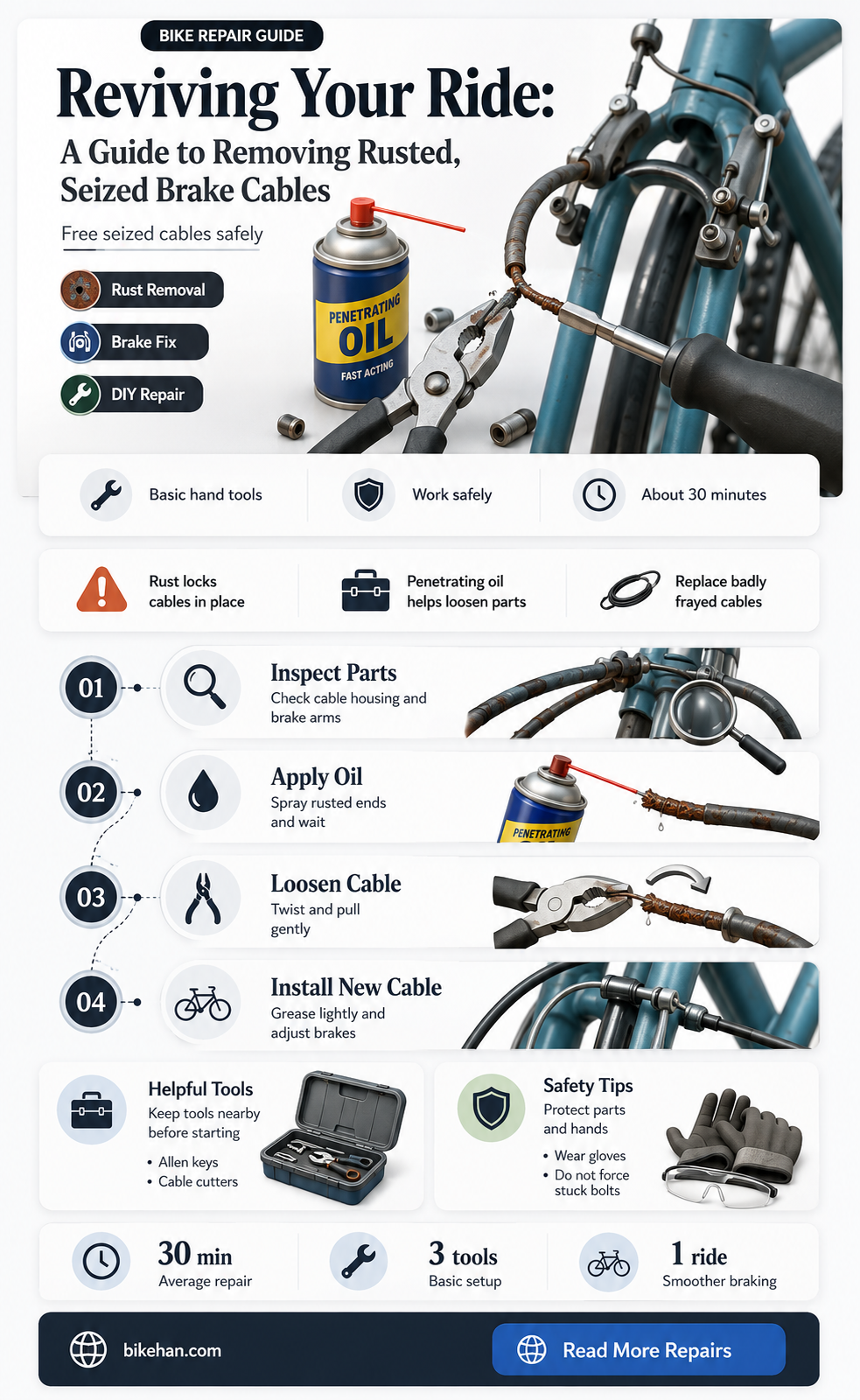
To effectively remove a rusted and seized brake cable from a bicycle, you'll need to follow a systematic approach. First, gather the necessary tools: a cable cutter, needle-nose pliers, a hex key set, and lubricant. Begin by loosening the brake cable clamp using the appropriate hex key. Once the clamp is loose, carefully cut the cable near the clamp, ensuring you leave enough slack to work with. Use the needle-nose pliers to grip the cut end of the cable and gently pull it out of the housing. If the cable is severely rusted and seized, you may need to apply lubricant to the affected area and let it sit for a few minutes to loosen the rust. After the cable is removed, inspect the housing for any signs of rust or damage and replace it if necessary. Finally, install a new brake cable, ensuring it's properly seated and secured in the clamp.
Explore related products


What You'll Learn
- Preparation: Gather necessary tools and materials, including lubricant, wire brush, and replacement cable if needed
- Cleaning: Use a wire brush to remove rust and debris from the seized brake cable and surrounding area
- Lubrication: Apply lubricant to the cable and work it in to loosen the rust and free the cable
- Removal: Carefully remove the loosened brake cable from the housing and inspect for damage
- Replacement: If the cable is damaged, replace it with a new one, ensuring proper installation and adjustment

Preparation: Gather necessary tools and materials, including lubricant, wire brush, and replacement cable if needed
Before embarking on the task of removing a rusted, seized brake cable from a bicycle, it is crucial to gather all the necessary tools and materials. This preparation phase ensures that the process is carried out efficiently and safely. The essential items include a high-quality lubricant, which can penetrate and loosen the rust; a wire brush, which is used to scrub away the rust; and a replacement cable, in case the existing one is too damaged to be reused. Additionally, having a set of Allen wrenches, a cable cutter, and some rags handy will make the task easier and more effective.
The lubricant should be specifically designed for bicycle cables, as it needs to penetrate the rust without damaging the cable or the surrounding components. A wire brush with fine bristles is preferable, as it can effectively remove rust without fraying the cable. When selecting a replacement cable, ensure it is the correct length and type for your bicycle's brake system. It is also advisable to wear gloves during this process to protect your hands from sharp edges and chemicals.
Once you have gathered all the necessary tools and materials, you can begin the process of removing the rusted brake cable. Start by applying the lubricant generously to the rusted area and allowing it to soak in for a few minutes. This will help to loosen the rust and make it easier to remove. Next, use the wire brush to scrub away the rust, working in a circular motion to ensure that all areas are thoroughly cleaned. Be careful not to apply too much pressure, as this could damage the cable.
After the rust has been removed, inspect the cable for any signs of damage or wear. If the cable appears to be in good condition, it can be reused. However, if it is frayed or kinked, it is best to replace it with a new one. When installing a new cable, ensure that it is properly lubricated and routed through the brake system. Finally, test the brakes to ensure that they are functioning correctly and make any necessary adjustments.
In conclusion, proper preparation is key to successfully removing a rusted, seized brake cable from a bicycle. By gathering the necessary tools and materials and following the correct procedure, you can ensure that your bicycle's brake system is functioning safely and efficiently.
Effortless Maintenance: Swapping Out Bike Disk Brake Pads
You may want to see also
Explore related products


Cleaning: Use a wire brush to remove rust and debris from the seized brake cable and surrounding area
Begin the cleaning process by ensuring the bicycle is securely positioned, either by placing it on a bike stand or flipping it upside down so the wheels are in the air. This will provide better access to the brake cable and surrounding components. Next, gather the necessary tools: a wire brush, which can be found at most hardware stores, and a clean rag or paper towels for wiping away debris.
Using the wire brush, vigorously scrub the rusted area of the brake cable, applying firm pressure to remove as much rust as possible. Be sure to brush in all directions to tackle rust that may be hiding in crevices or under the cable. As you work, rust particles and debris will fall away, so it's important to have a rag or paper towels handy to wipe up any mess and prevent it from spreading to other parts of the bike.
After scrubbing the brake cable, inspect the surrounding area for any additional rust or debris that may have been dislodged during the cleaning process. Use the wire brush to clean these areas as well, ensuring that all components are free from rust and grime. Once the cleaning is complete, use a dry rag to thoroughly dry the brake cable and surrounding area, as moisture can lead to further rusting.
For particularly stubborn rust, consider using a rust remover solution in conjunction with the wire brush. Apply the solution to the rusted area, let it sit for a few minutes, and then scrub away with the wire brush. Be sure to follow the manufacturer's instructions for the rust remover and take necessary safety precautions, such as wearing gloves and working in a well-ventilated area.
Finally, after the brake cable has been thoroughly cleaned and dried, apply a small amount of lubricant to keep it functioning smoothly and prevent future rusting. With these steps, you can effectively remove rust and debris from a seized brake cable, ensuring safe and reliable braking performance on your bicycle.
Explore related products


Lubrication: Apply lubricant to the cable and work it in to loosen the rust and free the cable
Begin by selecting an appropriate lubricant for the task. A silicone-based lubricant or a specialized bike cable lubricant is ideal because these products are designed to penetrate and protect against rust without attracting dirt. Avoid using oil-based lubricants like WD-40, as they can trap moisture and exacerbate rusting over time. Once you've chosen your lubricant, apply a small amount directly to the rusted area of the brake cable. Use a clean cloth or a cotton swab to work the lubricant into the rust, ensuring it penetrates deeply. You may need to let the lubricant sit for a few minutes to allow it to break down the rust.
After the lubricant has had time to work, use a cable housing tool or a pair of pliers to gently pull the cable back and forth. This motion will help to loosen the rust and free the cable. Be careful not to apply too much force, as this could cause the cable to snap. If the cable remains seized, you may need to repeat the lubrication process or consider replacing the cable entirely.
It's important to note that prevention is key when it comes to rusted brake cables. Regularly cleaning and lubricating your bike's cables can help to prevent rust from forming in the first place. Additionally, storing your bike in a dry, covered area can help to reduce the risk of rust.
In summary, lubricating a rusted brake cable is a delicate process that requires patience and the right tools. By choosing the appropriate lubricant, applying it correctly, and gently working the cable, you can often free a seized brake cable and restore it to working condition. However, if the cable is severely rusted or damaged, replacement may be the best option.
Explore related products



Removal: Carefully remove the loosened brake cable from the housing and inspect for damage
Begin by ensuring the bicycle is securely positioned, either by placing it on a bike stand or flipping it upside down so the wheels are in the air. This will provide stability and easier access to the brake components. Next, locate the brake cable housing, which is typically a cylindrical tube running from the brake lever to the brake caliper. Using a cable housing cutter or a sharp utility knife, carefully cut the housing at a point where it is easily accessible and where the cable is not seized.
Once the housing is cut, gently pull the brake cable out of the housing. Be cautious not to apply too much force, as this could cause the cable to snap, especially if it is rusted or corroded. As you remove the cable, inspect it for any signs of damage, such as fraying, rust, or kinks. If the cable is damaged, it will need to be replaced. If the cable appears to be in good condition, it can be reused after cleaning and lubricating.
After removing the cable, inspect the cable housing for any signs of rust, corrosion, or damage. If the housing is compromised, it will need to be replaced to ensure proper brake function and safety. If the housing is in good condition, it can be reused after cleaning and drying.
Before reinstalling the brake cable, apply a small amount of lubricant to the cable to prevent future rust and corrosion. Then, carefully thread the cable back through the housing, ensuring it is properly seated and not kinked. Once the cable is in place, reattach the housing to the bicycle frame and brake components, making sure all connections are secure.
Finally, test the brake function by squeezing the brake lever and ensuring the brake pads engage the rim or rotor properly. If the brake function is not satisfactory, adjust the cable tension or check for any other issues that may be affecting brake performance.
Explore related products


Replacement: If the cable is damaged, replace it with a new one, ensuring proper installation and adjustment
If the brake cable on your bike is damaged, it's crucial to replace it to ensure safe and effective braking. Here's a step-by-step guide on how to properly install and adjust a new brake cable:
- Remove the Old Cable: Start by loosening the cable clamp at the brake lever and carefully pulling the old cable out. Make sure to keep track of the cable's routing path for reference when installing the new one.
- Prepare the New Cable: Cut the new cable to the appropriate length, leaving enough slack for adjustments. Be sure to use a cable that is compatible with your bike's braking system.
- Install the New Cable: Thread the new cable through the cable housing, following the same routing path as the old cable. Secure the cable at the brake lever with the cable clamp, making sure it's tight but not over-tightened.
- Adjust the Cable Tension: To adjust the cable tension, locate the barrel adjuster where the cable enters the brake caliper. Turn the barrel adjuster clockwise to increase tension and counterclockwise to decrease it. Test the brakes to ensure they are functioning properly and make adjustments as needed.
- Check for Proper Function: After installation and adjustment, test the brakes to ensure they are functioning properly. Squeeze the brake lever and make sure the brake pads engage the rim or rotor smoothly and without any slack.
Remember, proper installation and adjustment of the brake cable are essential for safe and effective braking. If you're unsure about any part of the process, it's always best to consult a professional mechanic.
Frequently asked questions
To remove a rusted, seized brake cable, you'll need a few basic tools: a wrench or pliers to loosen the cable clamp, a cable cutter to snip the cable, and lubricant or penetrating oil to help free the seized parts.
Apply lubricant or penetrating oil directly to the seized area of the brake cable. Allow it to soak in for a few minutes to loosen the rust. You may need to reapply and let it sit several times to fully penetrate the rusted parts.
Use a cable cutter to snip the rusted brake cable. Make sure to cut it cleanly, avoiding any fraying or uneven edges that could interfere with the new cable installation.
To prevent rust, keep your bike clean and dry, especially after riding in wet conditions. Lubricate your brake cables regularly with a suitable lubricant, and consider using stainless steel or coated cables, which are more resistant to rust.