Matthew Brooks
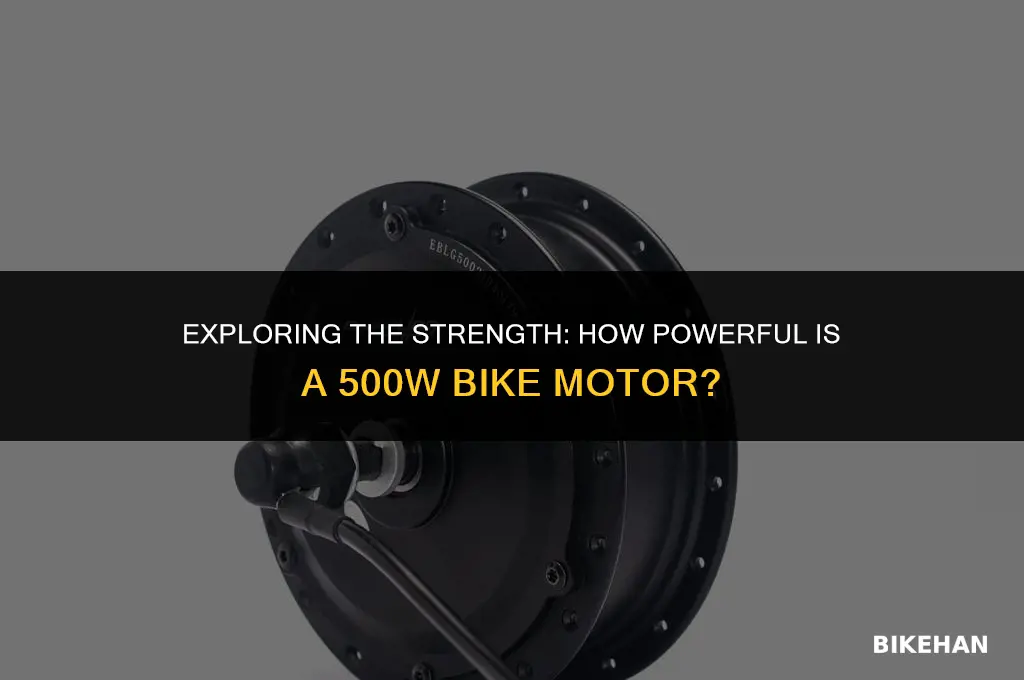
A 500-watt bike motor is a powerful electric motor designed to provide significant assistance to cyclists. This type of motor is commonly found in electric bicycles, also known as e-bikes, which are becoming increasingly popular due to their ability to make cycling more accessible and enjoyable for a wider range of people. The 500-watt rating indicates the motor's maximum power output, which is capable of delivering a substantial amount of torque and speed. This makes it suitable for various types of cycling, including commuting, recreational riding, and even some off-road adventures. With a 500-watt motor, riders can expect a smooth and responsive performance, allowing them to tackle hills and longer distances with less effort compared to traditional pedal-powered bicycles.
Explore related products




What You'll Learn
- Efficiency: How well does a 500W motor convert electrical energy into mechanical energy for propulsion
- Performance: What speed and torque can a 500W bike motor achieve under different loads
- Battery Life: How does a 500W motor impact the range and lifespan of an electric bike's battery
- Weight and Size: What are the physical dimensions and weight implications of a 500W bike motor
- Cost and Maintenance: How does the power rating of a bike motor influence its price and upkeep requirements

Efficiency: How well does a 500W motor convert electrical energy into mechanical energy for propulsion?
The efficiency of a 500W motor in converting electrical energy into mechanical energy for propulsion is a critical factor to consider when evaluating its performance. Efficiency is typically measured as a percentage and represents the ratio of output power to input power. In the case of a 500W motor, we would expect it to convert 500 watts of electrical energy into mechanical energy. However, due to various losses such as heat, friction, and electromagnetic resistance, the actual mechanical output will be less than 500 watts.
To determine the efficiency of a 500W motor, we need to look at its specifications, which usually include the input voltage, current, and output torque. By calculating the input power (voltage multiplied by current) and comparing it to the output power (torque multiplied by rotational speed), we can determine the motor's efficiency. For example, if a motor has an input voltage of 48V and a current draw of 10.4A, its input power would be 48V * 10.4A = 500W. If the motor produces an output torque of 10Nm and operates at a rotational speed of 500RPM, its output power would be 10Nm * (500RPM / 60) = 83.3W. In this case, the motor's efficiency would be (83.3W / 500W) * 100% = 16.66%.
It's important to note that the efficiency of a motor can vary depending on its operating conditions. Motors are typically most efficient at their rated power and speed, and efficiency can decrease at lower or higher operating points. Additionally, factors such as temperature, load, and maintenance can also affect a motor's efficiency.
In the context of electric bicycles, a 500W motor is considered to be quite powerful and can provide a significant amount of assistance to the rider. However, the actual amount of power that is converted into mechanical energy for propulsion will depend on the motor's efficiency. A more efficient motor will provide more power to the wheels, resulting in better performance and a longer range.
To maximize the efficiency of a 500W motor, it's important to operate it within its rated power and speed range, maintain it properly, and avoid overloading it. By doing so, you can ensure that the motor is operating at its peak efficiency and providing the best possible performance for your electric bicycle.
Pedal Power: Unveiling the Energy Consumption of Peloton Bikes
You may want to see also
Explore related products


Performance: What speed and torque can a 500W bike motor achieve under different loads?
A 500W bike motor's performance in terms of speed and torque is significantly influenced by the load it carries. When the motor is under a light load, such as on a flat surface with a rider of average weight, it can achieve higher speeds. Typically, a 500W motor can reach speeds of up to 25-30 km/h (15-18 mph) under such conditions. However, as the load increases, such as when climbing a steep hill or carrying a heavy rider, the motor's speed will decrease. This is because the motor has to work harder to overcome the increased resistance, which reduces its efficiency and speed.
Torque, on the other hand, is the measure of the motor's ability to rotate the wheels with force. A 500W bike motor generally produces a torque of around 80-100 Nm (59-74 ft-lb). This torque is sufficient for most urban commuting needs, allowing the bike to accelerate smoothly from a standstill and climb moderate inclines. However, under heavy loads, the torque output may not be enough to maintain a consistent speed, especially on steep hills. In such cases, the motor may struggle, and the rider may need to pedal to assist the motor.
It's also important to consider the efficiency of the motor under different loads. A 500W motor is generally more efficient at lower speeds and higher torques. This means that it will consume less power when it's working at its optimal torque output. However, as the speed increases, the efficiency decreases, and the motor will consume more power to maintain the higher speed. This is why it's crucial to match the motor's power output to the intended use and load conditions to ensure optimal performance and battery life.
In conclusion, the performance of a 500W bike motor in terms of speed and torque is highly dependent on the load it carries. While it can achieve decent speeds and torques under light loads, its performance will degrade as the load increases. Therefore, it's essential to consider the intended use and load conditions when selecting a motor for an electric bike to ensure that it meets the rider's needs and expectations.
Coating Your Ride: A Guide to Powder Amount for Bike Frames
You may want to see also
Explore related products


Battery Life: How does a 500W motor impact the range and lifespan of an electric bike's battery?
A 500W motor is a common choice for electric bikes, offering a good balance between power and efficiency. However, its impact on battery life is a crucial consideration for potential buyers. The range and lifespan of an electric bike's battery are directly influenced by the motor's power output.
In general, a higher power motor like a 500W unit will consume more energy than a lower power motor. This means that, all other factors being equal, an electric bike with a 500W motor will have a shorter range on a single charge compared to a bike with a less powerful motor. For example, if a bike with a 250W motor can travel 50 miles on a full charge, a bike with a 500W motor might only be able to travel 25-30 miles on the same charge.
The lifespan of the battery is also affected by the motor's power output. A higher power motor puts more strain on the battery, which can lead to faster degradation over time. This means that the battery may need to be replaced sooner on a bike with a 500W motor compared to a bike with a lower power motor.
However, it's important to note that other factors also play a significant role in determining battery life. These include the battery's capacity (measured in watt-hours), the rider's weight, the terrain, and the level of assistance used. For example, a rider who weighs more or rides in hilly terrain will require more power from the motor, which will drain the battery faster.
To maximize battery life on an electric bike with a 500W motor, riders can take several steps. These include using a lower level of assistance when possible, avoiding steep hills or rough terrain, and maintaining a consistent speed. Additionally, keeping the battery properly charged and stored can help extend its lifespan.
In conclusion, while a 500W motor can provide a good balance of power and efficiency for an electric bike, it does have an impact on battery life. Riders should be aware of this and take steps to maximize their battery's range and lifespan.
Unleashing the Beast: Power Output of Pro Motocross Bikes Explained
You may want to see also
Explore related products


Weight and Size: What are the physical dimensions and weight implications of a 500W bike motor?
The physical dimensions and weight implications of a 500W bike motor are critical considerations for anyone looking to upgrade or customize their bicycle. Typically, a 500W motor will have a cylindrical shape with a diameter ranging from 35mm to 45mm and a length of approximately 120mm to 150mm. These dimensions can vary slightly depending on the manufacturer and the specific model of the motor.
In terms of weight, a 500W bike motor generally weighs between 2.5kg and 4kg. This weight can significantly impact the overall performance and handling of the bicycle. A heavier motor may provide more power and torque, but it can also make the bike more difficult to maneuver, especially at low speeds or when climbing hills. Conversely, a lighter motor may be easier to handle, but it might not deliver the same level of power and performance.
When considering the weight and size of a 500W bike motor, it's also important to think about the placement of the motor on the bicycle. Most commonly, these motors are mounted in the rear hub, which can affect the bike's balance and weight distribution. A rear-mounted motor will typically result in a heavier rear wheel, which can influence the bike's acceleration, braking, and overall stability.
Another factor to consider is the impact of the motor's weight and size on the bike's battery life. A larger, heavier motor will generally require more power to operate, which can lead to shorter battery life. This means that riders may need to recharge their batteries more frequently, especially if they are using the motor for extended periods or at high power levels.
In summary, the weight and size of a 500W bike motor are important considerations that can significantly impact the performance, handling, and overall riding experience of a bicycle. Riders should carefully evaluate these factors when choosing a motor for their bike, taking into account their specific needs and preferences.
Exploring the Cost of Peloton Bikes: A Comprehensive Guide
You may want to see also
Explore related products


Cost and Maintenance: How does the power rating of a bike motor influence its price and upkeep requirements?
The power rating of a bike motor, such as a 500W model, significantly impacts both its initial cost and ongoing maintenance requirements. Generally, higher power ratings correlate with higher prices due to the increased complexity and quality of components needed to handle greater power outputs. For instance, a 500W motor may cost upwards of $500, whereas a 250W motor might be priced around $300. This price difference reflects the additional engineering and materials required to safely and efficiently manage the higher power.
In terms of maintenance, more powerful motors often demand more rigorous upkeep. This includes regular checks on the electrical connections, ensuring the cooling system is functioning optimally to prevent overheating, and more frequent replacement of wear-and-tear parts like brushes and bearings. The increased power output generates more heat and stress on the motor components, necessitating these additional maintenance steps to prolong the motor's lifespan and ensure reliable performance.
Moreover, the battery requirements for a 500W motor are more substantial compared to lower-powered models. This not only adds to the initial cost but also affects the long-term maintenance, as higher-capacity batteries may require specialized charging equipment and more careful monitoring to maintain their health and performance.
Insurance and registration costs can also be influenced by the power rating of the bike motor. In many jurisdictions, higher power outputs may categorize the bike as a moped or motorcycle, leading to increased insurance premiums and potentially more stringent registration requirements.
In summary, while a 500W bike motor offers greater performance and speed, it comes with a higher price tag and more demanding maintenance schedule. Owners must be prepared for these additional costs and responsibilities to keep their high-powered e-bikes running smoothly and safely.
Exploring the Cost of Peloton Bikes: A Comprehensive Guide
You may want to see also
Frequently asked questions
A 500W bike motor generates 500 watts of power, which is a measure of the motor's ability to do work or produce energy.
A 500W motor in an electric bike is significant because it provides a good balance between power and efficiency. It's powerful enough to assist with climbing hills and accelerating, but not so powerful that it drains the battery quickly.
The power of a 500W bike motor is considered to be on the higher end of the spectrum for electric bike motors. Many electric bikes come with motors ranging from 250W to 750W, so a 500W motor is a good middle ground that offers a nice blend of power and efficiency.
The performance of a 500W bike motor can be affected by several factors, including the weight of the bike and rider, the terrain, the battery capacity, and the motor's efficiency. A lighter bike and rider, flatter terrain, and a larger battery capacity can all contribute to better performance.
The power of a 500W bike motor can help an electric bike reach higher speeds, but the actual speed will depend on several factors, including the bike's weight, the rider's weight, the terrain, and the motor's efficiency. In general, a 500W motor can help an electric bike reach speeds of up to 20-25 mph (32-40 km/h) on flat terrain.